


Lesson 9 – The Luxor Temple in Egypt
Introduction
The New Kingdom is recognized as the golden era of ancient Egyptian history. It encompasses the reigns of renowned pharaohs such as Hatshepsut, Tutankhamun, and Ramses II. Egypt’s military dominance during this time resulted in immense wealth and prosperity, which in turn led to the construction of grand architectural marvels that celebrated the achievements of the pharaohs.
In this article, we will explore one of the most iconic structures from this period – the Luxor Temple. We will delve into the origin of its name, interesting facts about the temple and its structure.
I. Definition
Luxor, also known as Al-Uqsur or El-Aksur, is a city and the capital of Al-Uqsur Muhafazah in Upper Egypt. It is located in the southern part of the ancient Egyptian city of Thebes. In the Egyptian language, the Luxor Temple is known as ipet resyt which means the southern sanctuary; its main function was during the annual Opet festivals.
The Luxor temple in Luxor is unique compared to other temples in the area. Unlike those temples, it was not constructed to worship a specific god or pharaoh. Instead, the Luxor temple was built to symbolize the renewal and revitalization of kingship. Throughout history, many kings were crowned at this temple, either in actuality or symbolically.
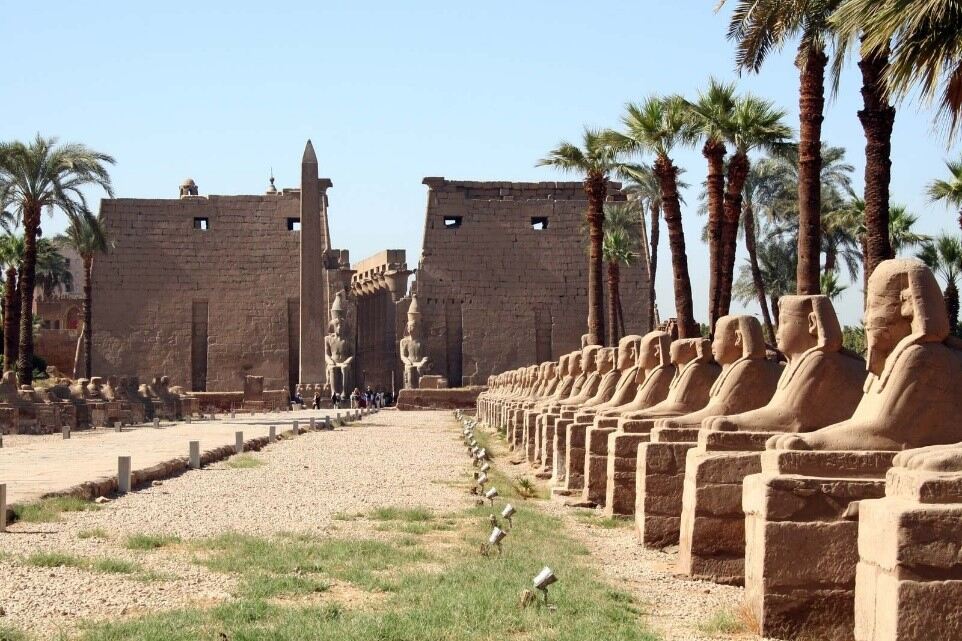
Luxor temple complex
II. Facts
1. Where is the Luxor Temple located?
Luxor Temple is situated in the historical city of Luxor, which was formerly known as Thebes. It is considered one of the most well-preserved ancient monuments, boasting a plethora of intact structures, statues, and relief carvings. This makes it an incredibly impressive and must-visit destination in both the Luxor region and Egypt as a whole.
2. When was the Luxor Temple built?
The temple was built in 1400 BCE during Egypt’s New Kingdom.
3. Who constructed the Luxor Temple?
Pharaoh Amenhotep III, a prominent builder in ancient Egypt, initiated the construction of the Luxor temple during the New Kingdom. The temple was later continued by Tutankhamun, and Horemheb, and ultimately completed by Rameses II.
The Luxor temple is believed to be one of the numerous projects commissioned by Ramesses II throughout his lengthy reign. Ramesses II also repurposed various existing monuments to enhance his own reputation. The temple is adorned with statues and carvings primarily depicting Ramses II.
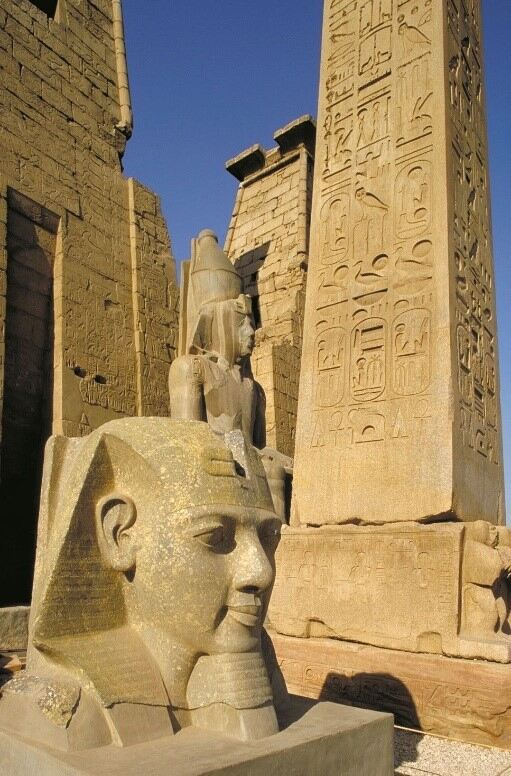
Temple of Luxor
III. Structure
The Luxor Temple was built using sandstone blocks from Nubia. It is enclosed by mud-brick walls that represent the division between the earthly realm and the sacred domain of the gods. The design of the temple during the New Kingdom period incorporated several common features. The Luxor Temple showcases many of these typical characteristics seen in temple construction during that time.
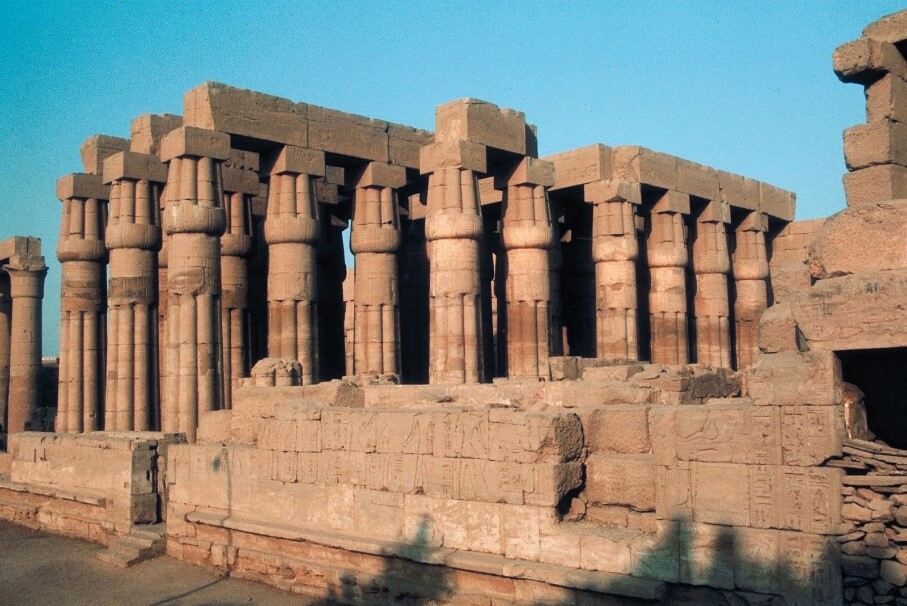
Temple of Luxor
Originally, the Temple of Luxor consisted of a large courtyard surrounded by a complex of halls and chambers. Inside one of the halls, there is a granite shrine dedicated to Alexander the Great. The grand courtyard at the entrance is bordered on three sides by a double row of elegant columns resembling the buds of the papyrus plant.
Ramses II later expanded the temple by adding an outer courtyard adorned with colossal statues of himself positioned between the pillars of a double colonnade. He also constructed a towering pylon, which depicted scenes from festivals and his military campaigns in Syria.
In front of the pylon, there were massive statues of the pharaoh (some of which still exist) and a pair of obelisks. One of the obelisks remains in its original location, while the other was relocated to the Place de la Concorde in Paris in 1831.
Conclusion
The Luxor Temple, like other Egyptian structures, employed techniques such as symbolism and illusionism in its construction. To create a sense of grandeur and elongate the pathway leading to the temple, two obelisks were built on either side of the entrance. These obelisks were designed to appear equal in height, even though they were actually different.