


Lesson 8 – Applications of Management Information Systems (MIS)
Introduction
In the dynamic landscape of contemporary business, the integration of technological advancements is essential for the efficient execution of various activities. This necessity is met through the adoption of Management Information Systems (MIS), which not only streamline business operations but also play a pivotal role in decision-making. This lesson explores the diverse applications of MIS, shedding light on its types, functions, and real-world examples.
I. Understanding Management Information Systems (MIS)
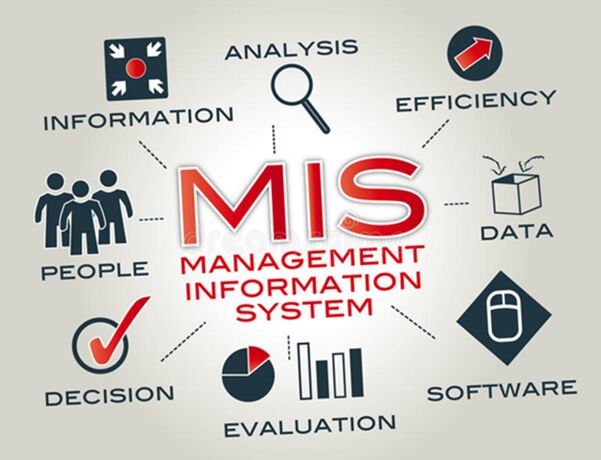
In the ever-evolving business environment, the reliance on MIS becomes evident. An MIS is a structured approach to gathering, compiling, and presenting information from different sources, providing business leaders and managers with crucial insights for strategic decision-making. The contemporary MIS heavily relies on technology to efficiently process and present data.
II. Types of MIS
| Type of MIS | Description | |
|---|---|---|
|
1 |
Process Control |
Gather data to create reports based on the performance of systems and processes. |
|
2 |
Management Reporting System |
Generate reports for the company’s operations. |
|
3 |
Inventory Control |
Allow tracking of the current inventory state within a department or the company. |
|
4 |
Decision Support Systems |
Gather information from internal and external resources and help team management make efficient business decisions. |
|
5 |
Expert Systems |
Use Artificial Intelligence to simulate the judgment and behavior of a person or organization with expertise and experience in a specific field. |
|
6 |
Executive Information System |
Report company data to top management directly in an easy-to-read format |
|
7 |
Transaction Systems |
Automate business processes and collect data on a company’s daily transactional activities. |
|
8 |
Accounting & Finance Systems |
Track a company’s assets and investments and processes financial and accounting-related operations. |
|
9 |
Sales & Marketing Systems |
Facilitate tracking of a company’s sales and marketing efficiency. |
|
10 |
HR Systems |
Allow controlling organizational information circulating within the company and oversee tasks like recruitment, daily administration, and ensuring all employees comply with company standards. |
|
11 |
School Information Management Systems |
Help educational institutions manage daily activities like attendance, payroll, and employee schedules. |
|
12 |
Local Databases |
Offer information about the residents of a given locality. |
III. Functions of MIS
The primary functions of MIS revolve around reporting on business operations to enhance decision-making and organizational efficiency. Key functions include:
Easy Access to Information
MIS allows convenient access to marketing, financial, or operational information stored centrally.
Data Collection
Collects and combines data from daily operations and external sources, fostering healthy relationships in the supply chain.
Performance Tracking
Records and stores production and sales data for effective employee performance tracking.
Collaboration in the Workplace
Serves as an effective communication channel for teams to collaborate, even in geographically dispersed settings.
Company Projections
Offers trend analysis features for projecting business performance and evaluating the impact of potential changes.
Decision Implementation Tracking
Helps project expectations for decisions and monitors team performance.
Improved Company Reporting
Enables timely decision-making through effective reporting functions accessible to various organizational levels.
IV. Application of Management Information Systems
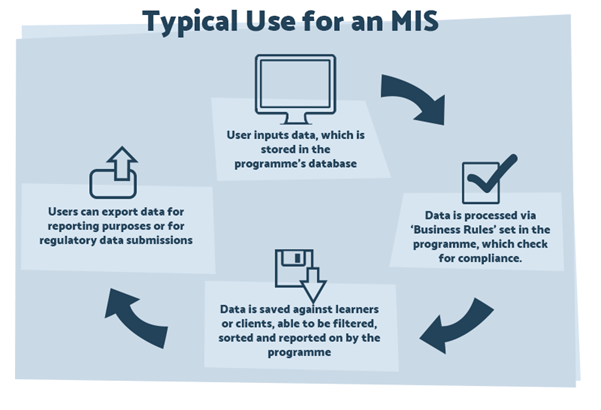
Management Information Systems (MIS) play a pivotal role in enhancing organizational efficiency and decision-making across various business sectors. Let’s explore how MIS applications are tailored to meet the unique needs of financial, marketing, manufacturing, and human resources (HR) domains.
1. Financial Management
MIS in Budgeting and Forecasting
In financial management, MIS aids in budgeting and forecasting by providing accurate historical data and real-time financial information. This enables organizations to create realistic budgets, identify trends, and make informed financial projections.
Financial Reporting and Analysis
MIS generates comprehensive financial reports, allowing financial managers to analyze key performance indicators, monitor expenses, and assess overall financial health. This facilitates strategic financial planning and regulatory compliance.
Risk Management
MIS contributes to risk management by providing tools for risk assessment, monitoring, and mitigation. Through data analysis, financial MIS identifies potential risks, enabling organizations to implement proactive measures to safeguard financial stability.
2. Marketing Management
Customer Relationship Management (CRM)
In marketing, MIS supports CRM systems, helping businesses manage and analyze customer interactions. It tracks customer preferences, purchase history, and feedback, enabling targeted marketing campaigns and personalized customer experiences.
Market Research and Analysis
MIS assists in market research by collecting and analyzing data on market trends, consumer behavior, and competitive landscapes. This data-driven approach empowers marketing teams to make informed decisions, optimize strategies, and stay ahead in dynamic markets.
Campaign Performance Tracking
Marketing MIS tracks the performance of advertising and promotional campaigns. It provides insights into the effectiveness of various marketing channels, allowing marketers to allocate resources strategically and refine their campaigns for maximum impact.
3. Manufacturing Management
Inventory Management
In manufacturing, MIS is instrumental in inventory management. It monitors stock levels, tracks raw materials, and facilitates seamless coordination between production and supply chain. This ensures optimal inventory levels and reduces the risk of stockouts or overstocking.
Production Planning and Control
MIS aids in production planning by providing real-time information on production processes, resource availability, and order status. This enhances operational efficiency, minimizes production delays, and ensures timely delivery to customers.
Quality Control
Manufacturing MIS includes tools for quality control, tracking product quality at various stages of production. This helps identify defects early, maintain quality standards, and minimize the risk of producing faulty goods.
4. Human Resources (HR) Management
Employee Information and Attendance
MIS in HR centralizes employee information, including attendance records, performance evaluations, and training history. This streamlines HR processes, making it easier to track employee performance, attendance, and compliance with company policies.
Recruitment and Onboarding
MIS supports HR in recruitment and onboarding processes by automating applicant tracking, managing resumes, and facilitating smooth onboarding procedures. This enhances the efficiency of HR teams and ensures a positive experience for new hires.
Performance Management
HR MIS contributes to performance management by providing data on employee performance metrics, goal achievements, and feedback. This aids in the fair assessment of employee contributions and supports strategic workforce planning.
The applications of Management Information Systems (MIS) are diverse and tailored to meet the specific needs of financial, marketing, manufacturing, and HR domains. By harnessing the power of data and technology, organizations in these sectors can make informed decisions, enhance operational efficiency, and gain a competitive edge in today’s dynamic business landscape.
V. Examples
Now, let us look at some examples of management information systems to understand their application.
1. Example #1
Let us assume that a multinational company owns multiple domestic and foreign offices. The total number of employees is 900. Maintaining a manual record of all the employees is not feasible.
Therefore, firms’ human resource department uses a human resource information system to collect, record, and classify employee information. The firm also uses MIS to track attendance and leaves. In addition, the firm opts for a centralized database to store large amounts of data.
2. Example #2
Consider a large hospital—a plethora of patients and staff hustling around. The hospital has multiple departments, each employing nurses, surgeons, and physicians. Some are permeant employees, and others work for a few hours. The hospital’s administration needs to record everything.
The hospital installs a health information system to record every minute detail. The MIS also tracks every single expense. As a result, the doctors get easy access to patient information; there is minimal chaos.
Conclusion
This article has been a guide to applications of Management Information System (MIS). Here, we explain its defination, types, functions and examples. MIS helps managers make effective decisions to support ongoing operations. An MIS produces several reports, including schedule, on-demand, exception, and detailed reports. The reports contain vital indicators, so a manager can take corrective action when necessary.