


Lesson 7 – Pharaohs as Patrons of the Arts
Introduction
The Pharaohs of ancient Egypt were not only powerful rulers but also patrons of the arts. They commissioned various forms of art, including paintings, sculptures, and jewelry, as well as grand structures like temples, tombs, and pyramids. The art and architecture created during this time are considered some of the most impressive and well-preserved in the world.
Numerous artworks were used to convey religious and political messages, as well as to honor the pharaohs’ reign. Many pharaohs were buried with intricate funeral items, such as sarcophagi and canopic jars. The art and architecture of ancient Egypt continue to be admired and studied by people worldwide.
I. History
Ancient Egyptian art refers to the art created in ancient Egypt from the 6th millennium BC to the 4th century AD. This period covers Prehistoric Egypt until the Christianization of Roman Egypt. The art includes paintings, sculptures, drawings on papyrus, faience, jewelry, ivories, architecture, and other forms of art. The style of ancient Egyptian art remained relatively unchanged over time. Many surviving examples of this art come from tombs and monuments, providing insight into the ancient Egyptian beliefs about the afterlife.
In the ancient Egyptian language, there was no specific word for art. Artworks had a functional purpose that was closely tied to religion and ideology. Creating art was a way to make a subject permanent. As a result, ancient Egyptian art depicted an idealized and unrealistic view of the world. There was not a strong tradition of individual artistic expression because art served a broader cosmic purpose of maintaining order.
II. Facts
Pharaohs were frequently portrayed in an exaggerated way, showcasing their power and authority through idealized features. They were commonly depicted wearing traditional pharaonic attire, and some statues even portrayed them as divine beings or god-like rulers.
The ancient Egyptians utilized various materials to construct their grand structures, such as limestone, sandstone, granite, and mud brick. They also employed copper and bronze for decorative purposes, while gold was reserved for crafting statues and coffins specifically for pharaohs.
The Mayans and Incas, along with other ancient civilizations, constructed impressive structures. However, the ancient Egyptians were exceptionally skilled in this field. Many of their monumental structures still exist today and are regarded as remarkable architectural achievements.
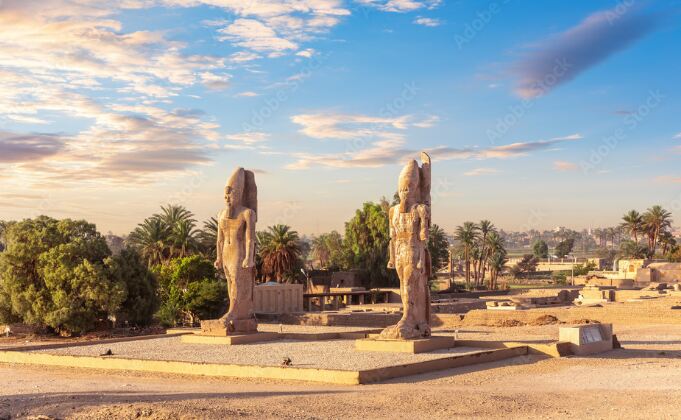
Colossal statues on the way to the Valley of Kings
III. Timeline
1. Pre-Dynastic Egypt (6000–3000 BC)
Pre-Dynastic Egypt, which corresponds to the Neolithic period of Egypt’s prehistory, lasted from around 6000 BC to the start of the Early Dynastic Period in 3100 BC. As the desert continued to expand, the early ancestors of the Egyptians were forced to settle along the Nile and adopt a more settled way of life during the Neolithic era.
Although there is limited archaeological evidence from the period between 9000 and 6000 BC, Neolithic settlements started to emerge throughout Egypt around 6000 BC.
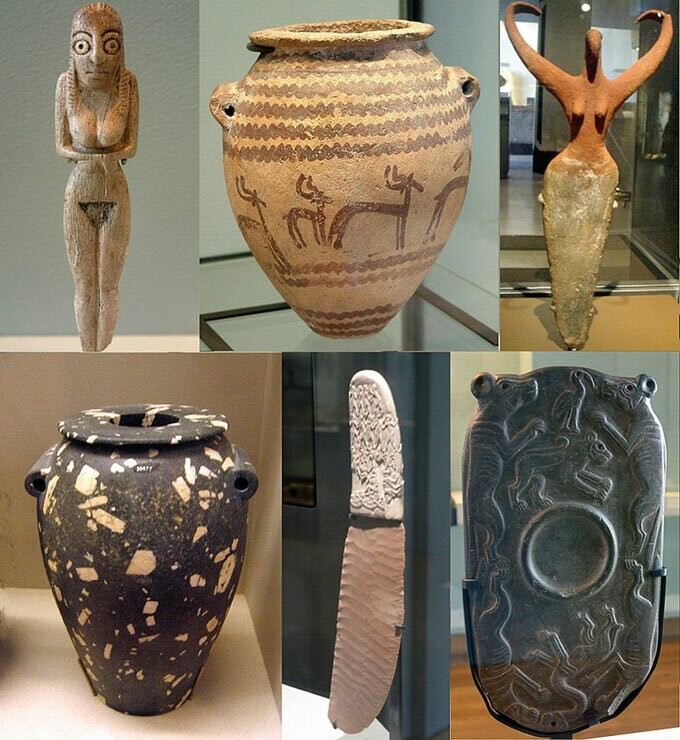
Artifacts of Egypt from the Prehistoric period
2. Merimde culture (5000–4200 BC)
During the period of 5000 to 4200 BC, the Merimde culture thrived in Lower Egypt, specifically in a large settlement located at the edge of the Western Nile Delta. This culture is primarily known from this particular site. The Merimde culture had strong connections with the Faiyum A culture and the Levant.
The people of the Merimde culture lived in small huts and their pottery was simple and undecorated. They also used stone tools. They engaged in the raising of cattle, sheep, goats, and pigs, and cultivated crops such as wheat, sorghum, and barley.
Interestingly, the Merimde people buried their deceased within the settlement and created clay figurines. Notably, the first life-size clay head from ancient Egypt was discovered in Merimde.
3. Badarian culture (4400–4000 BC)
The Badarian culture, which existed from around 4400 to 4000 BC, is named after the Badari site near Der Tasa. It came after the Tasian culture but was so similar that many people see it as one continuous period. The Badarian culture continued to make blacktop-ware pottery and was given sequence dating numbers.
The main difference that separates the two periods is that Badarian sites used copper along with stone, making them chalcolithic settlements, while the Neolithic Tasian sites are still considered to be in the Stone Age.
Conclusion
The Pharaohs of ancient Egypt were powerful rulers who played a crucial role in the development of art and architecture during their time. They commissioned a wide range of art forms and monumental structures, many of which are still remarkably well-preserved today.
The art and architecture created during the Pharaonic period are widely regarded as some of the most impressive and well-preserved in the world. People from all over the world continue to admire and study them, providing us with a glimpse into the rich culture and history of ancient Egypt. The Pharaohs’ legacy as patrons of the arts continues to inspire and captivate people even today.