Welcome to Lesson 6 – a captivating exploration of the artistic mastery embedded in Sandro Botticelli’s “Pallas and the Centaur.” As we journey through the corridors of Renaissance art, we find ourselves in the company of a lesser-known masterpiece that unfolds a mythological narrative with profound symbolic implications.
In this lesson, we will unravel the layers of meaning concealed within this masterpiece, exploring the mythological context that inspired Botticelli’s brushstrokes. We will dissect the composition, delve into the symbolism, and analyze the artistic techniques employed by the Florentine master, all while considering the broader implications of this work within the tapestry of Renaissance art.
Sandro Botticelli, born Alessandro di Mariano di Vanni Filipepi, in Florence around 1445, emerged as one of the most celebrated painters of the Italian Renaissance. Little is known about his early life, but it is believed that he received his initial artistic training in the workshop of Fra Filippo Lippi, a prominent painter of the time. Under Lippi’s tutelage, Botticelli honed his skills and absorbed the artistic influences that would later shape his distinctive style.
Botticelli’s artistic style is characterized by a unique blend of classical influences, a focus on grace and beauty, and a penchant for mythological and allegorical themes. His early works, such as “Adoration of the Magi” (1475) and “Primavera” (c. 1482), already showcased his mastery of composition, color, and symbolic storytelling. These paintings demonstrated a departure from traditional religious themes, reflecting the intellectual and cultural shifts of the Renaissance.
Botticelli’s talent garnered him significant patronage, particularly from the influential Medici family. Lorenzo de’ Medici, the de facto ruler of Florence, became a key patron and supporter of Botticelli’s career. The Medici influence played a pivotal role in shaping Botticelli’s subject matter, leading to the creation of some of his most renowned works.
Among Botticelli’s masterpieces is “The Birth of Venus” (c. 1484–1486), a painting that encapsulates the spirit of Renaissance humanism, blending classical mythology with a newfound appreciation for the beauty of the human form. Another notable work is “Pallas and the Centaur,” a lesser-known piece but one that showcases Botticelli’s skill in depicting mythological narratives.
As the political landscape of Florence underwent changes, and religious fervor intensified, Botticelli’s artistic fortunes experienced a decline. The influence of the Dominican friar Girolamo Savonarola led to the infamous Bonfire of the Vanities in 1497, during which secular and classical artworks were publicly burned. Botticelli, deeply affected by these events, turned away from mythological subjects and produced more religious works, reflecting the prevailing sentiment.
Botticelli’s later years saw a decline in commissions, and he passed away in obscurity in 1510. However, the 19th-century revival of interest in Renaissance art brought about a reevaluation of his contributions, leading to the recognition of his enduring legacy as one of the great painters of the Italian Renaissance. Today, Sandro Botticelli’s works continue to captivate audiences worldwide, and his impact on the evolution of art remains indelible.
The painting “Pallas and the Centaur” by Botticelli is richly embedded in Greek mythology, drawing upon the timeless narratives that have captivated generations. The central figures, Pallas Athena and the centaur, engage in a symbolic dance that encapsulates profound themes of wisdom, civilization, and the perpetual struggle between order and chaos.
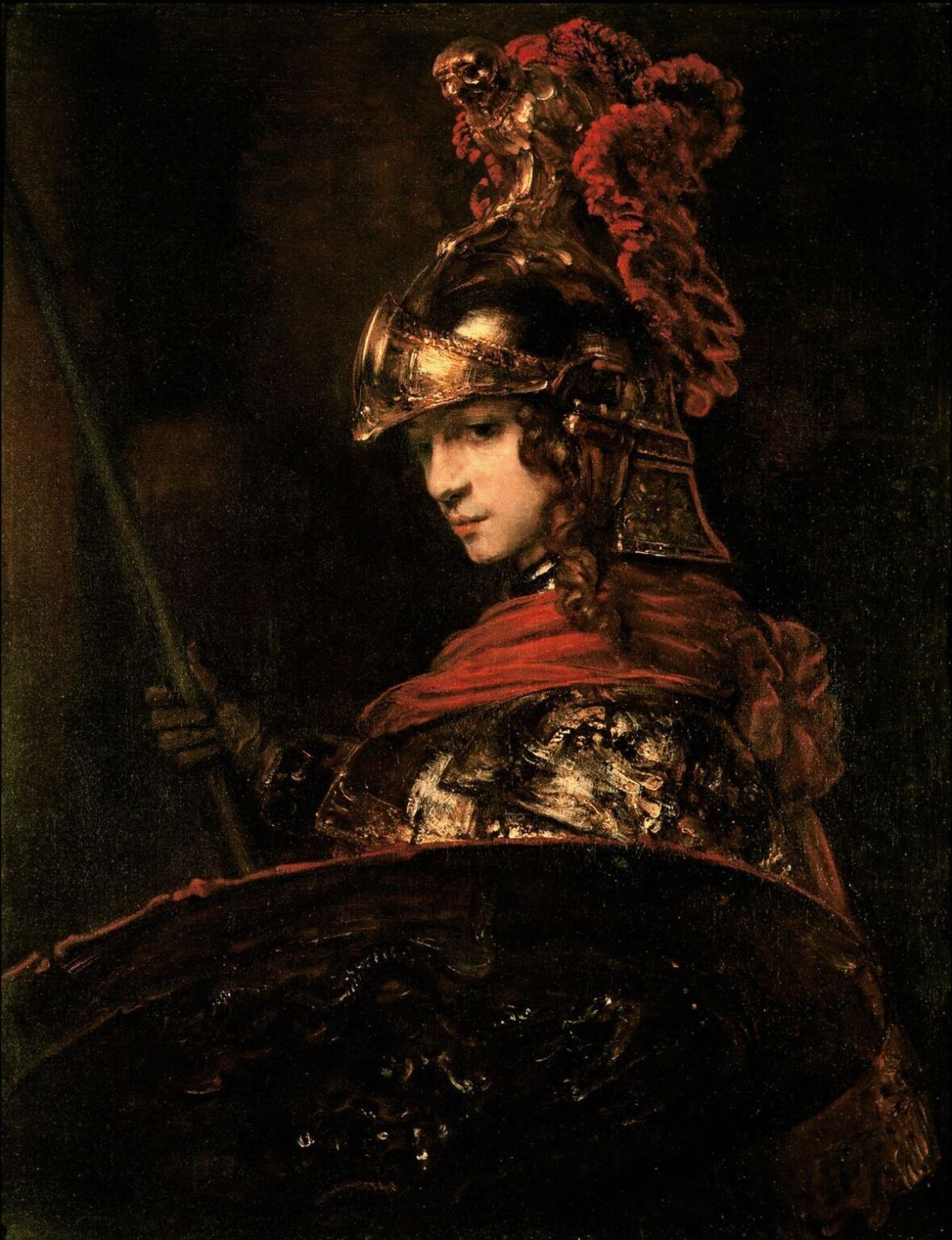
In Greek mythology, Pallas Athena, often referred to simply as Athena, is a goddess of multifaceted attributes. She is the daughter of Zeus, born fully grown and armored from his forehead. Renowned for her wisdom, strategic warfare prowess, and commitment to civilization, Athena is a symbol of intellect, justice, and civic order. The owl and the olive tree are emblematic of her associations, representing wisdom and peace, respectively.
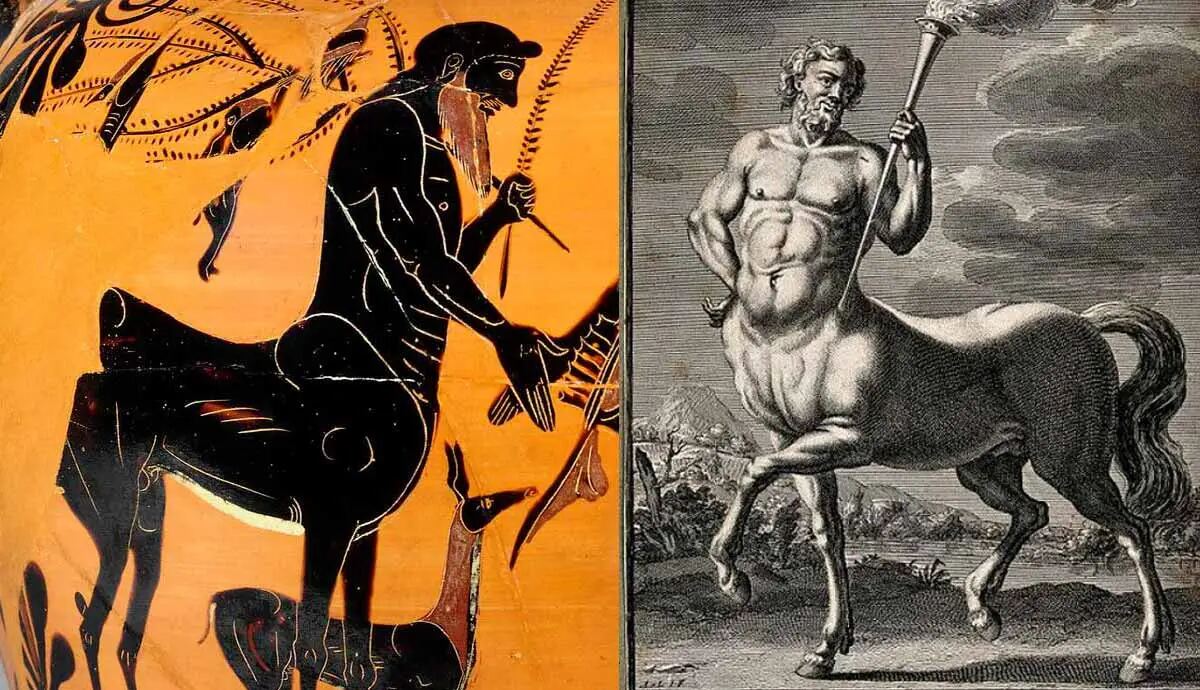
In classical mythology, centaurs are mythical creatures with the upper body of a human and the lower body of a horse. These beings often embody the untamed, wild forces of nature and are frequently depicted as both unpredictable and unruly. Their dual nature, with human and equine elements, symbolizes the conflict between civilized intellect and primal instincts.
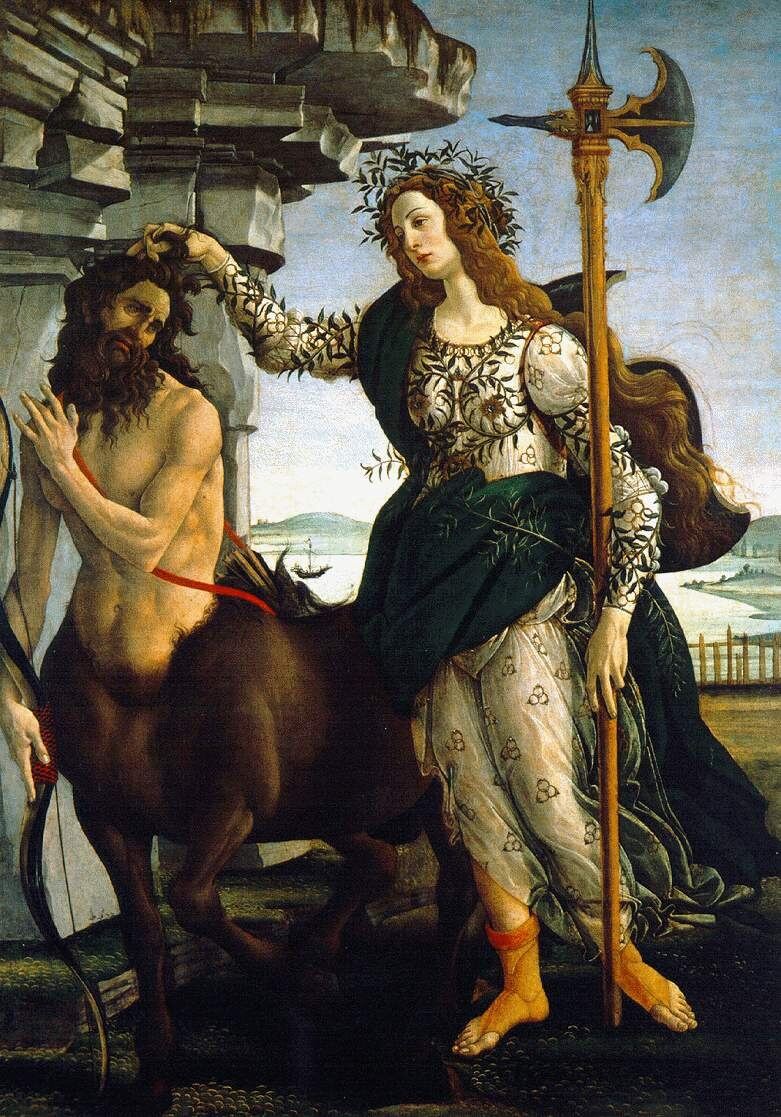
The composition of “Pallas and the Centaur” signifies a thematic struggle between the ordered, rational realm personified by Pallas Athena and the chaotic, instinctual forces represented by the centaur. The goddess, draped in serene elegance, appears composed and contemplative, signifying wisdom and intellectual control. In contrast, the centaur writhes in a tumultuous struggle, symbolizing the inherent chaos and untamed nature that Athena seeks to subdue.
The overarching theme of the painting is often interpreted as the triumph of wisdom and civilization over wild, instinctual nature. The goddess Athena, a paragon of intellect and strategic acumen, exerts her influence over the centaur, embodying the victory of order and rationality. The delicate equilibrium between these contrasting forces becomes a metaphor for the perpetual struggle within human nature and society.
As viewers engage with Botticelli’s “Pallas and the Centaur,” they are invited to contemplate the enduring mythological themes that resonate with the human experience. The artist’s brush captures a moment frozen in time, allowing us to witness the eternal clash between order and chaos, wisdom and primal instincts, as told through the symbolic figures of Pallas Athena and the untamed centaur.
“Pallas and the Centaur” by Sandro Botticelli is a visually arresting masterpiece that unfolds a narrative of mythological conflict and allegorical significance. The canvas, likely painted in the latter part of the 15th century, captures a moment frozen in time where Pallas Athena, the goddess of wisdom and warfare, confronts a centaur in a dynamic struggle.
In the foreground, Pallas Athena stands with serene elegance, draped in flowing robes that cascade gracefully around her figure. Her poised stance and calm demeanor emphasize her intellectual authority and wisdom. At her feet, a centaur—a creature with the upper body of a human and the lower body of a horse—writhes in a tumultuous struggle. The centaur’s wild, untamed features are evident in its contorted posture and flowing mane, creating a stark contrast with the composed goddess.
The background reveals a serene landscape, characterized by gently rolling hills, trees, and a tranquil sky. This idyllic setting serves as a backdrop to the intense struggle in the foreground, further accentuating the dichotomy between order and chaos, civilization and nature.
The painting invites a multifaceted interpretation, delving into both its mythological roots and allegorical implications.
In essence, “Pallas and the Centaur” serves as a visual tapestry where myth and allegory intertwine. Botticelli’s artistic choices in depicting this mythological scene invite viewers to reflect on profound themes—intellectual triumph over instinct, the delicate balance between civilization and nature, and the timeless quest for harmony within the human experience.
“Pallas and the Centaur” by Sandro Botticelli stands as a captivating testament to the artist’s profound ability to weave myth, symbolism, and artistic technique into a harmonious masterpiece. This painting, though perhaps less renowned than some of Botticelli’s other works, carries a timeless narrative that resonates with themes of wisdom, civilization, and the perpetual struggle between order and chaos
As we conclude our journey through “Pallas and the Centaur,” we are left with a profound appreciation for Botticelli’s ability to transcend the canvas and delve into the complexities of the human condition. This masterpiece invites us to ponder the enduring struggle between reason and instinct, civilization and nature—a contemplation as relevant today as it was in the Renaissance. In “Pallas and the Centaur,” Botticelli’s artistry beckons us to engage with the timeless dialogue between order and chaos, leaving an indelible impression on the canvas of art history.