


Lesson 6 – New Spain
Introduction
Throughout the 15th and 16th centuries, the fervor of exploration held profound significance for Spain, shaping its global trajectory. Driven by a medley of motivations and goals, the nation sought uncharted territories, creating ripples that would forever alter world history. As we embark on this journey, our focus will be to delve deeper into the tales of Spanish Explorers and the legacy of Spanish Colonies.
I. History of Spanish discovery
In our examination of Spanish exploration history, we’ll start by delving into its initial phases, reflecting on the influences of those pioneering journeys. We will also shed light on the famed explorers who charted unknown terrains and seas, underscoring their pivotal contributions to the annals of discovery.
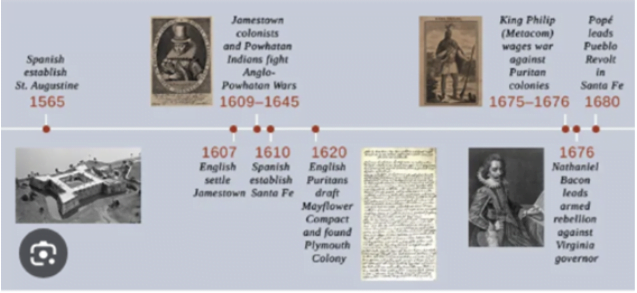
Figure 01: History of Spanish discovery
1. The influence of the first voyages
Within the annals of global exploration, Spanish endeavors stand out prominently. As we venture into the historical tapestry of Spanish exploration, our focus initially narrows down to its early stages. During this embryonic period, a series of pioneering voyages were embarked upon. These expeditions were not just significant for their discoveries, but also for the lasting impacts they made on trade, culture, and geopolitics, shaping the trajectory of the regions they touched.
2. The famous Spanish explorers and their contributions
Christopher Columbus:
Best known for his "discovery" of the Americas in 1492. While he wasn't the first European to reach the continents, his voyages opened the way for widespread European exploration and eventual colonization of the New World. His expeditions, sponsored by the Catholic Monarchs of Spain, led to the first lasting European contact with the Americas.
Hernán Cortés:
Led the expedition that caused the fall of the Aztec Empire, bringing large portions of what is now mainland Mexico under the rule of the King of Castile in the early 16th century. His encounters with the Aztec ruler Moctezuma and subsequent events are a significant part of the colonization history of the Americas.
Francisco Pizarro:
Pizarro was the Spanish conqueror who led the expedition that captured the Inca Empire. He claimed the lands for Spain and laid the foundation for Spanish colonization in the region.
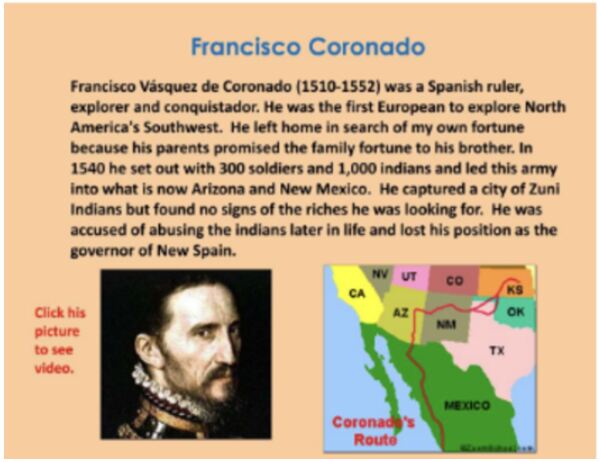
Figure 02: Spanish explorer
Juan Ponce de León:
Known for leading the first official European expedition to Florida, which he named, and serving as the first governor of Puerto Rico by appointment of the Spanish crown. He is also widely associated with the legend of the Fountain of Youth.
Ferdinand Magellan (Fernando de Magallanes):
Although Portuguese by birth, Magellan's expedition was sponsored by Spain. He is best known for his expedition from Spain that resulted in the first circumnavigation of the Earth. Though Magellan himself died in the Philippines and did not complete the full journey, his expedition made a monumental impact on global exploration.
Álvar Núñez Cabeza de Vaca:
Known for his incredible journey across North America after being shipwrecked off the Florida coast. His accounts provided early insights into the interior of the continent and its indigenous inhabitants.
These explorers, among others, played pivotal roles in expanding Spain’s territories, influence, and knowledge of uncharted regions, shaping the course of global history in significant ways.
II. Spanish Colony
1. The process of establishing and developing attributes
The establishment and subsequent development of the Spanish colonies play a pivotal role in understanding Spain’s global legacy. Tracing the timeline and key events that marked their growth and maturation provides insight into the depth of Spain’s overseas influence. Central to the colonial era was Spain’s management of these territories. The mechanisms they employed not only defined this period but also left lasting impacts on these colonial regions. Simultaneously, the diverse interactions between indigenous inhabitants and Spanish settlers, which spanned from peaceful exchanges to confrontations, significantly shaped the colonial narrative, underscoring the complexities of these relationships and their consequences.
2. Impacts of Exploration and Colonization on Spain
Economy: The exploration and colonization endeavors significantly bolstered Spain’s economic growth, particularly amplifying trade activities. The influx of wealth and resources from the colonies reshaped Spain’s economic landscape.
Cultural and education: Cultural and educational aspects of Spain underwent transformations, influenced by their interactions with, and dominion over, diverse civilizations.
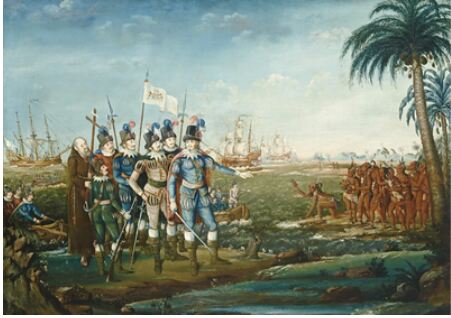
Figure 03: First Landing of Christopher Columbus on San Salvador, in the Bahamas, painted by Frederick Kemmelmeyer.
However, the management of such expansive territories was not without its challenges. The intricacies and obstacles faced by Spain in governing these vast colonies, with their distinct cultures and challenges, are also key elements of this historical account.
3. The ending and lasting impacts
During the 18th and 19th centuries, Spanish colonial power experienced a noticeable decline. Various geopolitical events, internal struggles, and external pressures, coupled with the rise of independence movements in the colonies, culminated in a reduced Spanish footprint on global territories. This period witnessed a series of revolts, wars, and treaties that gradually stripped Spain of its vast colonial domains, leading to the emergence of new nations in the Americas and a diminished Spanish hegemony.
Notwithstanding the decline, the legacies of Spanish exploration and colonization are indelible. The cultural, linguistic, and architectural imprints of Spain remain entrenched in many parts of the world, especially in the Americas. Spanish as a language has proliferated, becoming one of the most spoken languages globally. Architectural marvels, influenced by Spanish styles, adorn many cities in former colonies. Moreover, the fusion of indigenous and Spanish customs has given birth to rich traditions, cuisines, and festivals celebrated to this day. The influence of Spanish exploration and colonization, thus, transcends the constraints of time, continuing to shape the socio-cultural fabric of many regions.
III. FAQ
How did Spanish exploration in the 15th and 16th centuries shape Spain's global trajectory?
Spanish exploration in the 15th and 16th centuries propelled Spain into a position of global power. It resulted in the establishment of a vast colonial empire that spanned the Americas, Asia, and Africa. This expansion brought wealth, resources, and influence to Spain, transforming it into one of the most powerful nations of the time.
How did Christopher Columbus's voyages impact European exploration and colonization of the Americas?
Christopher Columbus's voyages had a profound impact on European exploration and colonization of the Americas. They opened the door to subsequent European expeditions and the establishment of colonies in the New World. Columbus's voyages sparked a wave of exploration, conquest, and exploitation as European powers sought to claim territories, exploit resources, and spread their influence.
How did the interactions between indigenous inhabitants and Spanish settlers shape the colonial narrative and its consequences?
The interactions between indigenous inhabitants and Spanish settlers shaped the colonial narrative and its consequences. These interactions ranged from cooperation and cultural exchange to conflict, oppression, and the introduction of diseases. The consequences included the displacement and marginalization of indigenous peoples, the imposition of Spanish cultural and religious practices, and the exploitation of indigenous labor and resources.
What challenges did Spain face in governing its vast colonial territories, and how did it manage them?
Spain faced numerous challenges in governing its vast colonial territories. These challenges included the vast geographical distances, diverse indigenous populations, resistance movements, and the need to extract resources for the benefit of the Spanish crown. Spain managed its colonies through a combination of military force, alliances with indigenous elites, the encomienda system , and the establishment of administrative structures.
What factors led to the decline of Spanish colonial power, and what lasting legacies remain from Spanish exploration and colonization?
The decline of Spanish colonial power was influenced by various factors. These included conflicts with other European powers, economic mismanagement, piracy, and the emergence of independence movements in the colonies. Spain's decline began in the 17th century and continued throughout the 18th and 19th centuries. Despite this decline, lasting legacies from Spanish exploration and colonization remain, including the Spanish language, cultural influences, architectural styles, and Catholicism in many parts of the Americas.
Conclusion
Spanish exploration and colonization have left an indelible mark on world history. Venturing into uncharted territories, Spain not only expanded its dominion but also reshaped cultures and economies. This era, characterized by both conquest and cultural fusion, has significantly influenced global geopolitical and cultural landscapes. In essence, Spain’s colonial endeavors have played a pivotal role in shaping the world as we know it today.