


Chapter 1, Lesson 6
In Progress
Lesson 6 – Leadership vs. Management
Chapter Progress
0% Complete
Introduction
Leadership is the ability to influence people to achieve goals with enthusiasm and willingness. It is different from management, as leadership is just one aspect of management. Management is the practice of effectively handling tasks and responsibilities. It involves the art of getting work done through collaboration with others. Management can be found in various fields such as education, hospitality, sports, and offices.
I. Difference Between Leadership vs Management
The role of management is to oversee a group or individuals to achieve a specific goal. Leadership, on the other hand, is the ability of an individual to influence, motivate, and empower others to contribute to the success of an organization.
Management is responsible for controlling an organization, group, or entity to achieve a particular objective. Managers ensure that day-to-day operations are carried out as expected. On the other hand, leaders communicate to provide direction, inspire, and motivate their team.
Leadership involves having a vision to guide change, while managers focus on achieving organizational goals through processes such as budgeting, organizational structure, and staffing. Leaders are more concerned with thinking ahead and seizing opportunities.
It is possible to be both a manager and a leader at the same time. However, it’s important to note that being a great leader doesn’t necessarily mean being a great manager, and vice versa. So, what sets these two roles apart? In this article on leadership vs management, we will explore the factors that distinguish them.
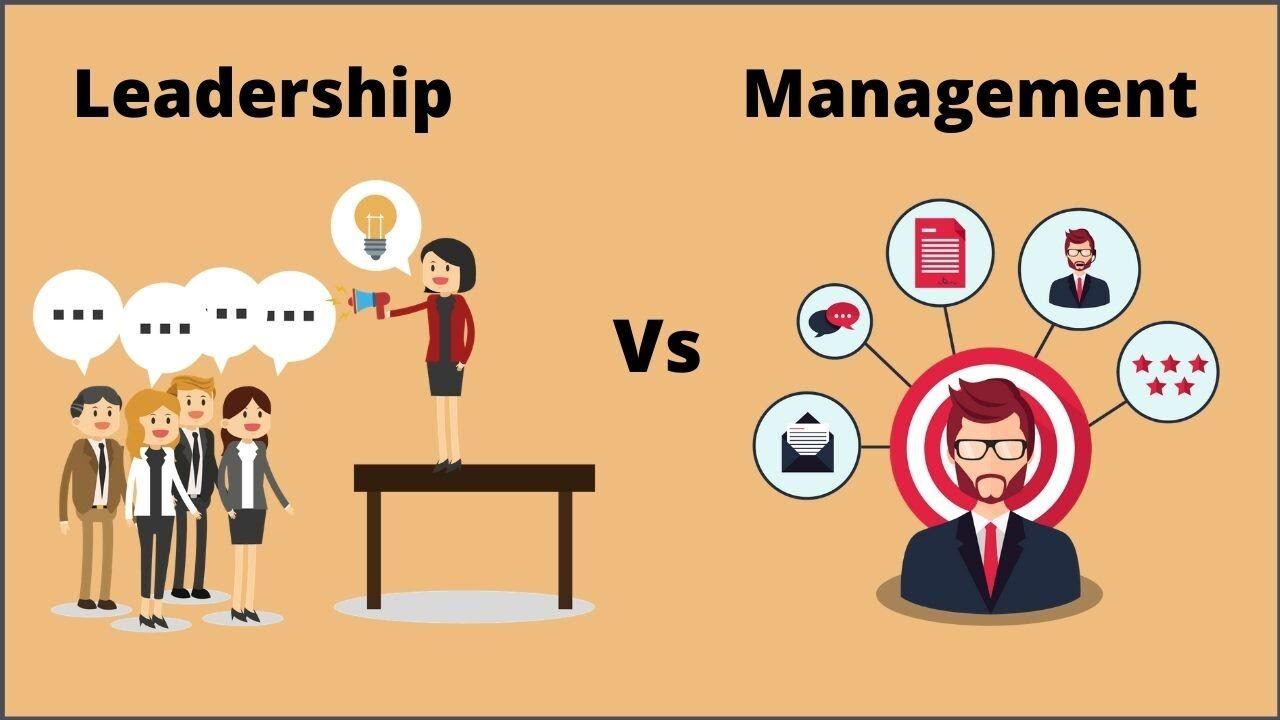
1. Differences in Vision
Leaders are often seen as visionaries who guide their organizations toward growth. They assess the current state of their organization, determine where they want to go and involve their team in figuring out how to get there.
On the other hand, managers focus on achieving organizational goals through processes like budgeting, structuring, and staffing. Their vision is limited to implementing strategies, planning, and organizing tasks to meet the objectives set by leaders. Both roles are equally important in business environments and require collaborative efforts.
2. Organizing vs Aligning
Managers accomplish their objectives by coordinating activities and implementing tactical processes. They divide long-term goals into smaller segments and utilize available resources to achieve the desired outcome.
In contrast, leaders focus more on aligning and influencing people rather than simply assigning tasks to them. They do this by helping individuals envision their role in a broader context and the potential for future growth that their efforts can bring.
3. Differences in Queries
A leader is someone who asks questions about what and why, while a manager focuses on how and when. To fulfill their role as a leader, it is important to question and challenge authority to reverse decisions that may not benefit the team. When a company faces obstacles, a leader will step up and ask, “What did we learn from this?” and “Why did this happen?”
On the other hand, managers are not required to assess and analyze failures. Their job is to focus on how and when things should be done, ensuring that plans are executed correctly. They tend to accept the current situation and make no effort to change it.
4. Position vs Quality
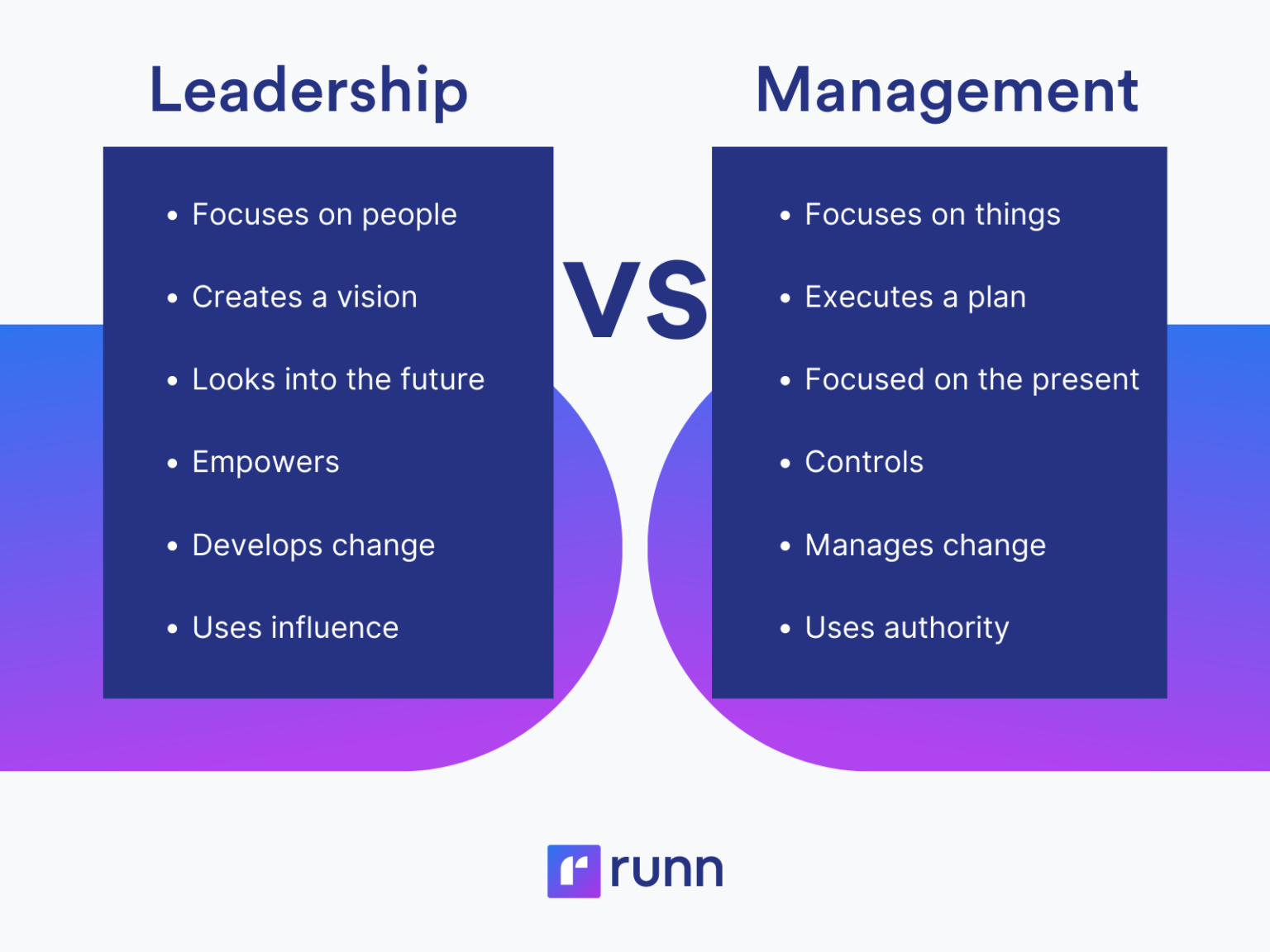
A manager is a specific job within an organization’s structure, while the term leader has a more vague definition. Leadership is demonstrated through actions that inspire others to perform at their best, regardless of title or position. In contrast, a manager is a job title that comes with a set of responsibilities.
II. Similarities Between Leadership and Management
Management and leadership have many similarities. Both involve setting goals, devising strategies to achieve them, and monitoring progress. They also require collaboration, effective communication, decision-making, problem-solving, strategic thinking, and accountability. Managers and leaders are responsible for gathering information, evaluating options, and making decisions that benefit their team or company. They must also take responsibility for their actions and be transparent about them. Overall, successful leadership and management require a combination of these skills because they share many important qualities.
Conclusion
Leadership and management are two distinct concepts that have different functions. While both leaders and managers aim for the success of their teams, they approach the path to success differently. They can be compared to two separate lines that contribute unique elements to the overall picture. Although there may be some areas of overlap, they never fully merge into one. This article will delve into the reasons behind this distinction.