


Lesson 5 – How to Identify Perpendicular Lines
Introduction
Understanding the concept of perpendicular lines is fundamental to geometry and plays a significant role in various real-world applications. Perpendicular lines are a special relationship between two lines that meet at a right angle, forming a 90-degree angle between them. Identifying perpendicular lines is essential for solving geometric problems, designing structures, and analyzing the relationships between different elements in both mathematical and practical contexts. In this lesson, we will explore the characteristics of perpendicular lines, learn how to identify them using different methods, and discover the significance of this concept in geometry and beyond.
I. Definition of Perpendicular lines and parallel lines
1. What is a Perpendicular line?
Perpendicular is one of the most common lines in Mathetics used to measure and calculate.
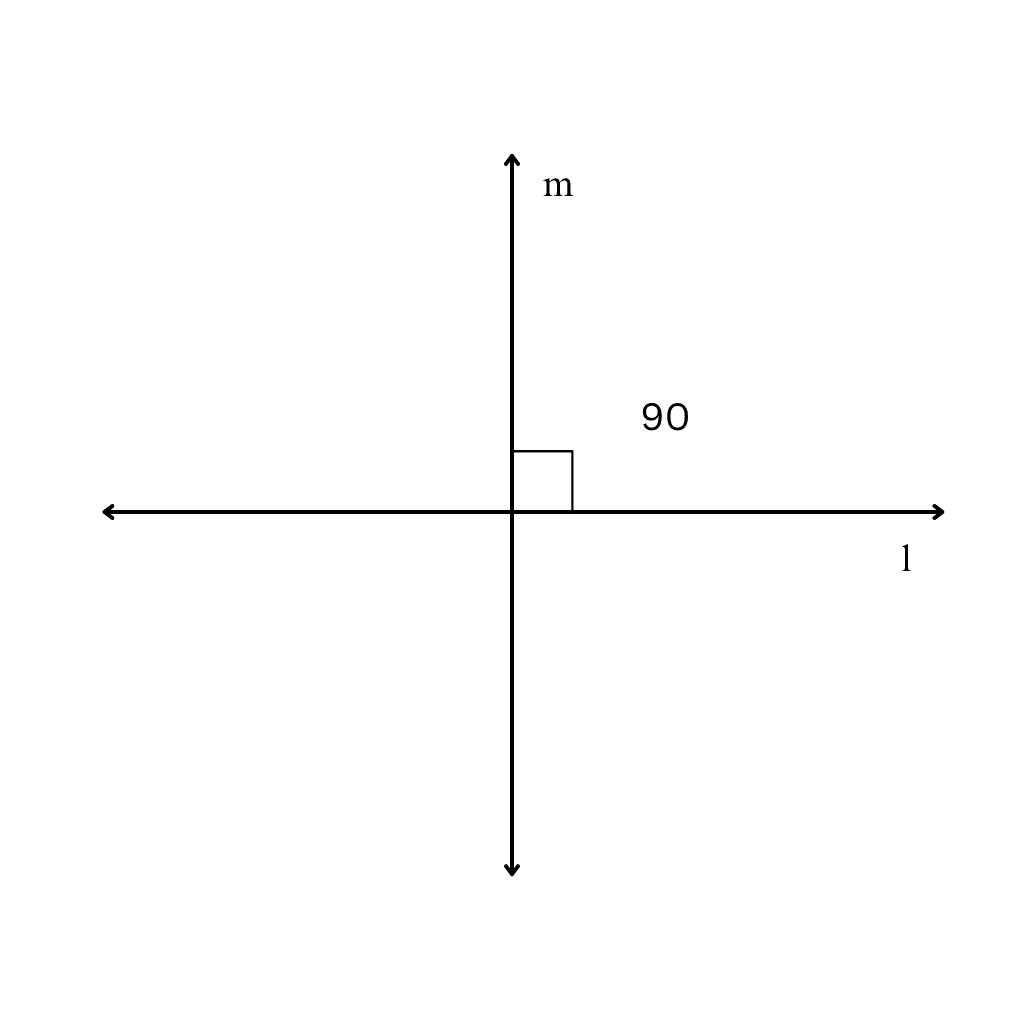
- Perpendicular lines are formed by straight lines that stretch and have no bounds on the same or different planes.
- Perpendicular lines are the two intersecting lines that form a 90-degree angle.
A line is considered perpendicular to the plane when it is perpendicular to all of the plane’s points or perpendicular to every line it encounters in the plane. A pair of planes are said to be vertical in space if their dihedral angle of intersection is a right angle.
Perpendicular lines, such as corners, tables, chairs, and rulers, are widely applied in life and appear around us.
2. What is a Parallel line?
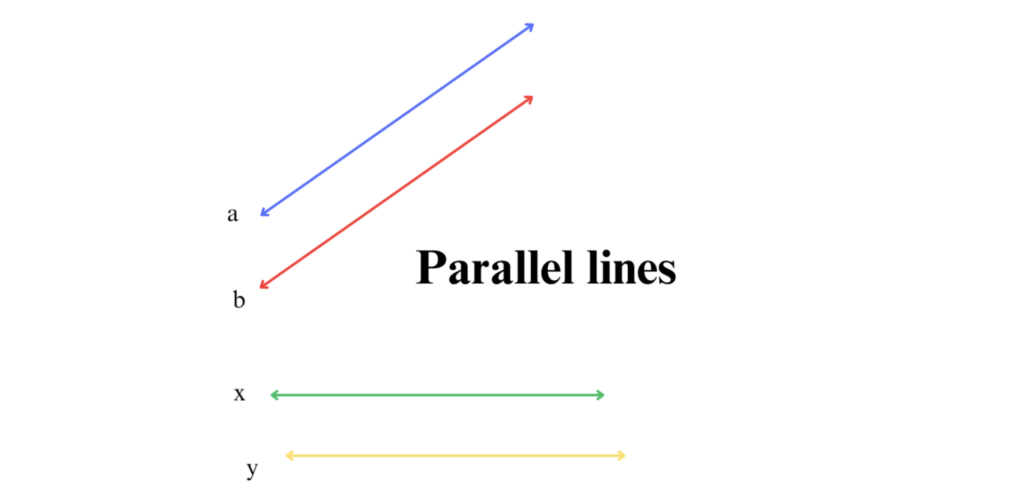
Parallel lines are lines that do not have a common point; in other words, they are lines that do not intersect.
II. Characteristic of perpendicular lines
1. Perpendicular symbol
The symbol of two perpendilines is ‘⊥. ‘Assuming the line l1 intersects the line l2 to form a 90-degree angle, it will be represented as l1⊥l2. The term “foot of the perpendicular.”
2. Perpendicular Lines' Qualities
In mathematics, lines that cross one another are not always perpendicular. If the intersecting lines satisfy the following conditions, they are said to be perpendicular lines. The following are the two primary characteristics of perpendicular lines:
- The intersection of perpendicular lines is always at a right angle.
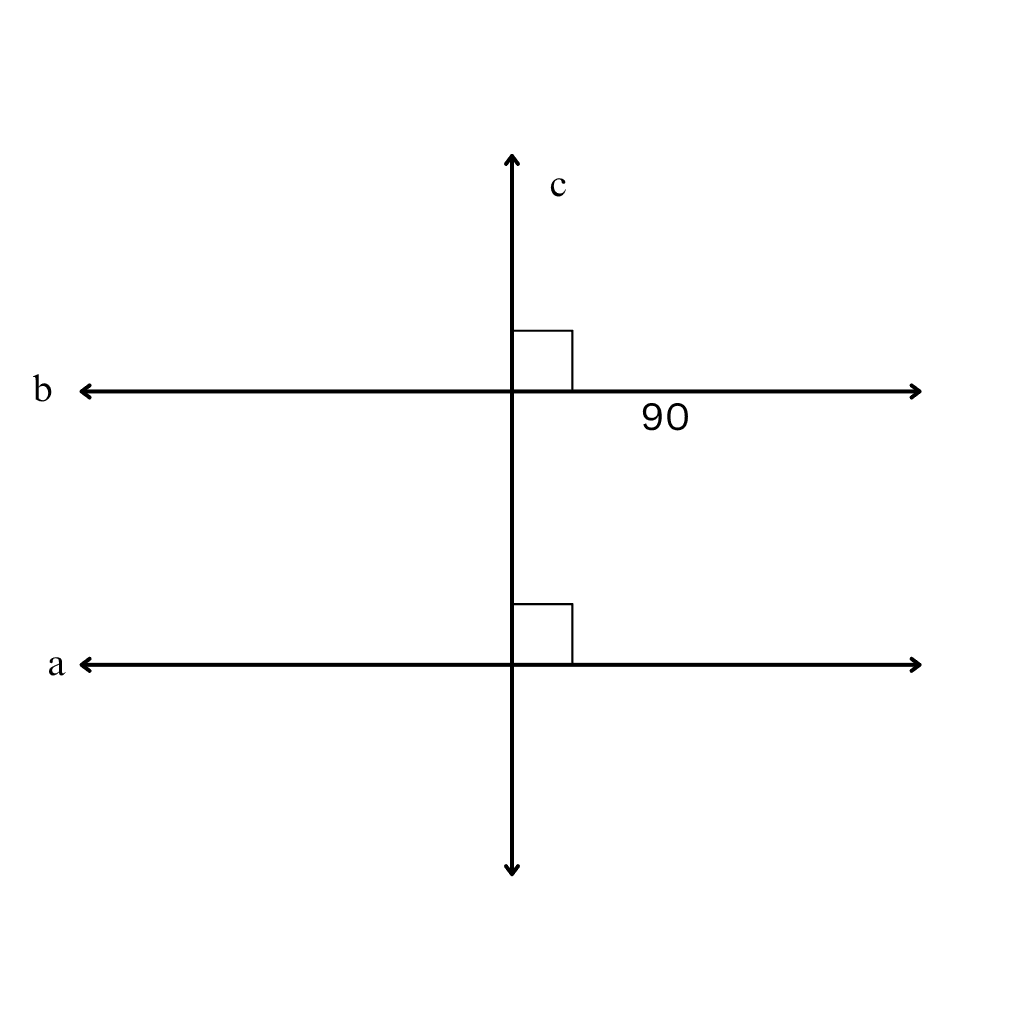
- Two lines are always parallel if perpendicular to the same line.
3. Perpendicular lines’ slope
Only when the slope products of two lines equal negative ones are they considered perpendicular to one another.
The formula for the slope of the perpendicular: m1.m2 = -1
4. The relationship between perpendicular lines and parallel lines
Two parallel lines are two lines that lie in the same plane and have no point in common.
If the line is perpendicular to 1 of the pair of parallel lines, the other line is vertical.
If two lines are perpendicular to the 3rd line, they are parallel.
5. Example
Giving two lines, one line goes through the points (0, –4) and (–1, –7), and the other goes through the issues (3, 0) and (–3, 2). Are these two lines parallel or perpendicular?
Solution:
The slope of the first line is
m1 = (-7+4)/-1 = -3/-1 = 3
m2 = (2-0)/(-3-3) = 2/(-6) = -⅓
Since m1 ≠ m2, thus, lines are not parallel.
m1.m2 = 3 x (-⅓) = -1
In conclusion, the two lines are perpendicular.
What is the formula for the perpendicular line to 4x−3y=6 through the point (4,6)?
According to the theory, Perpendicular lines have opposing reciprocals for their slope
Writing in slope-intercept form, we have:
y = (4/3)x – 2
Thus, the slope of the line 4x−3y=6, m = 4/3
The slope of the line perpendicular to the given line is (-¾).
Using the coordinates of the point (4,6) and putting the given equation, we have;
6 = (-¾) (4) + b
b = 9
Therefore, the required equation of a perpendicular line is given by:
y = (-¾) x + 9
IV. FAQ
1. What are perpendicular lines
Perpendicular lines are two lines that intersect at a right angle, forming a 90-degree angle between them. The equality of opposite angles characterizes this special geometric relationship.
2. How do I determine if lines are perpendicular?
To identify if two lines are perpendicular, check if the slopes of the lines are negative reciprocals of each other. If the product of their slopes is -1, the lines are perpendicular.
3. What is the slope-intercept form of a line?
The slope-intercept form of a line is given by y = mx + b, where “m” represents the slope of the line, and “b” is the y-intercept (the point where the line crosses the y-axis).
Conclusion
Perpendicular lines appear everywhere: houses, appliances, etc., and are applied in most technical disciplines such as graphic design and construction…. They are not only theories but also effectively utilized in all professions to serve people’s lives. This lesson has compiled all the essential information about perpendicular lines.