


Lesson 4 – Postzygotic Reproductive Barriers
Introduction
Postzygotic reproductive barriers play a crucial role forming distinct species by preventing the production of viable, fertile offspring between individuals from different populations or species. These barriers occur after fertilization and affect hybrid offspring’s development, survival, or reproductive capacity. They contribute to reproductive isolation and reinforce genetic and phenotypic differences, promoting the evolution of separate lineages. In this article, we will learn about the concept, classification, and specific examples for each type of postzygotic reproductive barrier.
I. Definition of postzygotic reproductive barriers
Postzygotic reproductive barriers occur after fertilization when individuals from different populations or species mate and produce offspring. These barriers prevent the production of healthy, fertile offspring and play a vital role in maintaining reproductive isolation and promoting the formation of distinct species.
Unlike barriers that prevent mating or fertilization, postzygotic barriers affect hybrid offspring’s development, survival, or reproductive ability. They arise from genetic differences between populations or species, such as variations in gene regulation or DNA sequences.
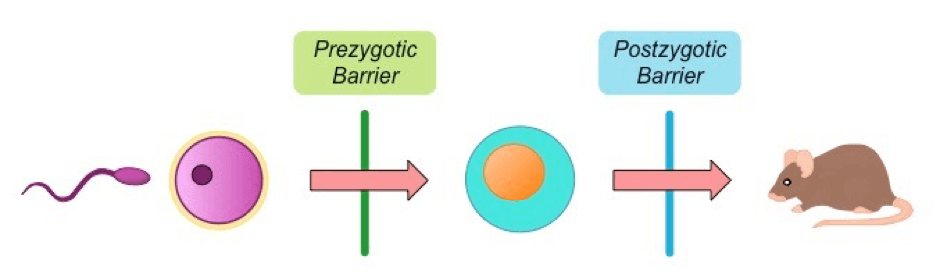
Postzygotic barriers limit the exchange of genetic material between populations or species by reducing the fitness or reproductive success of hybrid offspring. They reinforce the genetic and phenotypic differences that have accumulated during the process of divergence, contributing to the evolution of separate lineages and the formation of distinct species.
It’s important to note that postzygotic barriers often work alongside prezygotic barriers, such as behavioral or ecological barriers, to strengthen reproductive isolation and prevent gene flow. The combined action of prezygotic and postzygotic barriers is significant in the speciation and development of life’s diversity.
II. Types of postzygotic reproductive barriers
There are three main types of the postzygotic obstacles:
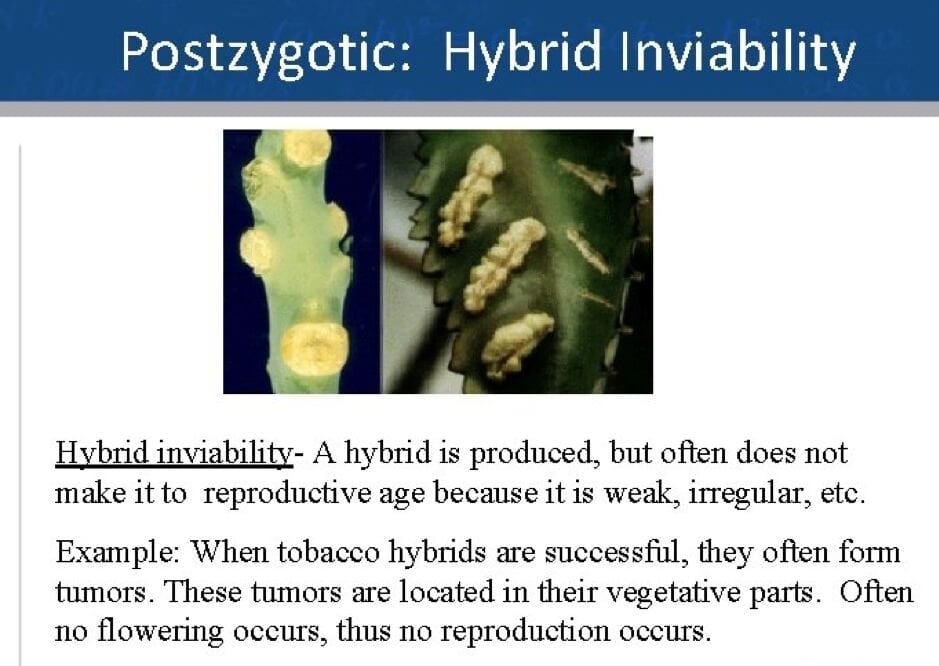
1. Hybrid Inviability
This occurs when the hybrid zygote is formed but fails to develop properly, leading to inviable or nonviable offspring. Genetic differences between the parental populations or species can cause developmental abnormalities or physiological issues that prevent the hybrid from surviving to reproductive age. These abnormalities may affect crucial processes such as the formation of organs or the functioning of essential biological systems, making the hybrid inviable.
Genetic incompatibilities arise when the hybrid’s genetic makeup combines genetic material from distinct parental populations or species. These differences may lead to disruptions in crucial developmental processes, affecting the formation of organs and the functioning of essential biological systems. Such abnormalities can seriously harm the hybrid’s survival and reproduction ability.
One form of hybrid inviability could be seen in cases where vital developmental genes do not interact harmoniously in the hybrid. Consequently, the proper formation of organs or tissues may be impeded, leading to severe developmental defects. These defects could manifest as malformed or non-functional organs, rendering the hybrid incapable of leading a healthy life.
Moreover, hybrid inviability can also be attributed to abnormalities in genetic regulators that govern essential cellular processes. Incompatibilities in these genetic mechanisms can cause abnormal cellular functions, leading to detrimental effects on the hybrid’s overall health and viability.
Additionally, genetic differences may affect the expression of genes involved in reproductive processes, such as those responsible for gamete formation, fertilization, or embryo development. Disruptions or incompatibilities in these genetic mechanisms can hinder the hybrid’s ability to reproduce successfully, leading to nonviable offspring or sterile hybrids.
The severity and nature of the developmental abnormalities or physiological issues observed in the hybrid depend on the extent of genetic divergence between the parental populations or species. The more significant the genetic disparities, the more severe the negative impacts on the hybrid’s development and survival.
Solving these issues is challenging since they arise from fundamental genetic incompatibilities. As such, there is no straightforward solution to prevent hybrid inviability. However, it is essential to recognize the role of postzygotic reproductive barriers in maintaining species integrity and biodiversity. From an evolutionary perspective, hybrid inviability acts as a mechanism to prevent blending of distinct populations or species into a single gene pool.
2. Hybrid Sterility
In hybrid sterility, the hybrid offspring are viable but unable to produce functional gametes, rendering them infertile. Gametes are the specialized reproductive cells, such as sperm and eggs, necessary for sexual reproduction. For a hybrid to be fertile and capable of reproducing, it must produce viable gametes that can successfully fuse with gametes from another individual to form viable offspring.
The mutation or genetic incompatibility responsible for hybrid sterility occurs at the genetic level, impacting the development of reproductive organs or the processes involved in gamete production. In sexually reproducing organisms, forming functional gametes is a complex and finely regulated process. Genetic differences between the parental genomes can lead to disruptions in this process for hybrids resulting from the mating of individuals from different species or populations.
One common scenario is that the hybrid’s reproductive organs, such as the testes or ovaries, fail to develop or function properly due to genetic incompatibilities. As a result, the hybrid cannot produce mature and viable gametes. Alternatively, even if the reproductive organs develop correctly, the genetic incompatibilities may affect the expression or function of genes involved in gamete production. This can result in the production of non-functional opeopler defective gametes, rendering the hybrid infertile.
The genetic incompatibilities that lead to hybrid sterility are often the result of evolutionary divergence between the parental populations or species. Over time, geographically or reproductively isolated populations can accumulate genetic differences through natural selection, genetic drift, or other evolutionary processes.
When individuals from these distinct populations mate and produce hybrids, the combination of genetically divergent genomes can disrupt the intricate operations of gamete formation.
It is important to note that hybrid sterility is a postzygotic reproductive barrier, meaning it occurs after the formation of the hybrid zygote (fertilized egg). Unlike prezygotic barriers that prevent the formation of hybrids altogether, postzygotic barriers like hybrid sterility allow combinations to develop but hinder their ability to reproduce successfully.
From an evolutionary standpoint, hybrid sterility plays a vital role in maintaining the integrity of species and preventing the merging of distinct gene pools. It serves as a mechanism that reinforces the boundaries between different populations or species, preserving biodiversity and promoting species diversification. Understanding the genetic basis of hybrid sterility can provide valuable insights into the complexities of reproductive isolation and the factors shaping the diversity of life on Earth.
3. Hybrid Breakdown
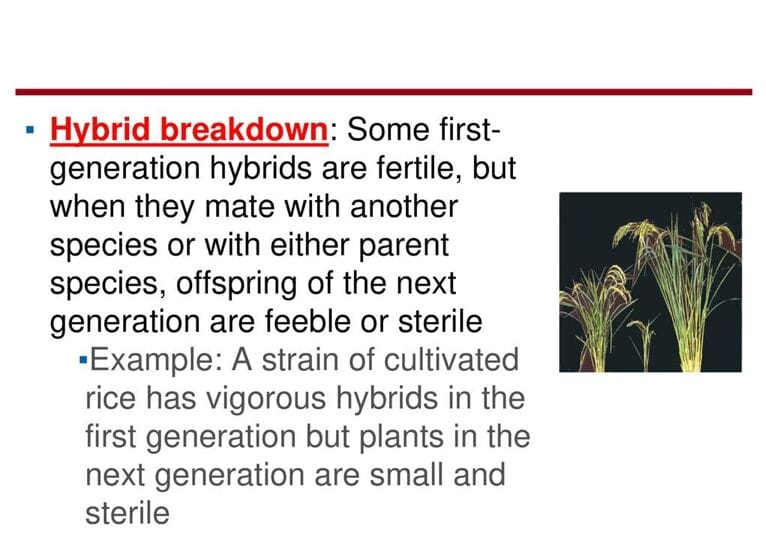
Hybrid breakdown occurs when the first-generation hybrids (F1) are viable and fertile, but subsequent generations (F2 or backcrosses) have reduced viability or fertility. In these cases, genetic incompatibilities between the parental populations or species become more pronounced or accumulate over generations. This leads to increased developmental abnormalities, reduced survival rates, or decreased fertility in the hybrid descendants.
III. Examples
The following are practical instances of each type of postzygotic reproductive barrier:
1. Hybrid Inviability
One example of hybrid inviability is the offspring produced by mating a polar bear and a grizzly bear, known as “pizzly” or “grolar” bears. These hybrids have been observed in the wild and captivity. While the hybrid cubs are born alive, they often have a high mortality rate and do not survive to adulthood. This reduced viability prevents the successful establishment of a stable hybrid population.
2. Hybrid Sterility
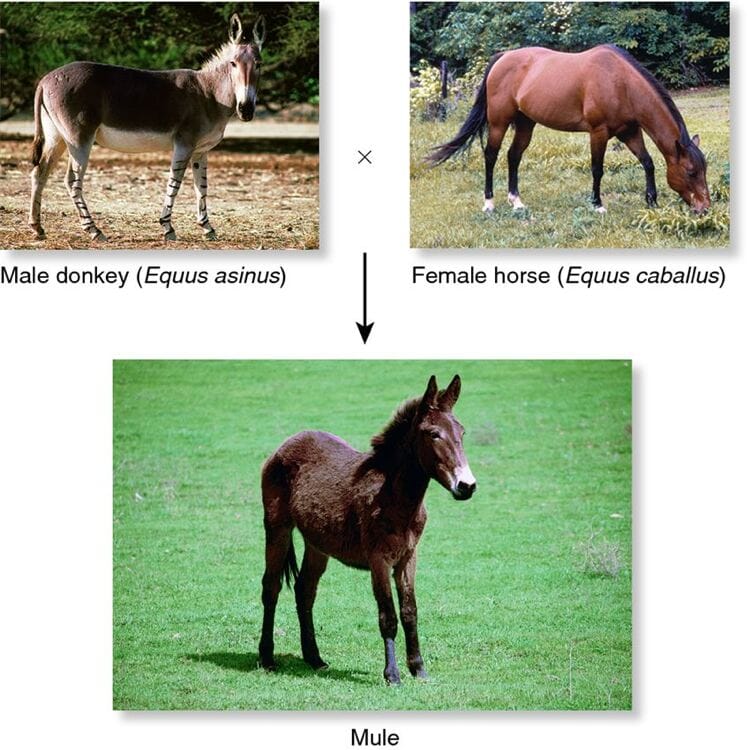
A classic example of hybrid sterility is mules, the offspring of a male donkey and a female horse. While mules are typically healthy and strong, they are almost always sterile and unable to produce viable offspring. This is due to differences in the number of chromosomes between donkeys and horses, which leads to problems during meiosis and the formation of gametes, resulting in infertility.
3. Hybrid Breakdown
An example of hybrid breakdown can be seen in cultivated rice. When certain varieties of rice are hybridized, the first generation of hybrids (F1) often performs well in terms of yield and vigor. However, when these F1 hybrids are allowed to interbreed or self-pollinate to produce subsequent generations (F2 and beyond), there is a noticeable decrease in fitness, such as reduced fertility, lower yield, and increased susceptibility to diseases. This phenomenon is known as a hybrid breakdown.
Conclusion
In conclusion, postzygotic reproductive barriers are important mechanisms that occur after fertilization and contribute to reproductive isolation and speciation. Hybrid inviability, hybrid sterility, and hybrid breakdown are examples of postzygotic barriers that limit the production of viable, fertile offspring. These barriers and prezygotic barriers help maintain species boundaries and shape the diversity of life on Earth. Understanding postzygotic barriers deepens our knowledge of how new species arise and how reproductive isolation is maintained, providing valuable insights into the complex processes of evolution.