


Chapter 1, Lesson 4
In Progress
Lesson 4 – Leon Battista Alberti
Chapter Progress
0% Complete
Introduction
Welcome to Lesson 4 of our exploration into the Renaissance, where we turn our attention to the multifaceted genius, Leon Battista Alberti. Born in 1404, Alberti’s life was a tapestry woven with threads of architecture, art, philosophy, and humanism, making him a central figure in the intellectual ferment of the Renaissance.
In this lesson, we will uncover the layers of Alberti’s contributions, delving into his architectural innovations, artistic endeavors, and philosophical musings. As we navigate the intricacies of his life and works, we’ll discover how Alberti’s ideas transcended disciplinary boundaries, leaving an indelible mark on the cultural landscape of the Renaissance and beyond.
I. Biography of Leon Battista Alberti
1. Early Life and Education:
Leon Battista Alberti was born on February 14, 1404, in Genoa, Italy, into a well-established Florentine family. Following the death of his parents, he was raised by his uncle, who recognized Alberti’s intellectual potential and provided him with a solid education.
Alberti studied the classics, literature, and the arts, displaying an early aptitude for learning. His education included exposure to humanist ideas, which would greatly influence his later work. He attended the University of Bologna, where he studied law, a field that would become one of his early professional pursuits.
2. Involvement in Various Fields:
Alberti’s intellectual curiosity extended beyond law, leading him to explore diverse fields. He excelled in mathematics, making significant contributions to the understanding of perspective in art. His mathematical interests influenced his architectural endeavors, contributing to his groundbreaking ideas on proportion and symmetry.
In the realm of philosophy, Alberti embraced humanism, a cultural and intellectual movement that focused on the revival of classical knowledge. His engagement with classical studies not only shaped his philosophical outlook but also influenced his approach to architecture and art.
Alberti’s versatility as a scholar and practitioner extended to literature, where he wrote plays, poetry, and dialogues. His multifaceted interests and expertise positioned him as a true Renaissance polymath, embodying the era’s ideals of well-rounded knowledge and skills.
Overall, Alberti’s early life and diverse education laid the foundation for his later contributions to fields as varied as architecture, mathematics, philosophy, and literature, making him a central figure in the cultural and intellectual landscape of the Italian Renaissance.
II. Architecture in the Renaissance
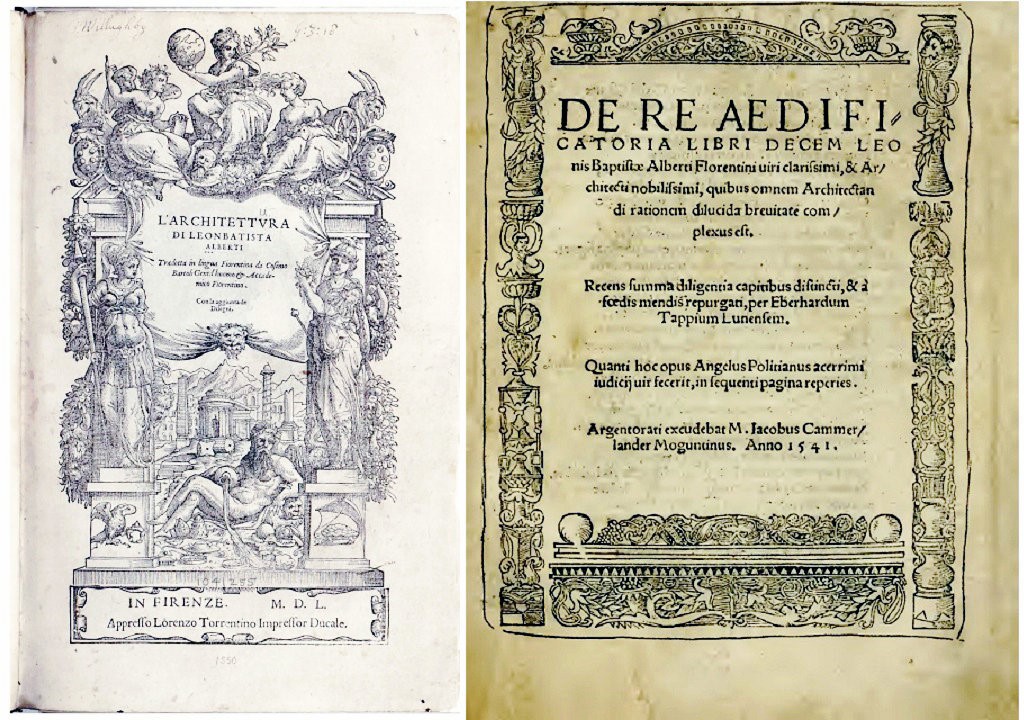
De re aedificatoria
Leon Battista Alberti’s influence on Renaissance architecture is profound, largely attributed to his seminal work, “De re aedificatoria” (On the Art of Building). Published in 1452, this architectural treatise became a fundamental text that guided architects and builders throughout the Renaissance and beyond.
1. "De re aedificatoria":
- The treatise is a comprehensive work that encompasses a wide range of architectural principles and practices. Alberti draws inspiration from classical sources, particularly the Roman architect Vitruvius, seeking to revive the classical ideals of proportion, order, and harmony in architecture.
- "De re aedificatoria" covers various aspects of architecture, including design, construction, materials, and aesthetics. Alberti addresses not only the technical aspects of building but also the ethical and intellectual dimensions of the architect's role.
2. Impact on Renaissance Architecture:
- Alberti's treatise significantly influenced the architectural thinking of the Renaissance. Architects and builders embraced his ideas, leading to a departure from the medieval Gothic style and a return to classical forms.
- His emphasis on the use of mathematical proportions and ratios, derived from classical architecture, contributed to the creation of harmonious and balanced structures. This approach marked a departure from the more arbitrary and asymmetrical designs of the Gothic period.
- "De re aedificatoria" also promoted the idea that architecture should reflect the ideals of the society it serves. This alignment of architecture with humanist principles became a hallmark of Renaissance design.
3. Ideas on Proportion, Symmetry, and Classical Elements:
- Proportion and Symmetry: Alberti stressed the importance of proportion as a means of achieving beauty and harmony in architecture. He advocated for the use of mathematical ratios, such as the golden ratio, to create visually pleasing and balanced designs. Symmetry, another classical principle, played a crucial role in his architectural philosophy.
- Revival of Classical Elements: Alberti aimed to revive classical Roman architectural elements, such as columns, arches, and domes. He sought to integrate these elements into contemporary structures, blending the classical past with the evolving needs of Renaissance society.
In summary, Alberti’s “De re aedificatoria” not only encapsulated the spirit of Renaissance architecture but also provided a guide that shaped the practices of architects for centuries. His ideas on proportion, symmetry, and the revival of classical elements became foundational principles, influencing the development of Western architectural aesthetics.
III. Architecture in the Renaissance
The Palazzo Rucellai (c. 1445–51) and the front of Santa Maria Novella (1456–70), both located in Florence, are renowned for their harmonious proportions as depicted in Leon Battista Alberti’s drawings. The church of Sant’Andrea in Mantua, which was started in 1472, is a prime example of early Renaissance architecture. It features a central-plan design and incorporates a triumphal-arch theme, making it a masterpiece of its day. Alberti, a prominent Renaissance architect and art theorist, is renowned for his systematic formulation of the principles of linear perspective, as documented in his work “On Painting” in 1436. Exemplifying the characteristics of a Renaissance man, he additionally produced notable advancements in moral philosophy, cartography, and cryptography.
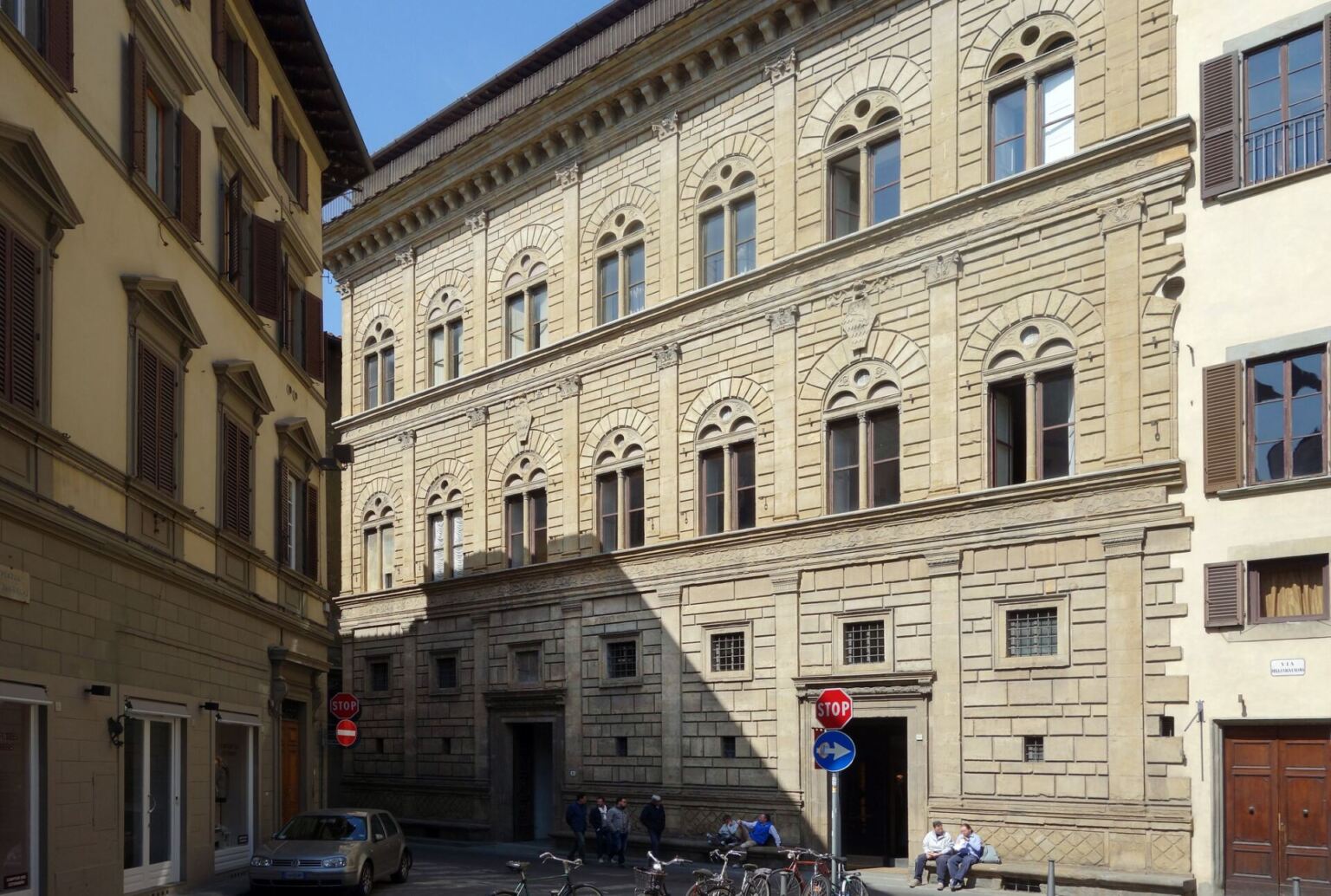
The Palazzo Rucellai
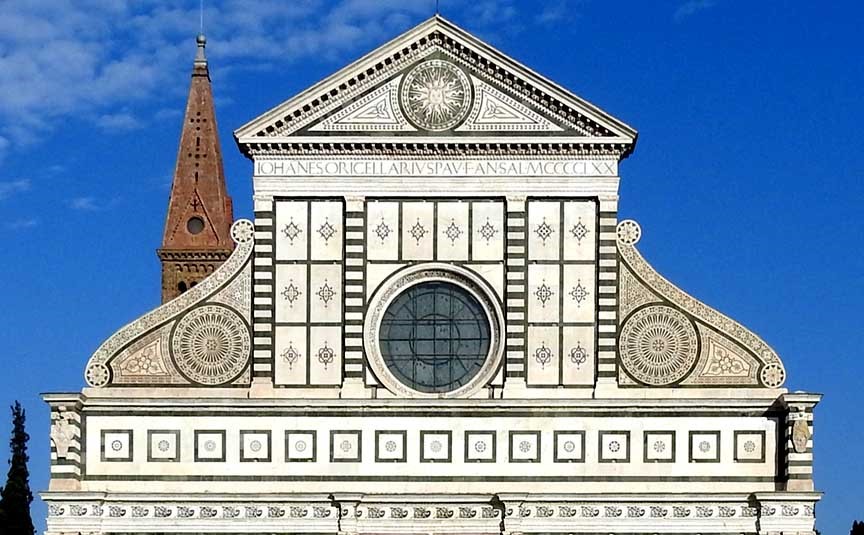
Santa Maria Novella
FAQs
1. Who was Leon Battista Alberti?
Leon Battista Alberti (1404-1472) was an Italian architect, artist, writer, and polymath of the Renaissance. He made significant contributions to various fields, including architecture, art theory, mathematics, and literature.
2. What are some of Alberti's notable architectural works?
Alberti’s architectural masterpieces include the Basilica di Sant’Andrea in Mantua and the Tempio Malatestiano in Rimini. He is also known for his writings on architecture, particularly in his treatise “De re aedificatoria” (On the Art of Building).
3. What is "De re aedificatoria"?
“De re aedificatoria” is Alberti’s seminal work on architecture, written in Latin. It is one of the first comprehensive treatises on the subject, covering various aspects of architecture, from principles of design to construction techniques.
4. What are some key principles of Alberti's architectural theory?
Alberti emphasized the importance of harmony, proportion, and symmetry in architecture. He drew inspiration from classical Roman and Greek architecture, advocating for a revival of ancient architectural principles.
5. How did Alberti contribute to art theory?
Alberti’s work “Della Pittura” (On Painting) is a foundational text in art theory. It explores the principles of perspective and provides guidelines for painters, influencing the development of Renaissance art.
Conclusion
Alberti’s architectural treatise, “De re aedificatoria,” emerged as a cornerstone of Renaissance architecture, guiding practitioners toward a revival of classical ideals. His emphasis on mathematical proportions, symmetry, and a return to classical elements reshaped the built environment, fostering structures that were not only functional but also harmonious and aesthetically pleasing.
As we conclude this lesson, we recognize Leon Battista Alberti as a true Renaissance polymath whose interdisciplinary approach epitomized the era’s spirit of curiosity and intellectual exploration. The principles elucidated in this lesson not only provide insights into Alberti’s contributions but also serve as a lens through which we can appreciate the broader cultural and intellectual landscape of the Renaissance. Alberti’s legacy endures as an enduring testament to the transformative power of ideas in shaping the course of history.