


Lesson 4 – Funerary Beliefs, Practices and Temples in Ancient Egypt
Introduction
Funerary beliefs, practices, and temples played a significant role in ancient Egyptian culture and society. The ancient Egyptians firmly believed in an afterlife and had intricate rituals and ceremonies to ensure the safe journey of the deceased into the next world. Mummification, a common practice, involved preserving the body to guarantee eternal life.
The ancient burial process underwent changes over time, with old customs being abandoned and new ones embraced. However, certain crucial elements remained consistent.
I. Old Kingdom
In the Old Kingdom, kings initially constructed pyramids as their burial sites, along with stone mastaba tombs for their high-ranking officials. The presence of these tombs for royal relatives suggests that these complexes also served as family cemeteries.
Within the upper class, bodies were mummified, wrapped in linen bandages, sometimes covered with molded plaster, and placed in stone sarcophagi or simple wooden coffins. Towards the end of the Old Kingdom, the decorations in the burial chambers depicted offerings, but not individuals.
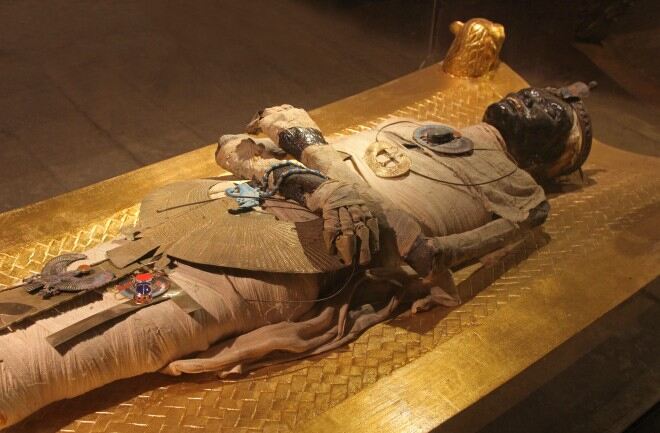
Mummification process
II. Middle Kingdom
Burial customs during the Middle Kingdom were influenced by the political trends of the time. In the Eleventh Dynasty, individuals of lower ranks had simpler tombs. These tombs often contained basic wooden coffins, with the body either mummified and wrapped in linen or simply wrapped without mummification. Additionally, a cartonnage mummy mask was sometimes added to the burial, a practice that continued until the Graeco-Roman period. Some tombs also included wooden shoes and a simple statue near the body.
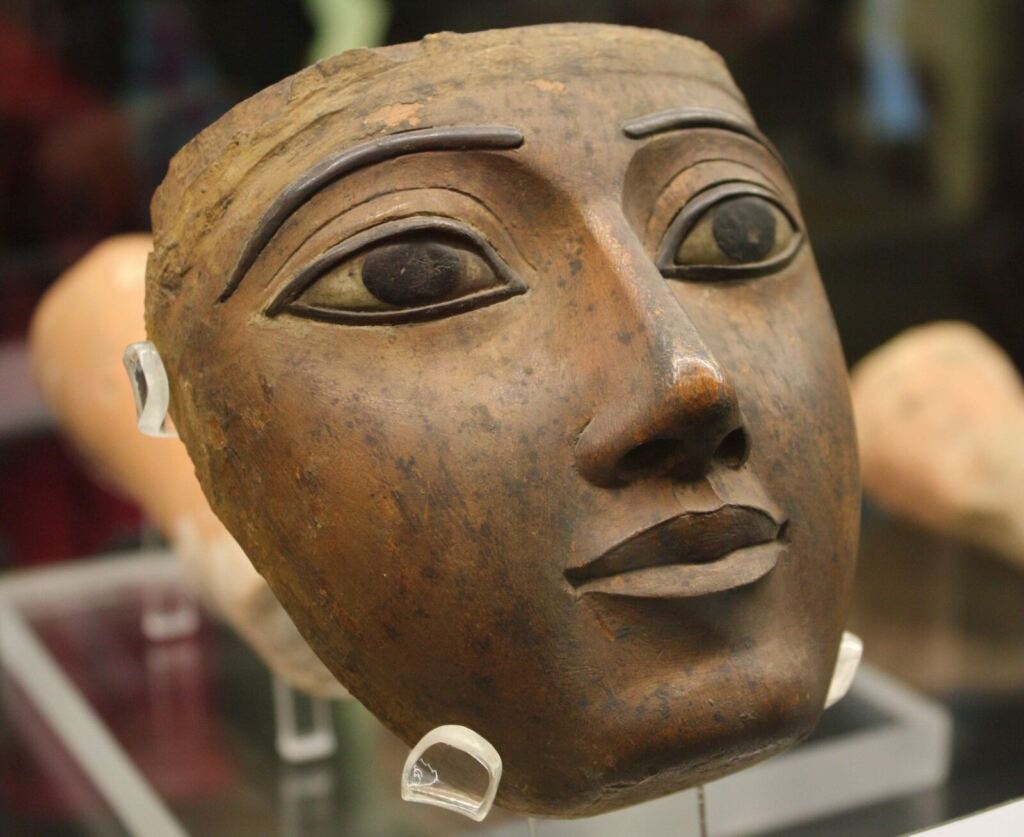
Mask from a coffin
Another notable change during this period was the increase in the number of burials in a single tomb, which was uncommon in earlier times. It appears that families began reusing the same tomb over generations, suggesting a more equal distribution of wealth. Overall, these burial customs reflect the social and economic changes that occurred during the Middle Kingdom.
III. New Kingdom
During the New Kingdom, most elite tombs were chambers that were cut into rocks. Instead of being buried in pyramids, kings were laid to rest in multi-roomed rock-cut tombs in the Valley of the Kings. On the west bank of the Nile, opposite Thebes, priests performed funerary rituals for them in stone temples.
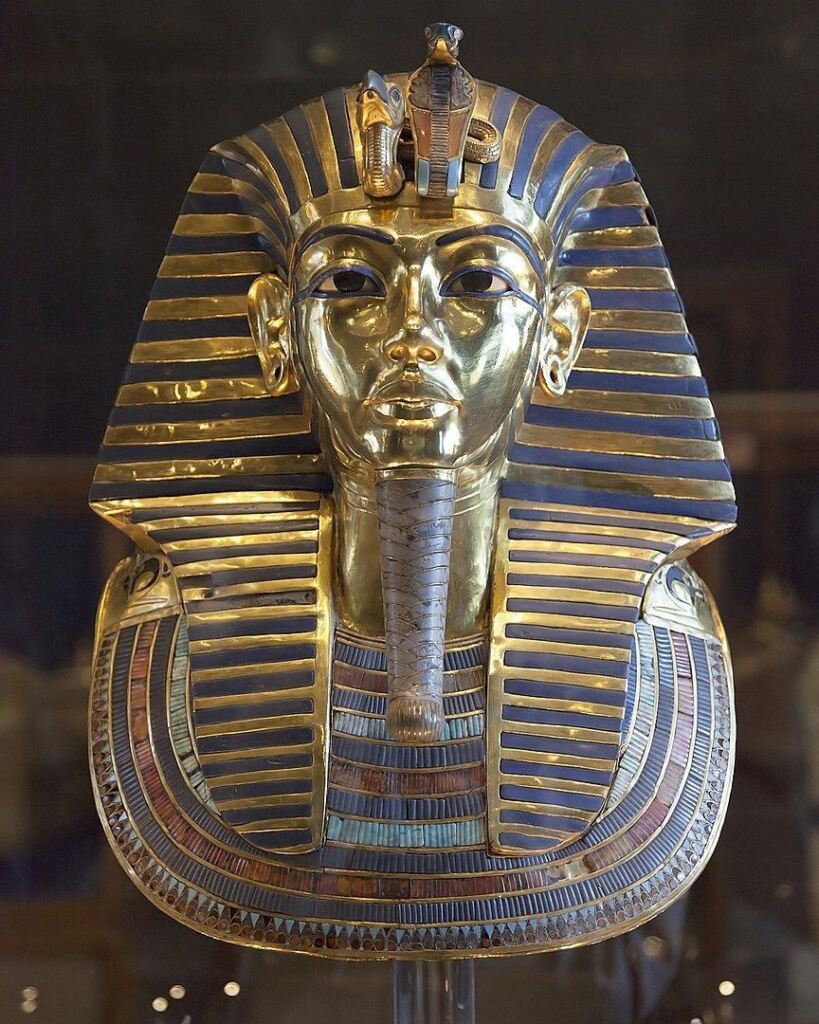
The mask of Tutankhamun
There are no known elite tombs from the Ramesside period that have remained untouched by looting. During this period, artists adorned the tombs of the elite with more depictions of religious events, rather than the everyday scenes that had been popular since the Old Kingdom.
The decorations in these tombs included the funeral ceremony, the funerary meal with multiple relatives, the worship of deities, and even figures in the underworld. The majority of objects discovered in Ramesside tombs were specifically made for the afterlife. Apart from the jewelry, which could have also been used in life, the objects in these tombs were created for the next world.
Conclusion
In summary, funerary beliefs, practices, and temples held great importance in ancient Egyptian culture and society. The ancient Egyptians firmly believed in an afterlife and conducted intricate rituals and ceremonies to guarantee the safe journey of the deceased into it. These funerary beliefs, practices, and temples not only demonstrate the profound religious convictions of the ancient Egyptians but also their commitment to providing for the deceased in the afterlife and securing their eternal existence.