


Lesson 4 – European Colonization
Introduction
The era of European colonization marked a significant turning point in world history, with explorers like Christopher Columbus paving the way for encounters between the Old World and the New World. However, this chapter in history also carries a darker side, as the arrival of Europeans had profound consequences for the Native American populations.
In this lesson, we will delve into the impact of European colonization, focusing on Christopher Columbus and the Native Americans and examining this historical period’s positive and negative aspects.
I. Conquering Continents: Unveiling the Complex Legacy of Christopher Columbus and the Native Americas
An Italian explorer, Christopher Columbus, embarked on a historic voyage in 1492, discovering the New World and altering human history. Despite initial doubts and challenges, his journey led to the opening of new trade routes and cultural exchanges between Europe and the Americas, leaving a lasting impact on the world.
1. Christopher Columbus: The Explorer's Journey
Christopher Columbus was an Italian explorer, navigator, and colonizer best known for his significant role in connecting the Old World (Europe) with the New World (the Americas). Born in Genoa, Italy, around 1451, Columbus developed a passion for exploration and maritime ventures from a young age. His adventurous spirit and belief in finding a westward route to Asia led him to embark on a journey that would change the course of history.
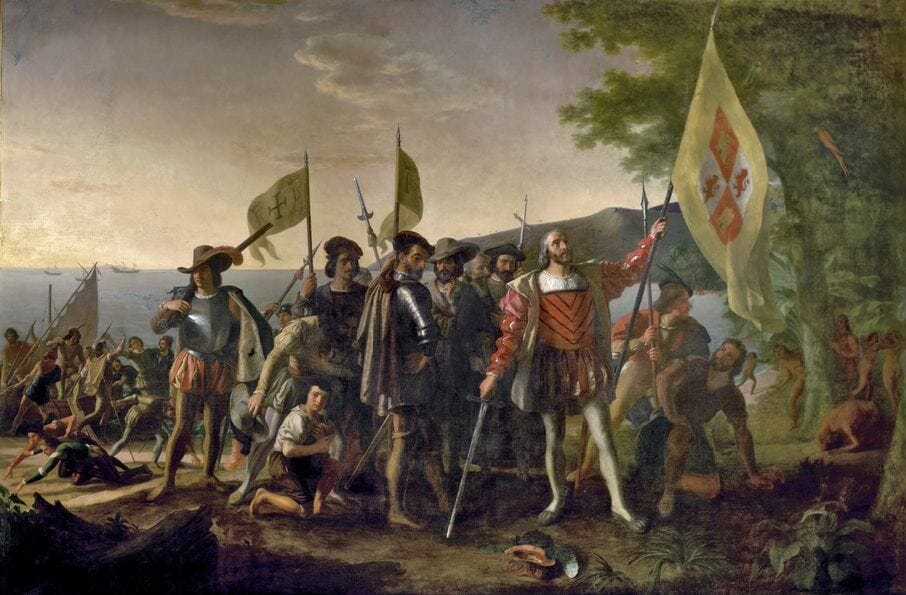
Motivated to find a direct trade route to Asia, Columbus sought the support of various European monarchs to finance his expedition. After several rejections, he finally received backing from Ferdinand II of Aragon and Isabella I of Castile, the Catholic Monarchs of Spain. On August 3, 1492, Columbus set sail from Palos de la Frontera, Spain, with three ships: the Santa Maria (flagship), the Pinta, and the Niña.
After a long and challenging voyage across the Atlantic Ocean, Columbus and his crew sighted land on October 12, 1492. They had reached an island in the present-day Bahamas, believing they had arrived in Asia. Despite realizing he had encountered an unknown land, Columbus continued his exploration, traveling to other Caribbean islands, including Cuba and Hispaniola (now Haiti and the Dominican Republic).
Columbus made four voyages to the Americas between 1492 and 1504. During these journeys, he explored various Caribbean islands, the South and Central American coast, and even present-day Venezuela and Panama. However, it’s crucial to note that Columbus was not the first to reach the Americas, as indigenous peoples had inhabited the region for thousands of years.
Despite his explorations, Columbus’s legacy is complex and controversial. While he opened up a new era of transatlantic exploration and exchange between Europe and the Americas, his expeditions also brought significant consequences for the indigenous populations. The arrival of Europeans led to colonization, the spread of diseases, and the exploitation of native peoples, which resulted in devastating effects on their communities.
Columbus’s accomplishments have been celebrated and commemorated over the centuries, with the United States observing Columbus Day as a federal holiday on the second Monday of October. However, the holiday has been increasingly criticized for glorifying a historical figure associated with the oppression and mistreatment of indigenous peoples. Many places now commemorate Indigenous Peoples’ Day on the same date as an alternative to honor and recognize the cultures and contributions of Native Americans.
2. Initial Encounters: Culture Clash and Misunderstandings
When European explorers first arrived in the Americas, they encountered a vastly different culture and way of life than their own. The Native American societies had developed over thousands of years and were diverse, comprising numerous tribes with unique languages, customs, and traditions. These initial encounters were characterized by a profound culture clash and misunderstandings between the two groups.
Language barriers made communication difficult, leading to misconceptions and misinterpretations. The Europeans often viewed the Native Americans as “uncivilized” or “savages” because their social structures, religious beliefs, and practices differed from European norms. Likewise, Native Americans found it challenging to comprehend the motives and behaviors of the newcomers, who seemed focused on expansion, resource exploitation, and territorial claims.
Cultural misunderstandings also extended to the concept of land ownership. While Native American tribes had their understanding of land usage and shared communal rights to the land, European colonizers had a more individualistic view of land ownership. This fundamental difference in perception further exacerbated conflicts over territory.
3. Impact on Native Americans: Disease and Displacement
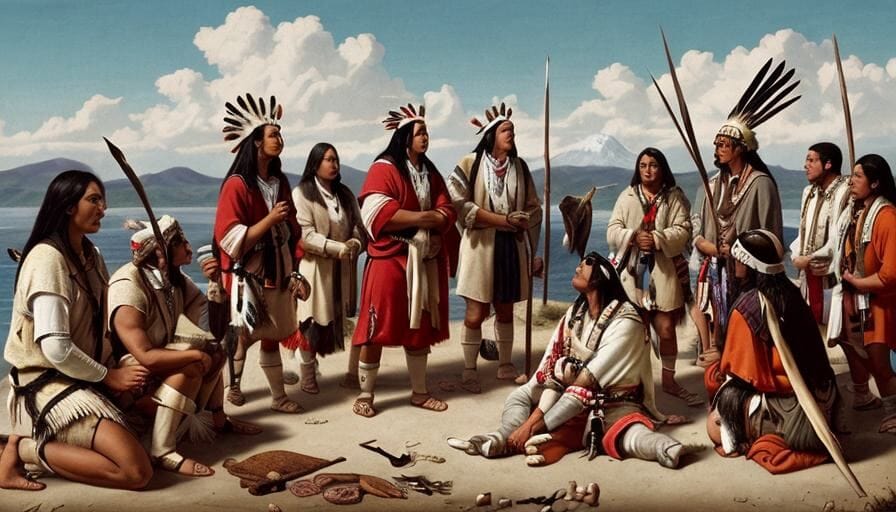
One of the most devastating impacts of European contact on Native American populations was the introduction of diseases to which they had little immunity. Diseases like smallpox, influenza, and measles spread rapidly among Native American communities, leading to catastrophic population declines. Historians estimate that millions of Native Americans perished due to these diseases, with some regions experiencing population losses of up to 90%.
The loss of lives due to disease also weakened Native American societies and made them more vulnerable to European conquest and displacement. As European colonies expanded, they encroached upon Native American lands, leading to violent conflicts and forced removals. Many Native American tribes were displaced from their ancestral territories, disrupting their traditional ways of life and severing their connection to the land.
4. Cultural Exchange and Assimilation:
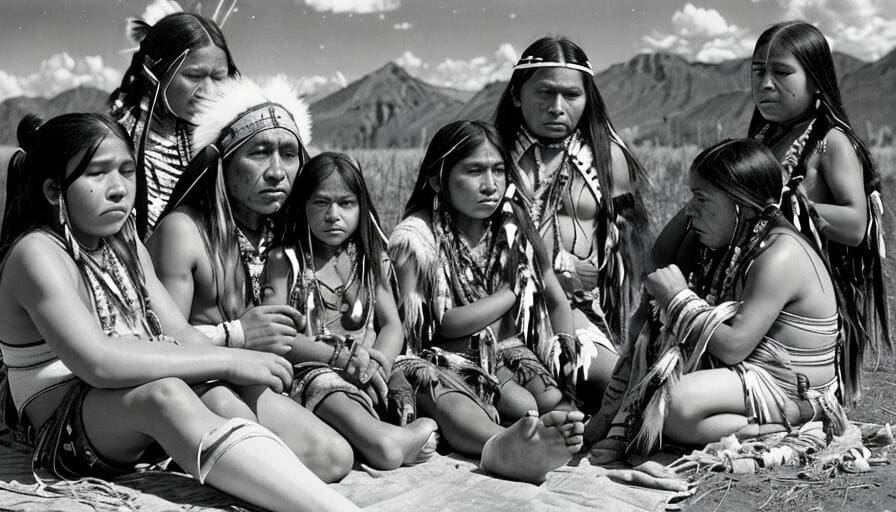
As European settlers established permanent colonies, interactions between the two cultures increased. Through these interactions, there was a degree of cultural exchange. Native Americans and Europeans shared knowledge about agriculture, hunting techniques, and other aspects of daily life. Some Native Americans adopted European technologies and goods, while Europeans also adopted elements of Native American culture.
However, this cultural exchange was not entirely equitable. The dominant power dynamics favored the Europeans, who often imposed their beliefs and customs on Native American communities. Missionaries sought to convert Native Americans to Christianity, and policies aimed at assimilating Native Americans into European-American culture emerged over time.
Assimilation efforts included establishing boarding schools where Native American children were separated from their families and communities, forbidden from practicing their traditions, and forced to adopt European-American customs and language. These policies aimed to strip Native Americans of their cultural identity and force them to assimilate into the dominant Euro-American society.
5. Legacy and Reflections:
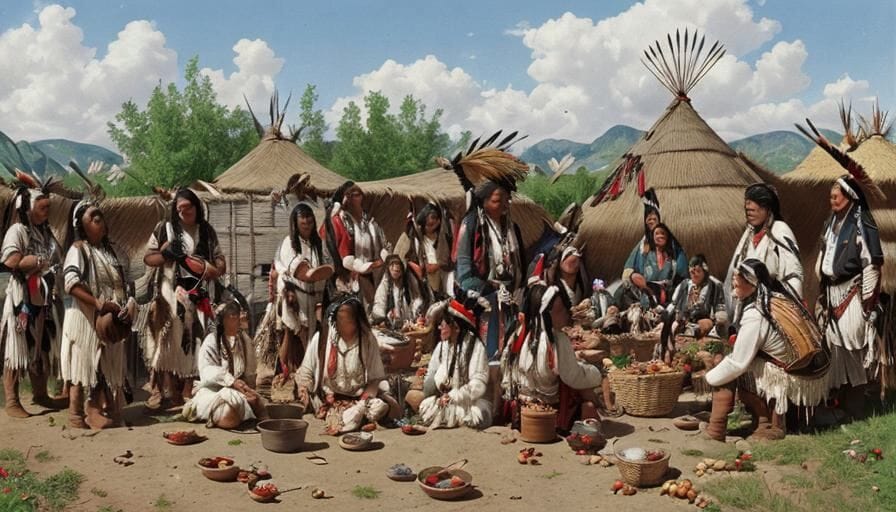
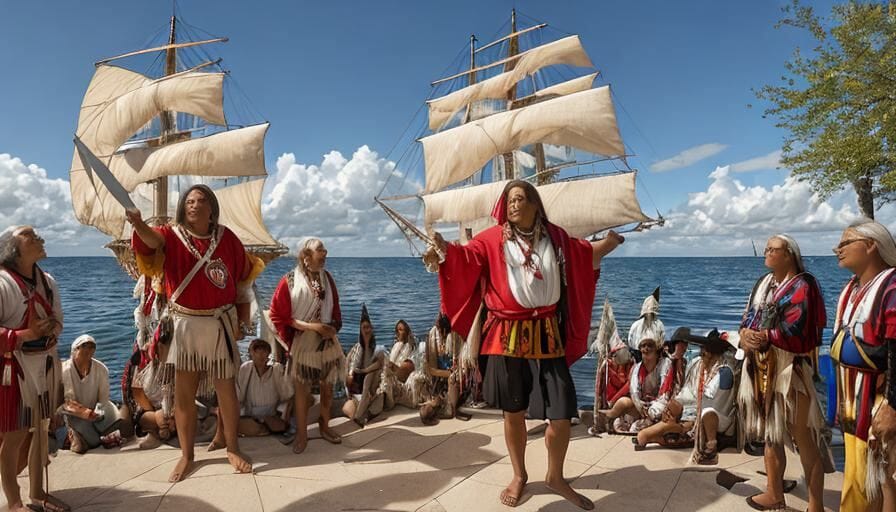
The legacy of Christopher Columbus and European colonization in the Americas is a topic of ongoing debate and reflection. While Columbus is often celebrated for his role in European exploration, there is a growing acknowledgment of the negative consequences that followed, particularly for the Native Americans. This recognition has sparked discussions about the need for a more nuanced understanding of history and reevaluating the narratives surrounding colonization.
6. Impact of Slavery on Native Americans:
While slavery is often associated with the African slave trade, Native Americans were also subjected to enslavement during the European colonization of the Americas. Early European colonists initially attempted to enslave Native Americans. Still, due to their susceptibility to European diseases and the resistance of some tribes, the focus shifted towards African slaves, who were seen as a more viable labor force.
However, Native Americans did become enslaved in various contexts. Some tribes were captured and sold into slavery by rival tribes, while others were forced into labor by European colonists. Additionally, European diseases and displacement indirectly contributed to their enslavement as they weakened Native American populations and left them susceptible to exploitation by more powerful groups.
Over time, the enslaved Native American populations dwindled, and the practice of Native American slavery diminished, particularly as the African slave trade grew in scale. Nonetheless, the history of Native American slavery remains a significant part of the complex interactions and exploitative practices that marked the early colonization of the Americas.
II. Frequently Asked Questions (FAQs):
1. Who was Christopher Columbus, and what was his role in European colonization?
Christopher Columbus was an Italian explorer who traveled across the Atlantic Ocean in the late 15th century. The Spanish monarchy funded his expeditions, and his goal was to find a direct sea route to Asia. Although he never reached Asia, his voyages resulted in the first sustained contact between Europe and the Americas, opening the door to European colonization of the New World.
2. What were some positive outcomes of the encounter between Columbus and the Native Americans?
The encounter between Columbus and the Native Americans led to various positive outcomes. It initiated cultural exchanges, introducing new foods and animals to both continents. European explorers learned navigation techniques from the Native Americans, and indigenous populations acquired new technologies from the Europeans. This period also sparked scientific exploration and advancements in cartography.
3. How did European colonization affect the Native American populations?
European colonization had a devastating impact on the Native American populations. The arrival of Europeans brought diseases to which the indigenous people had no immunity, leading to widespread epidemics and a significant loss of life. Native Americans also faced forced labor, violence, land displacement, and cultural assimilation. The colonization process resulted in the marginalization and decimation of many indigenous communities.
Conclusion
The encounter between Christopher Columbus and the Native Americans during European colonization is a complex and multifaceted chapter in history. It brought positive and negative outcomes, including cultural exchanges, economic expansion, violence, exploitation, and cultural assimilation. Recognizing and understanding this historical period allows us to appreciate the complexities of human interactions, learn from past mistakes, and work towards a more inclusive and respectful future where the voices and rights of all people are valued and protected.