


Chapter 1, Lesson 3
In Progress
Lesson 3 – What is Inference?
Chapter Progress
0% Complete
Introduction
Inference skill is an essential skill for the subject. Especially in literature, good inferring skills help readers infer the meaning of lines and identify clues or hints that are not presented in the text. This lesson will provide insight into the importance of inference skills.
I. Definition & Meaning
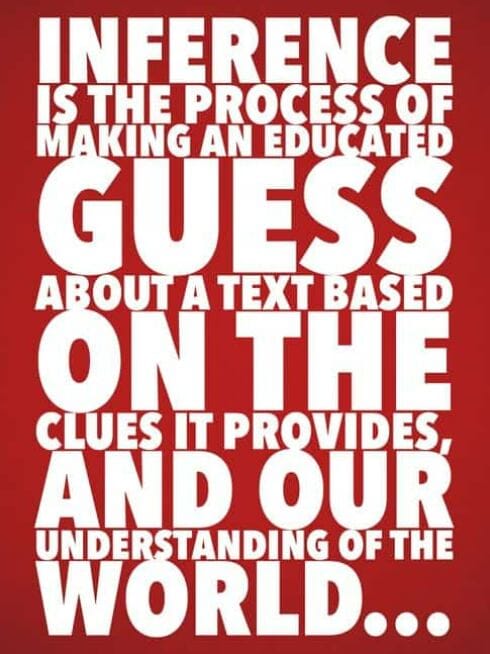
Inference is a noun that means the action or process of coming to a conclusion or forming an opinion based on evidence or known facts. It can also refer to moving from one proposition, statement, or judgment considered accurate to another where the truth is said to obey the previous one.
For example:
Even though there are almost no controlled clinical trials examining the effects of obesity in humans, we can make some inferences from animal studies.
—Patrick Johnson, Skeptical Inquirer, September/October 2005
We cannot see a past event directly. Still, science is usually based on inference, not objective observation (you don’t see electrons, gravity, or black holes either).—Stephen Jay Gould, Wonderful Life, 1989.
II. How to draw conclusions and infer meanings implied in written text.
The term “inference” refers to a conclusion or decision drawn. These steps will help you read between the lines and understand the basic meaning of the text. So keep in mind:
- Read the passage carefully
- Determine the context
- Main ideas, tone, and literary device and use existing knowledge.
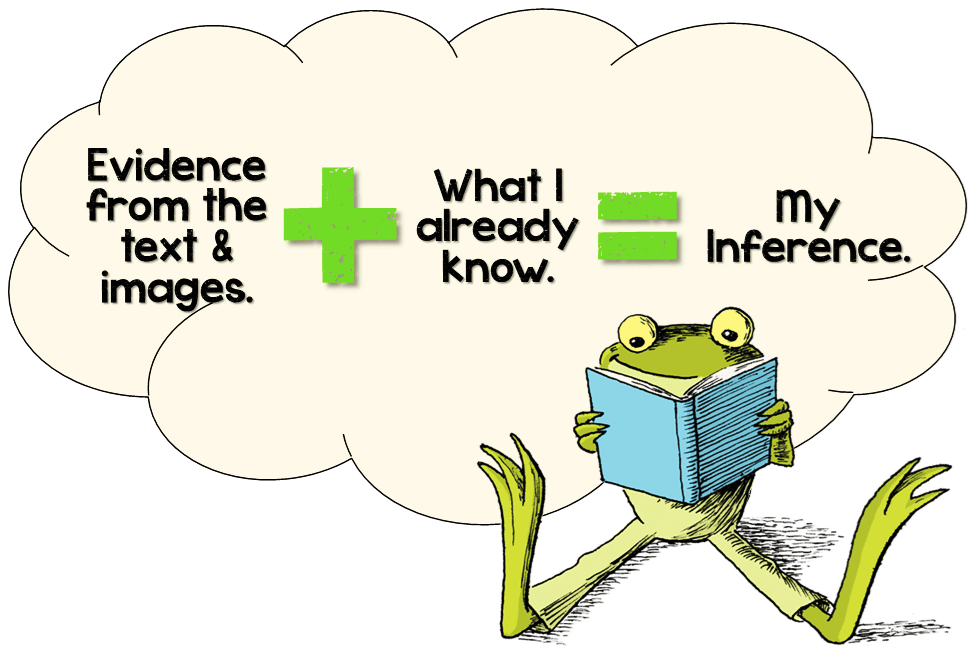
Thus, when inferring will clearly understand the intention of the author that the detail suggests or implies.
The reasoning process often happens in everyday life, often unconsciously, without you even knowing it. You can make inferences about an event you did not directly observe, hear, touch, smell, or taste.
For example, when you smell food, you can tell if it is the smell of a particular food or not; that is inference. You have carefully observed and been knowledgeable about those dishes before, so you can guess what it is just by smelling them.
Similarly, in literature, writers often make suggestions in suggested passages to make it easier for the reader to understand what is directly stated. You must only focus on the hint details to make very good inferences.
III. How to teach a student to infer
You can apply the simplified model to teach inference based on the following assumptions:
- We need to find clues to get some answers.
- We must add those clues to what we already know or have read.
In this model, teachers ask students questions to facilitate inferential discussions. There can be more than one correct answer. The goal is for students to internalize these questions to become aware of — and evaluate — their thinking.
IV. FAQ
1. What is an inference in literature?
Drawing logical conclusions based on information that isn’t explicitly stated in the text is referred to as an inference in literature. It entails deducing implied meanings or speculating about characters, events, or themes using hints, context, and your own understanding.
2. How is inference different from information explicitly stated in the text?
Reading between the lines and drawing conclusions about what the author hasn’t explicitly said is called inference, whereas information that the author directly presents in the text is known as explicit statement.
3. Why do authors use inference in their writing?
Inference is a technique used by writers to engross readers more fully, promote critical thought and add depths of meaning. It enables them to actively contribute to creating the meaning of the story.
4. How do I make accurate inferences?
Consider the scene or situation’s context, the author’s intentions, and the larger themes of the work as you carefully analyze the text, pay attention to details, and draw your conclusions.
5. What role does context play with making inferences?
To draw inferences, context is necessary. It contains details about the scene’s setting, characters, historical context, and activities prior to that scene. Readers can understand information that is not explicitly stated with the aid of context clues.
6. Are inferences subjective?
Making inferences involves some subjectivity, but strong inferences are typically supported by textual evidence and logical reasoning. Although different readers might infer slightly different things, they should be able to provide evidence for their conclusions.
7. Can inferences change the overall meaning of a story?
A8: Yes, a story’s meaning can be expanded and enriched by inferences. They can reveal hidden themes, character motivations, and subtext that help the reader comprehend the story in a more complex way.
8. How do inferences contribute to literary analysis?
By enabling you to look deeper into the text than is immediately apparent, inferences serve as the foundation for more in-depth analysis. They assist in revealing nuances, inconsistencies, and complexities that add to the interpretation of the work.
9. Can an inference ever be considered wrong?
The degree of accuracy and depth of inferences can vary. While there may not always be a single correct inference, thoughtful inferences that are well-supported can be more or less valid depending on how well they fit with the text and the reader’s logical thinking.
Conclusion
Inference is an essential reading skill that requires practice and patience. By following the above steps, you can learn how to infer the intended meaning in a text. Remember to identify the context, main idea, tone, and literary devices, and use prior knowledge. These steps will help you read between the lines and understand the underlying meaning of the text.