

Lesson 3 – Anglo-Saxon Literature
Introduction
Anglo-Saxon literature (or Old English literature) is written in Anglo-Saxon (Old English) throughout Britain’s 600-year Anglo-Saxon period, from the mid-5th century to the Norman Conquest in 1066. Epic poetry, hagiography, sermons, Bible translations, legal briefs, chronicles, riddles, and other genres are among the works that fall under this category. Over 400 surviving manuscripts from the time represent a considerable corpus of both general interest and specialized scholarship.
One of the most well-known works from this period is the poem Beowulf, which has taken on the status of a national epic in Britain. Because it is the earliest extant Old English epic poem, it is sometimes recognized as one of the most important works of Anglo-Saxon literature. Beowulf is also regarded as an early work of English literature.
This article will discuss the development of Anglo-Saxon literature and the poem Beowulf.
I. The history of Anglo-Saxon literature
1. The Anglo-Saxon Period 449-1066 AD
The island we now call Britain was home to the Celtic people. In 449, they were being invaded by Scottish and Irish tribes and could not fight them off. The Celts asked for help from the Angles, Saxons, and the Jutes (from Denmark), who were Germanic tribes. Instead of helping, they invaded and took over the island, calling it “Angleland.” So, English history and literature began in 449 AD.
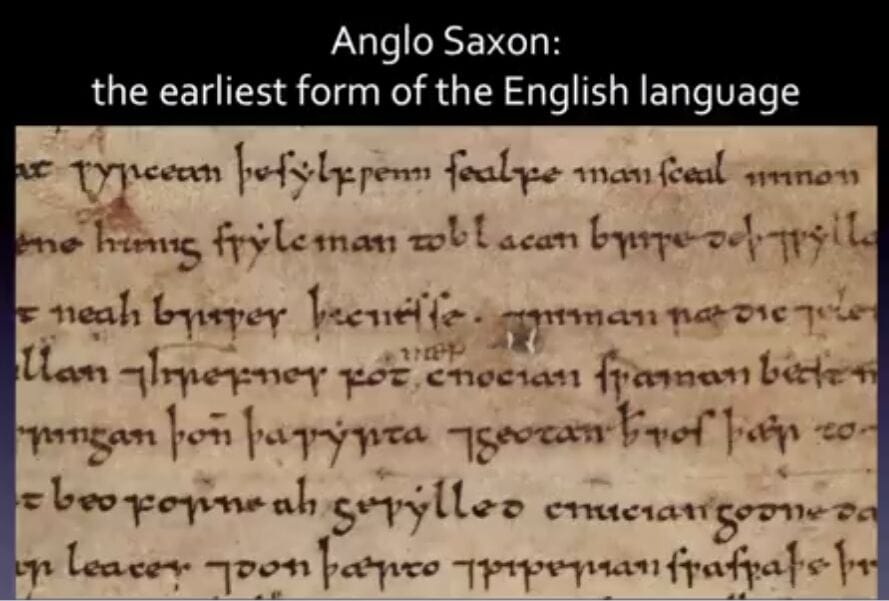
English language During this time, the English language was growing. The Celtic language merged with the Anglo-Saxon language. Some words added by A-S: to, and, for, man, wife, child, drink, eat, sleep, T, W, R. When Christian missionaries started coming to England around 600 AD, they brought words such as an altar, monk, preach, school, anthem, rule, candle, offer, a hymn from AD, Vikings came to the island with words such as: lift, take, give, live, husband, sky, trust, rotten when the Normans invaded and conquered the Anglo-Saxons, they brought 10,000 words like action, adventure, marriage, power, vision, rage, honest
2. Christianity of the A-S
In 596, missionaries came & attempted to convert them to Christianity. By 650, most A-S were Christians in the name. However, they still held on to some of their pagan traditions.
3. More Invasions Danish Invasions
During the 700s and 800s, the Danes and the Normans began attacking the island of Britain and almost won until Alfred the Great, a Saxon, fought back and won the country back – and there was peace – for a while.
4. End of the Anglo-Saxon Period
When Alfred’s grandson Edward died in 1066, there was an argument over the throne. The Duke of Normandy claimed the throne, but the English chose Harold II. The Duke retaliated by attacking and defeating the Anglo-Saxons at the Battle of Hastings. The A-S era ended in 1066 when the Normans won the Battle of Hastings and William the Conqueror became the new King, succeeding the Duke.
Social OrderBased on warrior bonds-they bonded together under a strong leader. Heroic groups, the rural and tribal core of culture, were a comitatus relationship-warrior bond for each other and their leader. Tribes engaged in blood feuding constantly.WER GELD= “man price,” absolute obligation to avenge a fellow warrior’s death (like gangs). Loyalty: fight to the end to protect and avenge; commitment to King and warrior. After battles, there was a strict payment of treasure. Chief selected for loyalty, generosity, strength, and courage.
5. Anglo-Saxon Literature
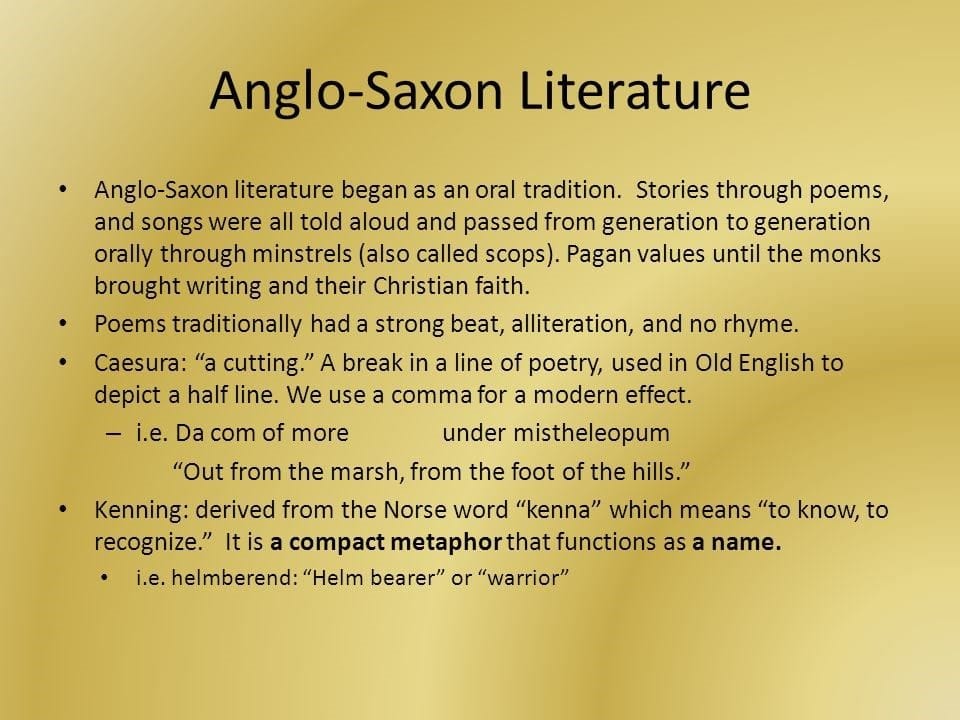
All literature was oral (spoken), not written, because a written language had yet been written. Literature & history were passed down by Scops, people in each tribe who composed stories and songs about the tribe and its heroes. The stories were passed down over generations. He told the stories every night after supper.
II. Beowulf
1. What is a hero Epic poem?
A Hero Epic Poem is a long narrative poem about a national hero with the virtues and qualities his society values. Epic poems are fiction with some facts put in. Epic Hero – courageous, resourceful, loyal, generous, willing to avenge wrongs, gentle, brave, strong, loves beauty, has deep feelings, able to express emotions.
2. The poem's genesis
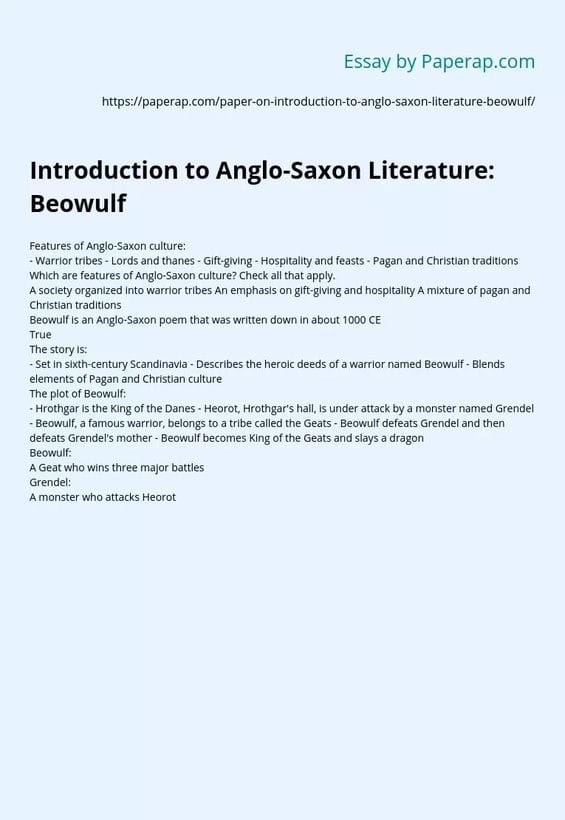
Beowulf was written around 700 AD. The author was unknown – it is known the Poet was a Christian, an aristocrat, and a professional (by language). The Poet composed it in his head and performed it. The poem was not written down for about 250 years.
3. The poem's subject matter
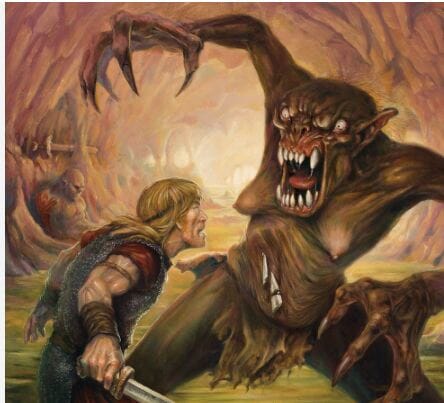
Beowulf consists of 3182 lines. It was found as a manuscript telling the heroic life and adventures of the Geatish King Beowulf. His experiences start when he hears that people in Heorot are slain one by one by a creature called Grendel and suffering from the loss of their loved ones. Beowulf gathers a troop and kills the monster and Grendel’s mother, who came for vengeance. The poem also tells about his reign as a King and his death caused by a fatal wound during his last journey to kill a dragon with a thread in the kingdom. The poem consists of Pagan and Christian values as well as Nordic Mythology.
4. Characteristics of a classical hero
Beowulf embodies most characteristics of a classical hero, the type of hero seen in epic poetry and literature. He possesses extraordinary strength, wisdom, courage, and loyalty.
His purpose in the poem is to embody and oppose the symbols of evil and villainy- in this case, Grendel, Grendel’s mother, and the dragon. Grendel kills his victims while they sleep, whereas Beowulf fights his adversaries face to face. Beowulf’s brutality is justified because he battles to preserve Heorot and confronts Grendel with honor, confronting the monster without weapons or armor to maintain their combat on an even playing field. Beowulf is also contrasted with Grendel’s spiteful mother and the dragon’s pride and greed since Beowulf battles to defend others and is generous with his wealth.
III. Frequently Asked Questions (FAQs)
1. What is the most notable aspect of Anglo-Saxon literature?
The following are the five primary themes that define Anglo-Saxon literature:
- Desire for personal liberty
- Religion
- Adaptability to Nature
- Respect for Womanhood
- The Battle for Glory
2. What are the characteristics of a figure in Anglo-Saxon literature?
Major characters deliver long, formal speeches. The hero performs courageous, sometimes superhuman deeds. The poem includes universal themes such as good/evil and life/death. The scenario is quite broad in scope and frequently involves many nations. The hero, generally male, is of noble birth or high position. Hero characteristics reflect important ideals of his society. Supernatural beings or events complicate the plot and may involve a long and dangerous journey to a foreign land.
3. What's the most significant impact of Anglo-Saxon Literature on our English today?
The Anglo-Saxons had a tremendous effect on the English language, from bringing Old English to England to establishing its vocabulary, grammar, and alphabet, and their legacy is now an essential element of the language’s history and evolution.
4. Why is the poem Beowulf important to English literature?
The epic poem Beowulf (8th century CE) is the longest surviving and most important Old English work. Beowulf offers a story of courage and sacrifice similar to hundreds of other stories throughout history. However, its importance stems from how it retains the ancient Anglo-Saxon language and culture. When comparing Beowulf’s Old English to current English translations, readers can better understand Old English and how it served as the foundation for today’s English language.
Conclusion
Anglo-Saxon literature, culture, and language are some of the most essential aspects of English Literature. Anglo-Saxon heritage is a required course in each English Language and Literature department. Learning about Anglo-Saxon culture is necessary since it is a civilization that created modern-day English literature and influenced later English culture.
Beowulf is an important poem because it helps readers understand Anglo-Saxon cultural values, the structure of Old English and its development into modern English, and the genre of epic poetry.