


Lesson 2 – The Scientific Method
Introduction
In today’s world, the essence of modernity is deeply intertwined with our scientific understanding and technological advancements. Looking ahead, familiarity with science will transition from a mere option to an essential requirement. The significance of science is inescapable, permeating every aspect of our lives. This article aims to underscore the criticality of comprehending the scientific method and its application in experiments, emphasizing the necessity of scientific literacy for navigating the complexities of the future effectively.
I. What is the Scientific Method?
The scientific method is a set of procedures for conducting research that includes meticulous observation and data collection.
Are scientists all exactly following the scientific method? No. It is easier to test certain scientific theories than others. For instance, it is not possible to accelerate a star’s life by a million years or do medical tests on feeding dinosaurs to test scientific theories about how stars age or how dinosaurs eat. Scientists alter the scientific method when doing direct experiments is not feasible. But even when modified, the goal (and many of the steps) remains the same: ask questions, carefully collect and analyze the evidence, and determine whether all the information given can be logically incorporated into a response in order to find cause and effect linkages. A scientist may also decide to go back and redo a stage at any time along the process in light of new knowledge or ideas. You may better focus your scientific inquiry and process your observations and data to provide the best possible answer by being aware of the procedures involved in the scientific method.
The scientific method includes the elements: observation, question, hypothesis, experiment, analysis, and conclusion.
Understanding the scientific method, or "how did we find out about it"
Surgeon and public health researcher Atul Gawande addressed graduating students at the California Institute of Technology in 2016 with the following remarks:
- Research is not a major or a profession. It is an adherence to a methodical mode of thinking, a dedication to a process of knowledge construction, and an explanation of the world based on empirical observation and testing (Gawande, 2016).
- As simple and organized as it may seem, scientific discovery is not always an easy process. As a student scientist, you complete "cookbook" practicals, which include following a set of instructions, and you read textbooks. In reality, challenges, ambiguities, and conflicting theories are hallmarks of scientific knowledge creation.
- Science is a vast discipline, and the methods used in different fields of study vary. A scientist's exact method of working depends on the information and solutions they are trying to find. For instance, field observations form the basis of knowledge for astronomers and geologists, but experiments form the basis for knowledge for physiologists and chemists.
- A physiologist interprets the scientific method as carrying out a sequence of experimental processes in order to generate new knowledge and enhance one's comprehension of a given subject.
II. Steps and Example
1. Observation
Observations form the basis of scientific advances. This entails identifying a pattern in the literature, either directly or indirectly. An example of an indirect observation would be reading a scientific study reporting high concentrations of toads in urban areas with watered lawns, whereas a direct observation would be seeing that there have been a lot of toads in your yard ever since you switched on the sprinklers.
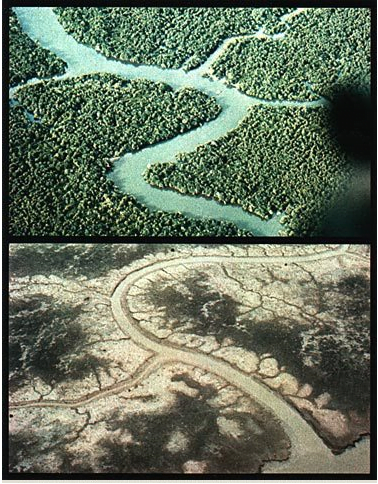
Press reports from North Vietnam during the Vietnam War showed that birth abnormalities were becoming more common. Even though the United States first questioned the veracity of this material, it raised concerns about the causes of these birth abnormalities. Moreover, veterans of the Vietnam War who had returned to the United States later developed a higher incidence of some malignancies and other ailments. This brings us to the question, which is the next stage of the scientific method.
2. Question
The scientific method’s first step is to ask, “What explains the observed pattern?” One observation can give rise to several inquiries.What is causing the ailments among Vietnam veterans and birth deformities in Vietnam? became a question for scientists and the general public. Is it connected to the extensive military application of Agent Orange, a herbicide, to eradicate forests and facilitate easier enemy identification?
3. Hypothesis and Prediction
The anticipated response to the query is the hypothesis. The most persuasive hypotheses specify the anticipated direction of the effect (increases, decreases, etc.) and provide evidence for their plausibility.
OK hypothesis
Agent Orange affects the prevalence of illness and birth abnormalities.
Better hypothesis
A more plausible theory is that Agent Orange raises the prevalence of illness and birth abnormalities.
Best hypothesis
The most likely theory is that Agent Orange raises the risk of illness and birth defects since people who have been exposed to this pesticide have repeatedly reported experiencing these health issues.
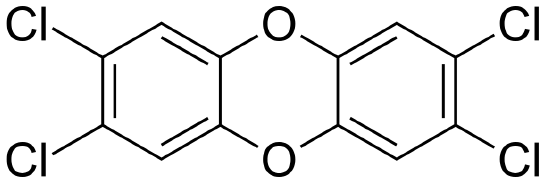
The more straightforward hypothesis is chosen when two or more satisfy this requirement. The hypothesis informs the predictions.The forecast indicates which outcomes would corroborate the theory. Because it makes reference to the specifics of the experiment, the forecast is more precise than the hypothesis. For instance, “If Agent Orange causes health problems, then mice experimentally exposed to TCDD, a contaminant of Agent Orange, during development will have more frequent birth defects than control mice” .
Validity of forecasts and hypotheses depends on their testability. A hypothesis that relies on the opinions of bears, for instance, cannot be tested because it is impossible to know what they may think. It should also be falsifiable, which means that it can be put to the test and shown to be false. The statement “Botticelli’s Birth of Venus is beautiful” is an illustration of an unfalsifiable hypothesis. There isn’t any experiment that could refute this claim. A researcher will carry out one or more experiments intended to rule out one or more of the hypotheses in order to test a hypothesis. This is a crucial matter. A hypothesis is never proven; it can only be refuted or deleted. Unlike mathematics, science does not deal in proofs. When an experiment is unable to refute a hypothesis, we discover evidence in favor of that explanation; but, this does not preclude the possibility that a more compelling explanation or a more meticulously planned experiment will eventually be discovered to refute the hypothesis.
Science theories are not the same as hypotheses, which are speculative accounts. A widely recognized, well investigated, and verified explanation for a collection of data or events is called a scientific theory. The basis of scientific knowledge is scientific theory. Furthermore, scientific laws—which are sometimes described in mathematical formulas—describe how elements of nature will behave under particular, specified conditions in many scientific disciplines (but not in biology). These rules do not, however, explain why the events take place.
4. Design an Experiment
The hypothesis is then put to the test via a scientific investigation (experiment) to see if the outcomes match up with expectations. There will be one or more variables in every experiment. Scientists conjecture that the independent variable could be the source of anything else. The scientist manipulates the independent variable in a manipulative experiment (see below). The last variable in the study to be measured was response, which was the dependent variable. Confounders, or controlled variables, may have an impact on the dependent variable, although the study is not focused on them. To ensure that the controlled variables have no impact on the outcomes, the scientist attempts to standardize them. Scientific research can be broadly classified into two categories: observational research and experimental research, or controlled experiments.
Scientists alter the independent variable in a manipulative experiment and then watch to see what happens. Stated differently, scientists employ interventions. To compare the incidence of birth abnormalities with a control group, one approach involves exposing growing mice to TCDD. When test subjects are placed in a control group, they are kept as comparable to the other test subjects as possible, with the exception that they are not given the experimental treatment (those who receive that treatment are called the experimental group, treatment or testing). Finding out what the dependent variable would be like in the absence of the experimental treatment under normal circumstances is the goal of the control group. It acts as a standard by which the test group can be judged. In this instance, mice in the control group would get the same treatment as the other mice but would not be subjected to TCDD.
Scientists evaluate many samples with and without the suspected cause in observational research. One instance could be keeping an eye on the well-being of veterans who experienced differing degrees of exposure to Agent Orange.
Many replications are found in scientific investigations. By using multiple samples, it is ensured that any pattern seen is the result of the treatment and not just individual deviations that happen spontaneously. A scientific study should also be repeatable, which means that if it is carried out again using the same methodology, the overall findings should be obtained. Furthermore, the same hypothesis will finally be tested by other investigations.
5. Analysis
Ultimately, the information is gathered and the outcomes examined. Statistics can be used to summarize and describe data, as discussed in the Math Blast chapter. They also offer a standard by which to judge if the data’s pattern is robust enough to bolster the hypothesis.
In our example manipulation experiment, mice exposed to high concentrations of 2,4,5-T (an Agent Orange component) or TCDD (an Agent Orange contaminant) during development were more likely than control mice to have a cleft palate birth abnormality. Additionally, compared to controls, mice embryos exposed to TCDD had a higher chance of dying.
Observational research of Korean veterans of the Vietnam War revealed a strong correlation between the occurrence of many ailments, including skin conditions, psychological problems, diseases of the neurological and cardiovascular systems, and various malignancies, and the veterans’ self-reported exposure to Agent Orange. Keep in mind that a positive correlation just indicates that the independent and dependent variables rise or fall together; more information, such as that obtained from manipulative experiments, is required to establish a cause-and-effect link. (When one variable rises while the other falls, this is known as a negative correlation.)
6. Conclusion
Finally, scientists draw a conclusion about whether the hypothesis is supported by the data. The evidence about Agent Orange indicates that mice exposed to 2,4,5-T and TCDD had increased incidences of cleft palate, which is consistent with the hypothesis. The theory was further supported by the fact that veterans exposed to Agent Orange had greater incidence of specific ailments. Therefore, we can accept the theory that Agent Orange raises the risk of illness and birth abnormalities.
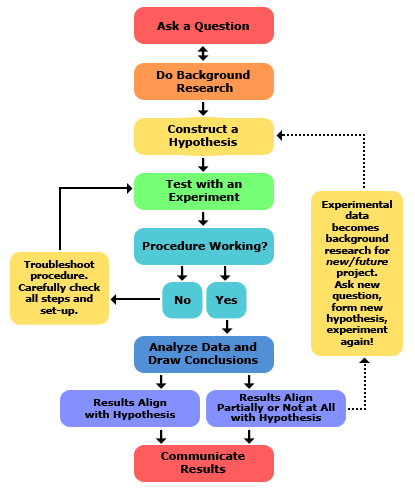
The scientific process is not as strict and regimented in practice as it would seem at first. An experiment may yield results that support a different course of action, but more frequently than not, it raises brand-new scientific inquiries. Science frequently doesn’t work in a straight manner; rather, as study progresses, scientists continuously draw conclusions and generalize, looking for patterns. Scientists might test the idea in different ways even if it turned out to be correct. For instance, as Vietnam veterans age, scientists investigate the long-term health effects of Agent Orange.
The results are given regardless of whether the hypothesis is validated or not.A new hypothesis can be put out if the previous one is unsupported by the data.
A simple example of the scientific method is
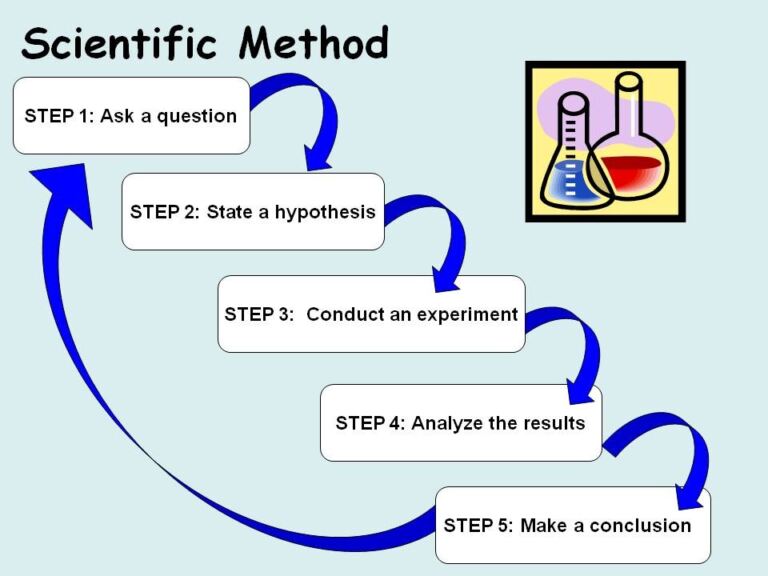
Pose a Question
Why does a map of Greenland appear so big?
Background Information
Find out that the land mass of Greenland is one-fourth that of the United States. Discover also that the process of creating Mercator projection maps involves projecting images from a sphere onto a piece of paper that is coiled around the sphere.
Theory
My theory is that if I create a map using Mercator projection, the objects in the center will appear to be the actual size, but the objects near the poles will appear larger.
Experiment
To create a Mercator projection map, use a sphere with 1-inch by 1-inch squares at the equator and each pole. Using the Mercator projection map, measure the squares.
Evaluate Information and Draw Conclusions
The squares in the center of the map average one inch on each side, whereas the squares at the poles average three inches. To sum up, distortion is produced at the poles but not at the equator by the projection method used to construct Mercator projection maps. Because of this, Greenland, which lies near the North Pole, appears larger than it is.
Communicate
To inform people about the experiment, create a presentation, a report, or a video.
Conclusion
The inception of innovative methodologies often acts as a catalyst for rapid advancements across various scientific domains, as exemplified by the transformative impact of light and electron microscopes on biological research. Numerous experimental techniques, initially devised to address specific challenges, have found widespread adoption across different laboratories, facilitating solutions to diverse scientific inquiries. Similarly, the emergence of pioneering theories, such as Darwin’s theory of evolution, resonates beyond their original disciplines, prompting reevaluation and integration into other branches of science. Evolutionary theory, for instance, continues to guide research endeavors in fields ranging from environmental science to biochemistry, illustrating the enduring influence of groundbreaking ideas on scientific exploration and understanding.