


Chapter 1, Lesson 2
In Progress
Lesson 2 – How to Cite Textual Evidence to Support Analysis of the Text
Chapter Progress
0% Complete
Introduction
Citing textual evidence is an essential skill for analyzing and interpreting a text. It involves finding specific quotes or examples from the text to support your analysis or argument. In this lesson, we will learn the following: How to effectively cite textual evidence to support our analysis of a text.
- Identify central ideas and supporting details in a text.
- Cite textual evidence to support your answer using the ACE method.
I. Definition
Textual evidence is specific data or details drawn from a written or printed text to support, justify, or elucidate a position. It frequently entails quoting or referencing passages, sentences, or phrases from the original text to provide unbiased support for a particular point of view or interpretation.
The ideas, claims, or viewpoints in discussions, debates, essays, research papers, or any other written analysis are concretely supported or validated by textual evidence. As it demonstrates a writer’s capacity to engage with and draw conclusions from the text rather than relying solely on personal opinions or assumptions, it is crucial to academic writing, critical thinking, and scholarly research.
By incorporating textual evidence, writers can strengthen their arguments and provide credibility to their claims by demonstrating that their ideas are rooted in the text and supported by factual information. Direct quotations, paraphrases, summaries of pertinent passages, statistics, examples, or other pertinent information culled from the source material are all acceptable supporting documentation.
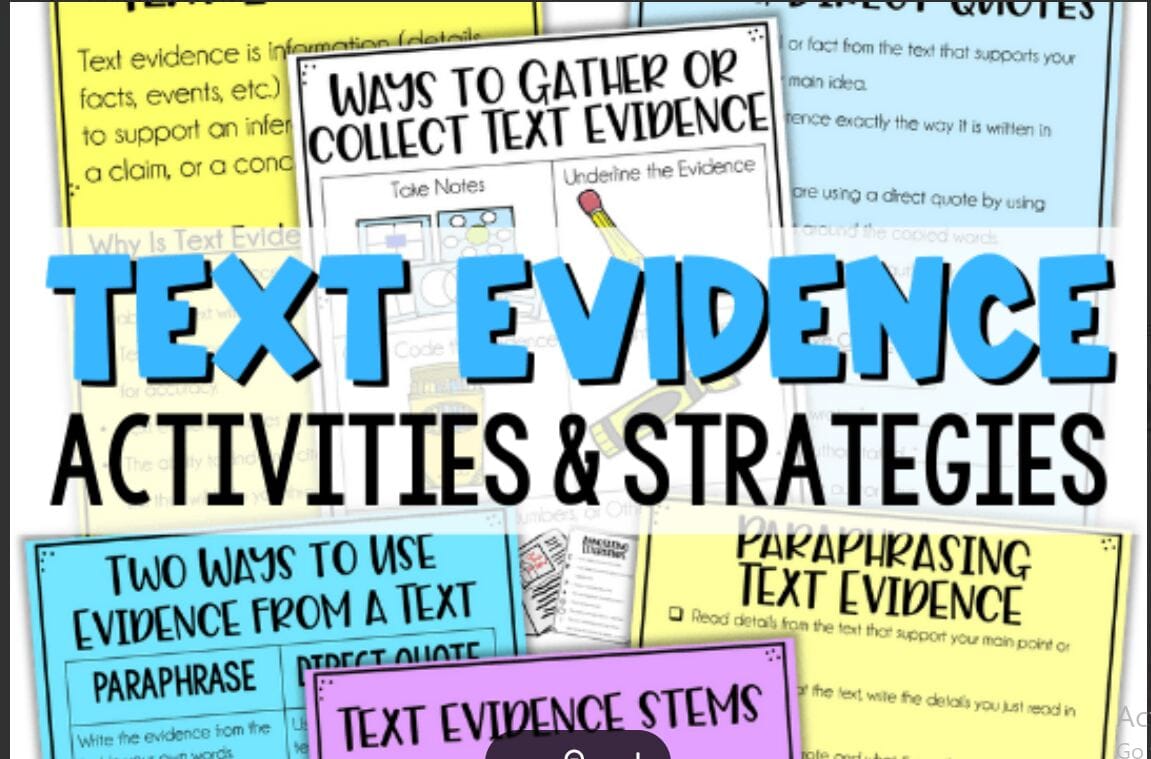
II. How to effectively cite textual evidence to support our analysis of a text
To analyze a written text, we need to identify the text’s central idea or thesis, the intended audience, and the questions the author addresses. Additionally, it is crucial to examine how the author structures the text and the main parts of the text and how they relate to the thesis. It is also essential to evaluate how the author creates interest in the argument, convinces the reader of the merits of their opinion, and provides evidence to support their point.
Students will learn about four essential steps to follow when searching for textual evidence:
- The first step is determining the answer or opinion they want to support.
- Next, they should read the text thoroughly.
- After that, they must find specific evidence or proof in the text.
- Finally, they should identify the evidence and use quotation marks and the exact words if quoting or use their own words if paraphrasing.
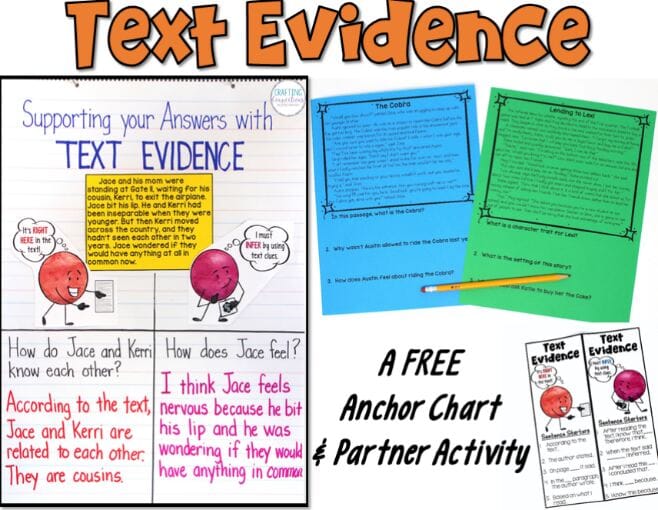
1. Analyze a written text
When analyzing an essay or article, you need to consider several questions. These include identifying the central idea or thesis of the text, the intended audience, and the questions the author addresses. In addition, you can examine how the author structures the text, the main parts of the text, and how they relate and relate to the thesis. You can also evaluate how the author creates interest in the argument, convinces the reader of the merits of their opinion, and provides evidence to support their point.
2. Analyze a visual text
When analyzing a visual work, it’s essential to consider various questions to understand the image entirely. One should start by evaluating what confuses, surprises, or interests them about the picture. Additionally, it’s crucial to identify the medium and origin of the visual and the creator and intended purpose. This includes identifying clues that suggest the visual’s intended audience and how the image appeals to that audience. In the case of advertisements, it’s crucial to remember the product being sold and whether the visual conveys an additional message or idea. Evaluating how words contribute to the overall meaning is essential if they are included in the graphic. Lastly, it’s crucial to identify design elements such as colors, shapes, perspective, and background and speculate how they help to convey the visual’s meaning or purpose. One can better understand a piece of graphic work by answering these questions.
3. Citing Evidence with ACE Method
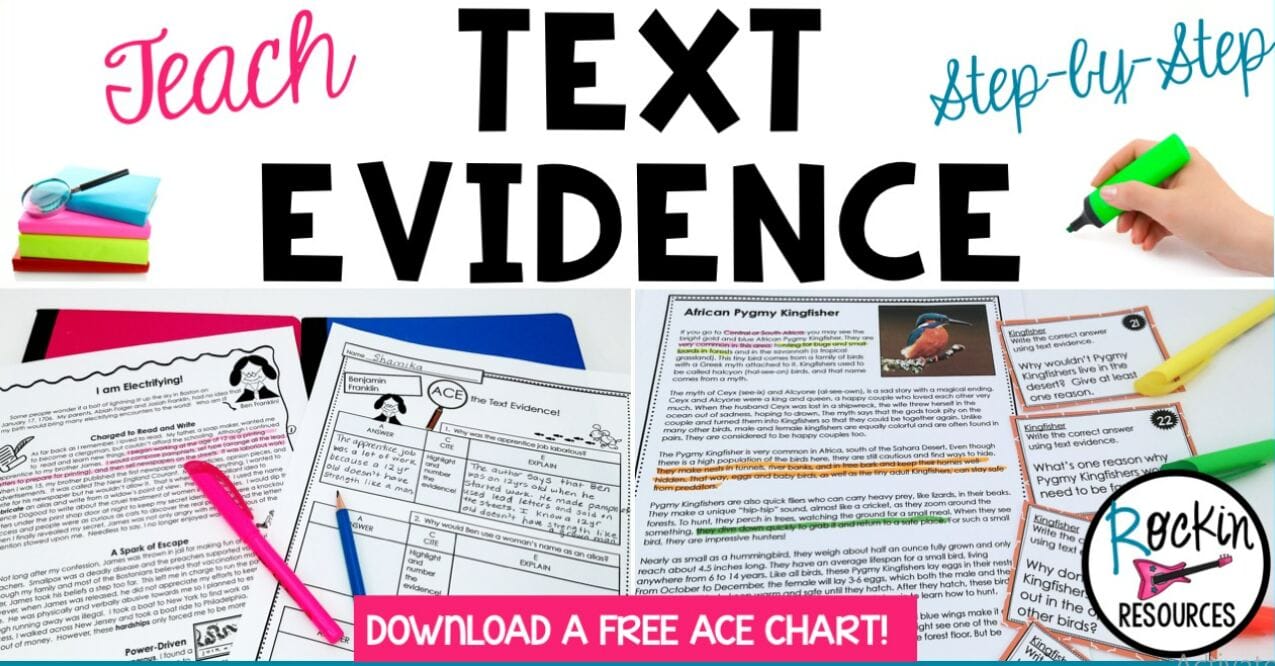
The ACE method, which stands for Answer, Cite, and Explain, is a way to help them remember how to cite evidence properly. Students will practice citing evidence from passages on different topics. They will answer questions to evaluate the ACE and determine how to support their analysis with written proof. To properly cite supporting text, students should follow the steps:
- Identify central themes and ideas, analyze plot and character development, understand word meaning and tone impact, and compare terms and phrases in different texts.
- Identify the answer or opinion you want to prove and reread the text carefully.
- Identify specific evidence or evidence in the text.
Here is an example of a text quote that makes a robust analysis
French scientist Louis Pasteur was the first to prove that germs exist. The germs in the air can be counted. The number of germs around us, especially in crowded rooms, is tremendous. Sure, scientists measured 42,000 germs in approximately one cubic meter of air in a picture gallery when it was empty. But when the gallery was crowded with people, they found nearly 5,000,000 germs in the same place. In the open air, germs are less abundant. There are fewer germs in the country air than in town air. We see at once how important it is to live as much as possible in the open air and for the rooms we live in always to be well-ventilated by fresh air.
III. FAQ
1. Why is citing textual evidence important?
Citing textual sources strengthens the validity and depth of your analysis. It shows that your interpretations are based on the text itself, strengthening the argument you’re making.
2. How do I choose which passages to cite?
The passages you choose should be pertinent to the arguments you’re making in your analysis. Pick the ones that most effectively illustrate the themes, character development, literary devices, or any other elements you’re addressing.
3. How do I format a textual citation?
Whenever you quote directly from a text, you should enclose the passage in quotation marks and include the page number (if necessary) or the line number for plays or poems. As an illustration, use the format: “This is a quoted passage” (author’s Last Name, page/line number).
4. How do I integrate textual evidence into my analysis?
Describe the situation, the character, or the theme surrounding the passage that was quoted in order to provide context for the evidence. After the quote, consider its importance and how it contributes to your case.
5. What if the text is from a poem or play without page numbers?
Use line numbers rather than page numbers when referencing plays and poems. For instance: (Last Name of Author act.scene.line(s)).
6. How much evidence should I include?
Don’t overdo it with quotes; just use enough to back up your analysis. Aim for a balance between quoting and explaining how the evidence relates to your argument.
7. Can I interpret the text without citing evidence?
Your interpretation gains credibility when backed by evidence. Avoid unsupported claims, as they weaken your analysis’s foundation.
8. How should I punctuate quotes within my sentence?
Use quotation marks to denote the quoted text if it is part of your sentence. Example: The protagonist’s conundrum is made clear when she says, “Quote here.”
Conclusion
In short, citing textual evidence is essential for analyzing and interpreting a text. By using direct quotes, paraphrases, summaries, and examples, you can effectively support your analysis and make compelling arguments. Remember to cite the source and comprehensively analyze the evidence to support your paragraph.