


Lesson 2 – Ancient Egyptian Architecture
Introduction
Ancient Egyptian Architecture is commonly linked to the pyramids of Giza, but it was actually quite diverse. It took on various forms in the construction of administrative buildings, temples, tombs, palaces, and the homes of both nobility and commoners. The ornamentation of these structures also differed depending on their purpose and the available resources of the builder.
I. History
1. Predynastic and Early Dynastic
During this era, Egyptians created sculptures and ceramics as a way to show respect to their gods and pharaohs. However, their architectural abilities were not advanced at this time. Egypt did not have a central government, only regional and tribal leaders, which meant that no large structures were built in the center of Egypt.
The introduction of stone monuments occurred in the Second Dynasty of Egypt (around 2890 – 2670 BCE). One of the earliest stone monuments was known as an obelisk, or teknuhu in Egyptian.
2. Old Kingdom
Pharaoh Sneferu of the Fourth Dynasty is believed to have started the golden age of the Old Kingdom. The development of architecture, led by Imhotep, was encouraged by subsequent pharaohs. Egyptologists agree that the pyramid of “Meidum” was the first pyramid built in Egypt.
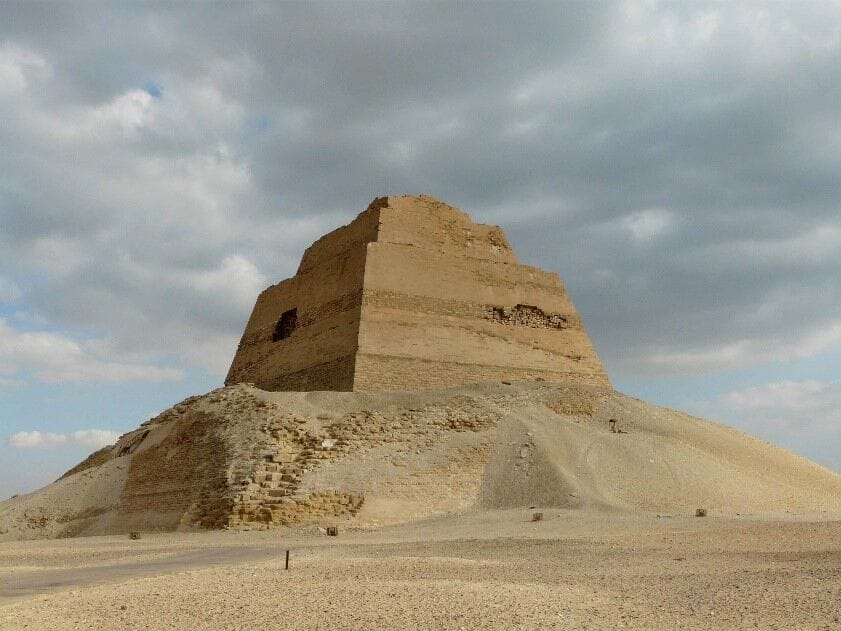
The pyramid of “Meidum”
3. First Intermediate Period and Middle Kingdom
The Old Kingdom collapsed gradually because the priesthood gained more power. This led to the First Intermediate Period, which lasted from 2181 to 2040 BCE. During this time, the authority shifted from the kingship to local regions, allowing architects and artists more freedom to build and create as they pleased. They were no longer limited to constructing religious monuments.
In the period from 2061 to 2010 BCE, Pharaoh Mentuhotep II brought unity to Egypt. This encouraged the development of architecture once again, and artists were able to express their personal views more freely in their artwork.
4. Second Intermediate Period and New Kingdom
After successfully expelling the Hyksos from Egypt, the rulers of the New Kingdom took measures to safeguard Egypt’s borders by establishing buffer zones. This ensured the protection of Egypt. As the Egyptian Empire expanded, the country grew increasingly prosperous. Consequently, they resumed the construction of various complexes, monuments, temples, and mortuaries.
One notable temple, Karnak, stood out from the rest due to its unique features. It contained scriptures and writings that documented the rich history of Egypt. Additionally, King Ramesses II gained fame for his ambitious construction endeavors in Lower Egypt.
5. Late Period and Ptolemaic Dynasty
During this time, the power of kingship decreased and the influence of the priesthood grew, resulting in weak kings ruling over Egypt. The Late Period of Ancient Egypt was marked by a series of invasions, including those by the Assyrians and the Persians.
In the Ptolemaic Dynasty, Greek rulers incorporated their own architectural style into Egyptian culture. The early rulers were also encouraged to construct large monuments and temples. With the death of the queen, Cleopatra VII, the legacy of Egyptian architects was left behind on the buildings they constructed.
II. Style
1. Tombs
During the Old Kingdom, mastaba tombs were often located near the pyramids and usually west of the Nile. Most mastabas were tombs for monarchs and their relatives.
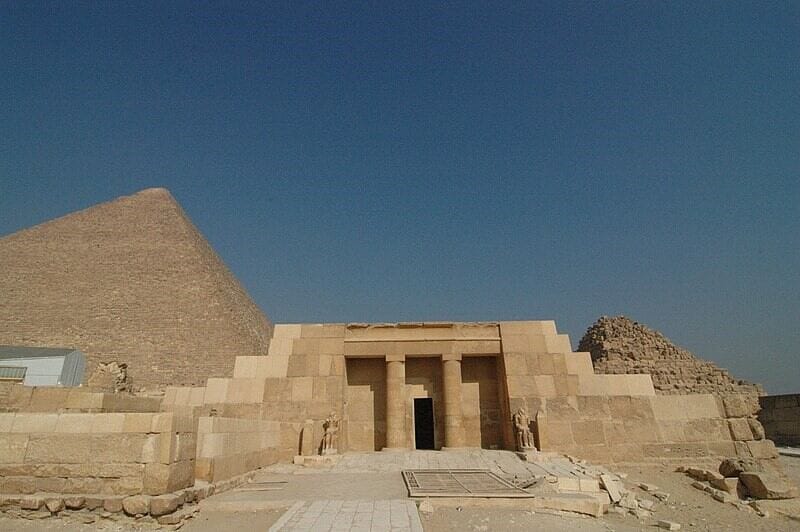
The Mastaba of Seshemnefer IV
2. Pyramids
Compared to tombs, pyramids are large monuments with four stone walls meeting at the top, resembling mountains. Pyramids were a symbol of humans’ attempt to reach the heavens.
The Great Pyramid of Giza is the oldest and largest pyramid in the Giza pyramid complex. Originally, its surface was smooth and covered in limestone casing stones, some of which can still be seen today. There are different theories about how it was built, but most agree that it involved moving huge stones from a quarry and then dragging and lifting them into place. The construction of the pyramid took anywhere from 10 to 20 years.
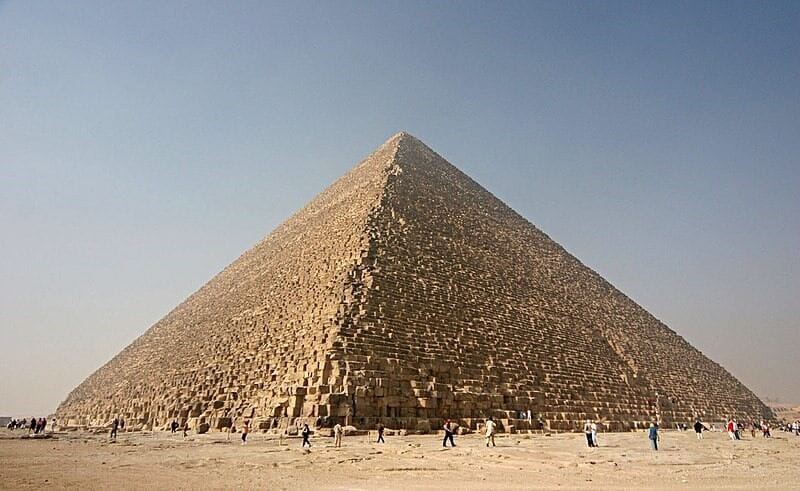
The Great Pyramid of Giza
The Step Pyramid of Djoser, which was Egypt’s first true pyramid, actually started as a mastaba in Saqqara. It was expanded six times to create six levels. The vizier Imhotep came up with the idea of building a more impressive tomb for the king by stacking mastabas on top of each other and using stone instead of the traditional mud-clay. This resulted in the Step Pyramid shape, which became a major influence on ancient Egyptian architecture.
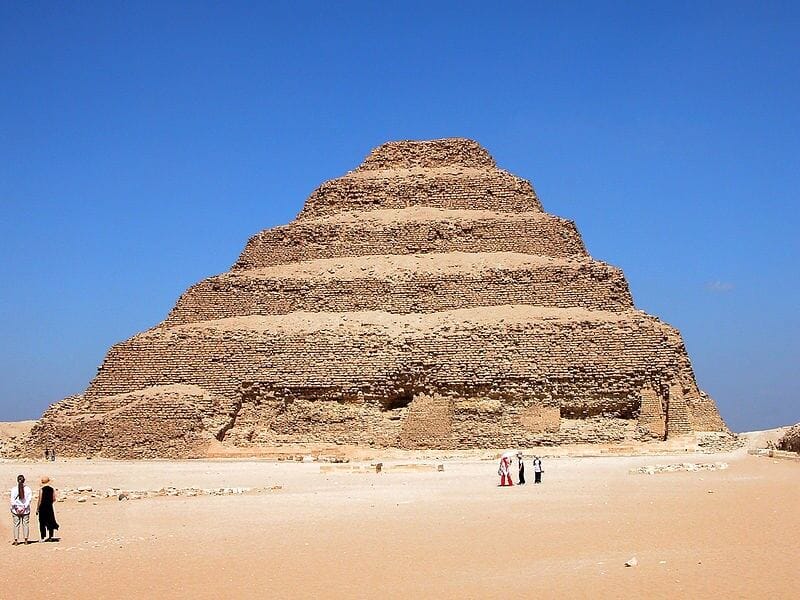
The Step Pyramid of Djoser
3. Temples
Temples were constructed to honor specific Egyptian gods, believed to be the eternal residences of these deities.
4. Palaces
Palaces were built to fulfill the needs of ancient pharaohs and were characterized by their immense size and adorned with magnificent sculptures of kings and gods.
Conclusion
The pyramids at Giza are still remarkable structures even after thousands of years since their construction. The knowledge and expertise needed to build them were accumulated over many centuries before their construction began. However, it is important to note that the pyramids are not the pinnacle of ancient Egyptian architecture. They are just some of the earliest and most famous examples of a culture that went on to create equally fascinating buildings, monuments, and temples.