


Chapter 1, Lesson 2
In Progress
Lesson 2 – Alberti’s ‘On Painting’
Chapter Progress
0% Complete
Introduction
In this session, we delve into the intellectual masterpiece of the Italian Renaissance, Leon Battista Alberti’s ‘On Painting’ (De Pictura). As we navigate through the pages of this influential treatise, we embark on a captivating exploration of the principles and insights that shaped the art of the Renaissance and beyond.
This lesson invites you to step into the world of Alberti’s ideas, where linear perspective, chiaroscuro, composition, and the study of proportions converge to form the foundational pillars of artistic expression. As we dissect these key concepts, we will uncover the essence of how artists during the Renaissance sought to emulate nature and capture its beauty on canvas.
I. Perspective
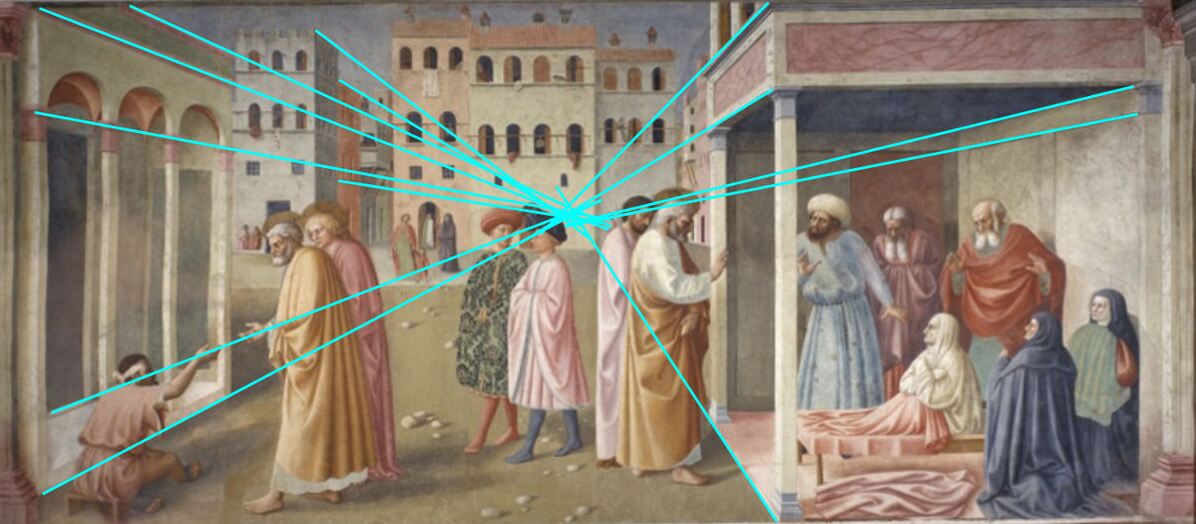
The Healing of the Cripple and Raising of Tabitha
In art, “perspective” refers to the technique used to represent three-dimensional space on a two-dimensional surface, such as a canvas or paper. It creates the illusion of depth and distance in a two-dimensional artwork, making objects appear as if they are situated in a realistic, three-dimensional space.
There are several types of perspective, with linear perspective being one of the most commonly used in Western art. Linear perspective relies on the use of lines and a vanishing point to create the appearance of depth. Key elements of linear perspective include:
- Vanishing Point: A point on the horizon line where parallel lines appear to converge and disappear. The vanishing point is crucial for establishing the viewer's line of sight.
- Horizon Line: A horizontal line that represents the viewer's eye level. It is typically positioned across the composition and intersects with the vanishing point.
- Converging Lines: Lines that recede into the distance and appear to meet at the vanishing point. These lines help create the illusion of depth in the artwork.
Linear perspective allows artists to accurately depict how objects appear smaller as they recede into the distance, contributing to a sense of realism in the composition. Beyond linear perspective, other types of perspective include atmospheric perspective, which considers the impact of atmospheric conditions on the perception of distance, and isometric perspective, which maintains the size of objects regardless of their distance from the viewer.
Perspective is a fundamental concept in art that has evolved over time, with different cultures and artistic movements employing various techniques to represent space and depth in their own unique ways. Artists use perspective to guide the viewer’s eye, create a sense of realism, and convey a particular mood or message in their artworks.
II. Exploring Chiaroscuro: Mastering Light and Shadow in Art
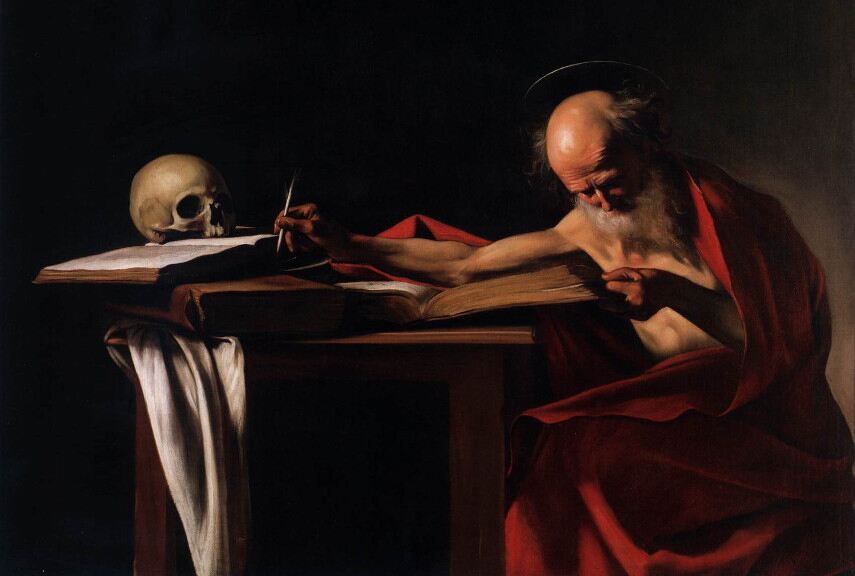
Chiaroscuro in Art
Leon Battista Alberti’s exploration of chiaroscuro, the interplay of light and shadow, is a cornerstone of artistic technique that transcends time. This technique, extensively discussed in Alberti’s ‘On Painting,’ plays a pivotal role in giving form, depth, and dimension to objects within a two-dimensional space. Let’s delve into the significance of various elements of chiaroscuro and how artists utilize them to create a compelling three-dimensional illusion.
1. Light Source:
- The light source is the origin of illumination within a composition. The direction and intensity of the light source significantly impact the distribution of light and shadow.
- Artists carefully choose the placement of the light source to influence the mood, emphasize specific elements, and guide the viewer's attention.
2. Highlights:
- Highlights are the areas directly illuminated by the light source. They represent the highest intensity of light and often appear as bright spots or reflections.
- Artists use highlights to draw attention to specific details, create focal points, and enhance the realism of surfaces by simulating the reflective properties of different materials.
3. Mid-tones:
- Mid-tones lie between the highlights and shadows, representing areas where the light is less intense. They contribute to the overall tonal range of the composition.
- Achieving a smooth transition from highlights to mid-tones adds subtlety and nuance to the depiction of form, making objects appear more rounded and lifelike.
4. Shadows:
- Shadows are areas that receive minimal or no direct light, creating contrast and defining the shapes of objects. Understanding shadow placement is crucial for establishing the spatial relationships within a composition.
- Artists strategically manipulate shadows to suggest volume, depth, and perspective. Darker shadows may imply recessed areas or the presence of nearby objects blocking the light.
How Artists Use Chiaroscuro:
- Modeling Forms: Chiaroscuro is employed to model and sculpt the forms of objects, enhancing their three-dimensional appearance. By strategically placing highlights and shadows, artists create the illusion of rounded surfaces and textures.
- Creating Drama and Emotion: The use of strong contrasts between light and shadow can evoke drama and heightened emotion in a composition. This technique, popularized by artists like Caravaggio, is known for its intense visual impact.
- Guiding the Viewer's Focus: Chiaroscuro allows artists to control the viewer's gaze by emphasizing certain areas through the manipulation of light and shadow. This technique directs attention to key elements within the composition.
In summary, chiaroscuro is a powerful tool that artists use to breathe life into their creations. By skillfully managing the interplay of light and shadow, artists not only create a convincing three-dimensional illusion but also imbue their works with emotion, drama, and a heightened sense of realism. Alberti’s insights into chiaroscuro continue to influence artists, serving as a timeless guide to the mastery of light and shadow in the visual arts.
III. The Art of Composition in Alberti's 'On Painting'
Leon Battista Alberti’s treatise ‘On Painting’ not only delves into the technical aspects of art but also offers profound insights into the art of composition. Understanding the arrangement of elements within a painting is crucial for achieving balance, harmony, and ultimately, an aesthetically pleasing composition. Let’s explore the concepts of the golden mean and how artists utilize compositional elements to guide the viewer’s visual journey.
1. Golden Mean:
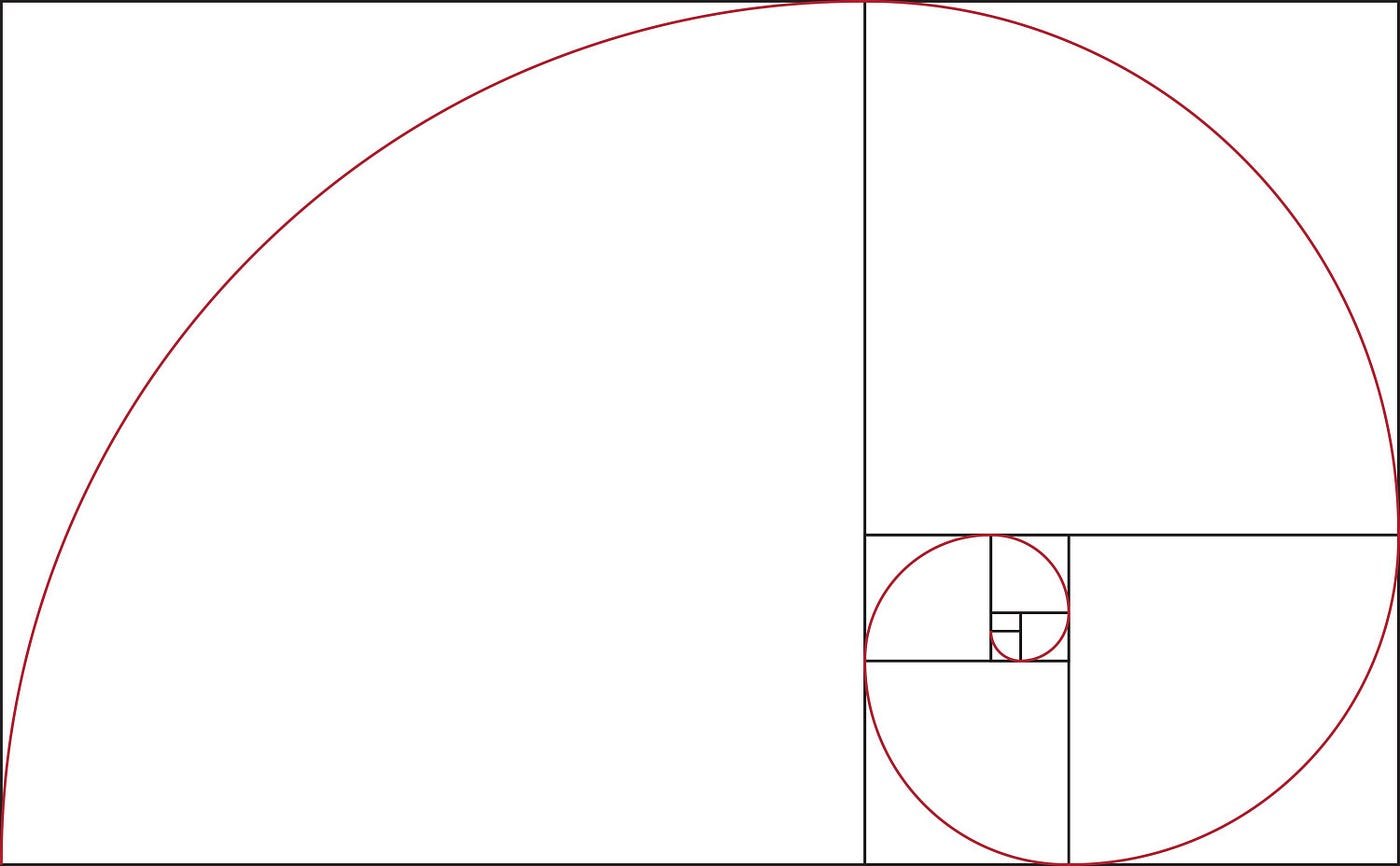
- Alberti, building on ancient Greek principles, emphasizes the significance of the golden mean in composition. The golden mean is a mathematical ratio, approximately 1:1.618, known for its aesthetic appeal and balance.
- In the context of art, the golden mean suggests that dividing a composition into parts, with the ratio of the smaller part to the larger part equal to the ratio of the larger part to the whole, results in a visually pleasing and harmonious arrangement.
2. Achieving Aesthetic Pleasure through Balance:
- The golden mean serves as a guide for artists to distribute visual elements in a way that avoids excessive symmetry or imbalance. It encourages a balanced distribution of weights, forms, and colors throughout the composition.
- By adhering to the principles of the golden mean, artists create a sense of equilibrium, drawing the viewer into the artwork and evoking a feeling of satisfaction and aesthetic pleasure.
3. Compositional Elements and Focal Points:
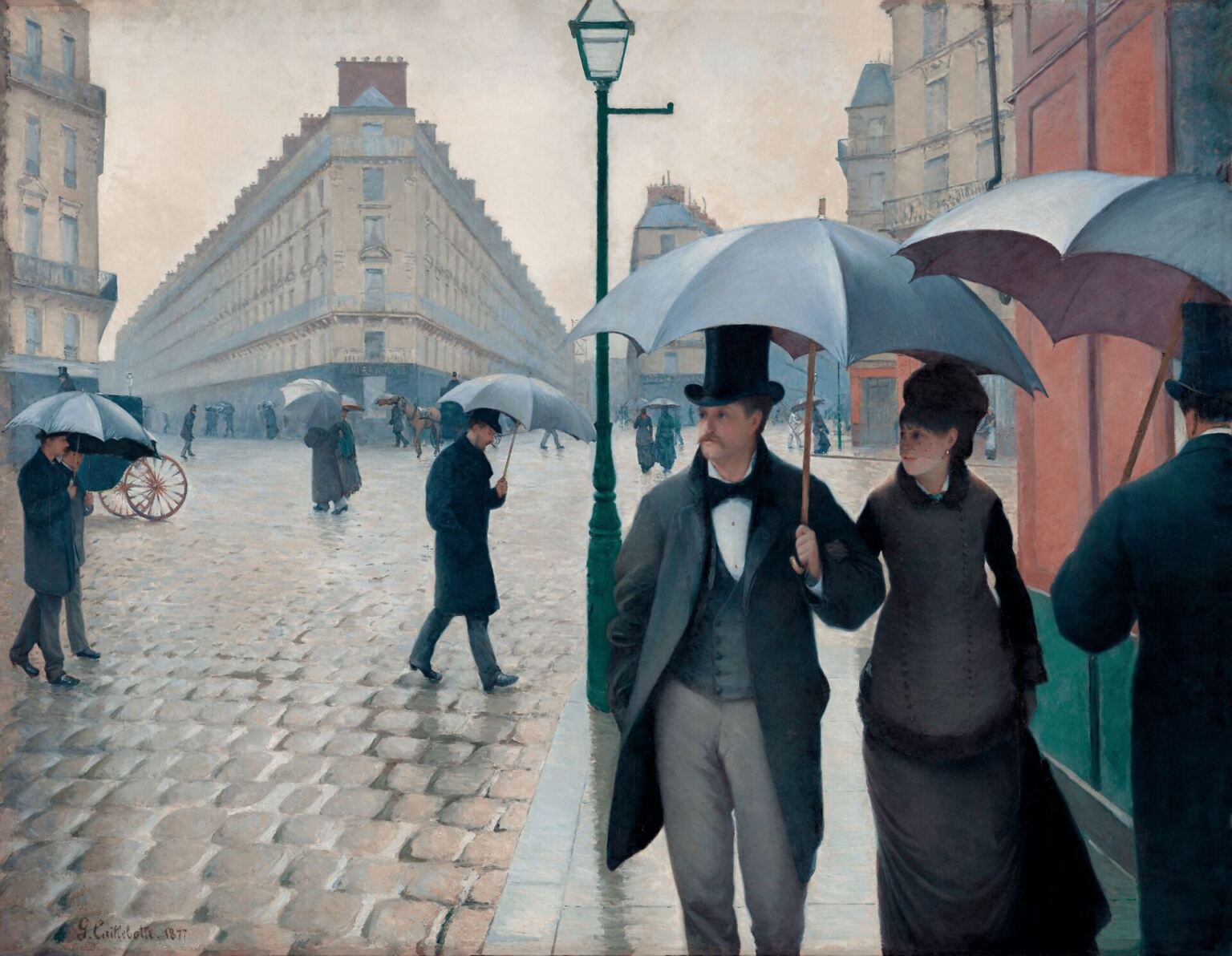
Focus Point in Art
- Alberti underscores the importance of compositional elements in creating focal points within a painting. Focal points are areas that draw the viewer's attention and are strategically placed to guide the visual journey.
- Contrast and Emphasis: Artists use contrast in color, value, or size to emphasize specific elements within the composition. By creating variations in these elements, artists guide the viewer's gaze and highlight key aspects of the artwork.
- Leading Lines and Movement: Incorporating leading lines, whether implied or explicit, directs the viewer's eye through the composition. These lines can be actual elements within the artwork or suggested by the arrangement of forms.
- Rule of Thirds: A compositional guideline often related to the golden mean, the rule of thirds divides the canvas into a grid of nine equal parts. Placing key elements along these grid lines or at their intersections helps create dynamic and visually appealing compositions.
4. Visual Journey and Narrative:
- Alberti's ideas extend beyond aesthetics; they are tools for storytelling. Artists strategically arrange elements to guide the viewer through a narrative or evoke specific emotions.
- The placement of focal points, the use of compositional elements, and the application of the golden mean all contribute to the overall visual journey experienced by the viewer.
IV. Proportion and Anatomy
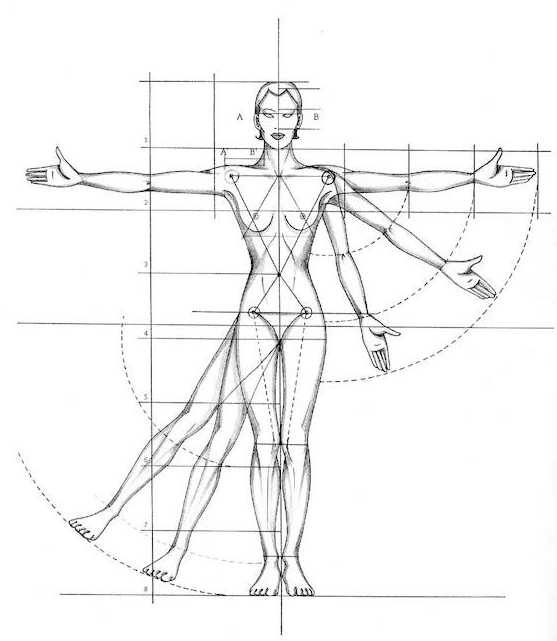
Human Proportion
Leon Battista Alberti’s dedication to the study of the human figure is a testament to the Renaissance pursuit of understanding and depicting the world with precision. In ‘On Painting,’ Alberti not only emphasizes accurate proportions but also delves into the intricacies of anatomy. Let’s explore the concepts of ideal proportions and the incorporation of anatomical knowledge, shedding light on how these principles contribute to the representation of the human form in art.
1. Ideal Proportions:
- Alberti, inspired by ancient Greek and Roman ideals, champions the notion of ideal proportions in art. This involves establishing a set of balanced and harmonious measurements that capture the essence of beauty and perfection.
- The pursuit of ideal proportions aims to create a sense of visual harmony and balance in representations of the human figure. This concept is rooted in mathematical ratios and strives to achieve a standard of beauty that transcends cultural and individual variations.
2. Contributions to Representation:
- Aesthetic Pleasure: Ideal proportions contribute to the aesthetic pleasure derived from viewing art. When artists adhere to these proportions, viewers often perceive the figure as more graceful, balanced, and visually satisfying.
- Symbolism and Universality: The pursuit of ideal proportions allows artists to convey specific symbolic meanings or evoke universal themes. The representation of a figure with idealized proportions can transcend cultural boundaries, resonating with viewers across different times and places.
3. Incorporating Knowledge of Anatomy:
- Alberti's exploration of anatomy goes beyond idealized proportions; he encourages artists to study and understand the underlying anatomical structures that give form to the human body.
- Realism and Authenticity: Anatomical knowledge enables artists to create realistic and anatomically correct figures. Understanding the underlying structure of bones, muscles, and joints allows for more accurate depictions of movement, posture, and expression.
- Dynamic Poses and Movement: Knowledge of anatomy empowers artists to capture dynamic poses and movements authentically. By understanding the mechanics of the human body, artists can portray figures engaged in various activities with a heightened sense of realism.
- Expressive Features: Anatomical knowledge contributes to the portrayal of facial expressions and emotional states. Artists can convey a wide range of emotions by accurately rendering the subtle nuances of muscles and facial features.
4. Artistic Mastery:
- The fusion of ideal proportions and anatomical knowledge represents a pinnacle of artistic mastery. Artists who can seamlessly integrate these principles create works that not only captivate the eye with beauty but also resonate with a profound understanding of the human condition.
Conclusion
As we conclude our exploration in Lesson 2, delving into the profound insights of Leon Battista Alberti’s ‘On Painting,’ we find ourselves enriched with a deeper understanding of the fundamental principles that have shaped the course of art history. Alberti’s treatise, a beacon of Renaissance thought, has not merely served as a guide for artists but as a gateway into the timeless realms of perspective, light and shadow, composition, proportion, and anatomy.