


Lesson 13 – Papyrus
Introduction
When we think of ancient Egypt, we often associate it with the invention of papyrus paper. Papyrus, derived from the Cyperus papyrus plant that grows abundantly along the Nile River, is commonly thought of as the ancient Egyptian equivalent of paper. Its primary purpose was to serve as a medium for writing and illustrations, playing a crucial role in the documentation and communication of information throughout Egyptian civilization.
Papyrus sheets were made by cutting the plant’s stalk into thin strips, which were then laid out in two layers—one horizontal and one vertical. These layers were pressed together and dried to form a durable writing surface. The resulting sheets could be rolled into scrolls, making them portable and easy to store. This innovation significantly contributed to the administrative and cultural development of ancient Egypt, enabling the recording of religious texts, administrative documents, literary works, and scientific knowledge.
However, the exact time when papyrus was first created in Egypt as a writing material remains unknown. Evidence suggests that its use dates back to at least the First Dynasty (c. 3100-2900 BCE), but it likely predates this period. Archaeological findings have uncovered papyrus fragments with hieratic script from as early as the Fourth Dynasty (c. 2613-2494 BCE), indicating its long-standing presence in Egyptian society.
Let’s take a closer look at papyrus, exploring its manufacturing process, its uses in ancient Egyptian society, and its significance in the broader context of human history.
I. Definition
Papyrus, a plant known as cyperus papyrus, used to be abundant in the wilds of the Egyptian Delta and other parts of the Nile River Valley. However, it has become rare nowadays. Papyrus plants grew from horizontal roots in shallow freshwater and the muddy Delta. They could reach heights of up to 16 feet and had small brown flowers that often produced fruit.
Initially, these plants were just a natural part of the region’s vegetation. However, once people discovered their usefulness, they started cultivating and managing them on farms. As a result, papyrus was heavily harvested, leading to a depletion in its supply. Although papyrus still exists in Egypt today, its numbers have significantly decreased.
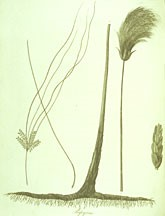
The papyrus of Egypt is mainly known for its association with writing. In fact, the English word "paper" is derived from the word "papyrus." However, the Egyptians discovered various other uses for this plant beyond using it as a surface for writing documents and texts.
II. Meaning
The Greek name for the plant is papyrus, which may have come from the Egyptian word papuro. This word means “royal” or “pharaoh,” as the central government controlled the processing of papyrus due to their ownership of the land and oversight of the plantations.
The ancient Egyptians referred to the plant as djet, tjufi, or wadj, which all relate to the idea of freshness. Wadj also signifies lushness, flourishing, and greenness. Once the papyrus was cut, harvested, and made into rolls, it was called djema, which could mean clean or open, referring to the fresh writing surface.
III. Symbols
The papyrus plant was seen as a symbol of rebirth by the ancient Egyptians. They used this plant to create and record information for thousands of years. The papyrus plant required freshwater or water-saturated soil to grow.
The plant may have been recognized as the symbol of Lower Egypt as early as the fourth millennium BC. It is depicted on one side of the famous Narmer palette from Dynasty I, around 3100 BC. A bronze replica of the palette can be seen in the Egyptian Gallery of the McClung Museum. On the palette, Horus is shown triumphing over his enemies, represented by the marshland people of Lower Egypt, symbolized by the papyrus plant.
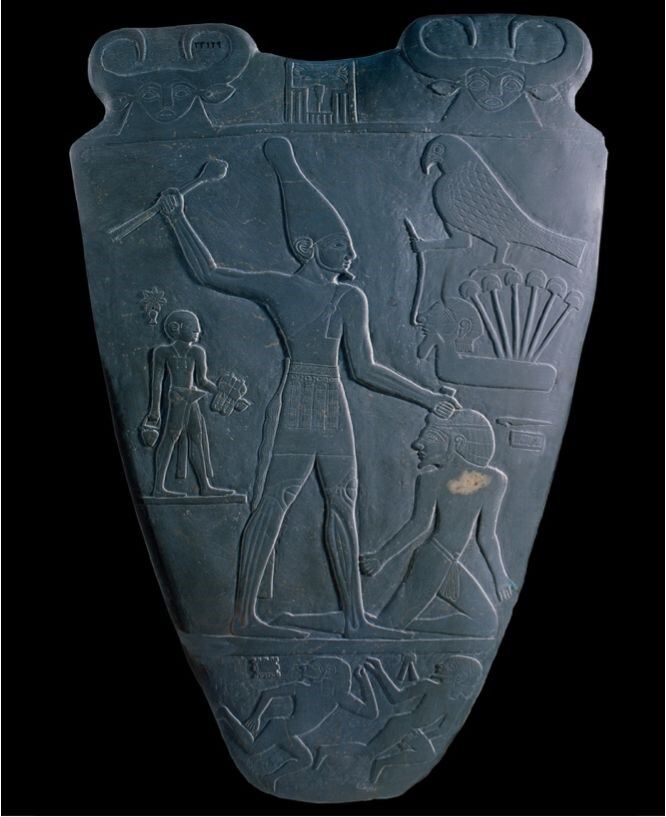
Cast of the Narmer Palette
Another early example of this symbol can be found on a fragment of an ivory club, now housed in the Cairo Museum. The fragment shows King Zer, also known as the Scorpion King of Dynasty I, seated on his throne with the papyrus plant in the background. One of the notable examples of this symbol is the relief at the Temple of Abu Simbel, which was built during Dynasty XIX by Rameses II. The relief depicts a combination of the twined plant, representing Lower Egypt, in the “Union” of Upper and Lower Egypt.
Conclusion
Papyrus is a fascinating plant that had a significant impact on the lives of ancient people in various ways. It played a crucial role in maintaining the vitality of their land and promoting a bustling atmosphere of energy and activity.