


Lesson 3 – Old World vs. New World
Introduction
The discovery of the Americas by Christopher Columbus in 1492 marked a turning point in history, as it brought together two previously isolated worlds: the Old World, encompassing Europe, Africa, and Asia, and the New World, comprising North and South America. This momentous event sparked an era of exploration and colonization that shaped the course of human civilization.
In this lesson, we delve into the motivations behind why Europeans embarked on dangerous voyages across the vast Atlantic Ocean and explore the factors that drove them to sail to the Americas. Let’s join us!
I. Old World and New World:
“Old World” and “New World” describe two major geographical and cultural regions, primarily during the Age of Exploration and the colonial era.
Old World:
The Old World refers to the continents of Europe, Asia, and Africa. These are the regions where human civilization first developed, and many of the earliest and most influential ancient civilizations emerged. A long history of human settlement, advanced cultures, and complex societies characterizes the Old World. Major historical events, such as the rise and fall of empires, the spread of major world religions, and significant technological advancements, have occurred in the Old World.
New World:
The New World refers to the continents of North and South America, which were initially “discovered” by Europeans during the late 15th and early 16th centuries. Christopher Columbus’s voyages in 1492 are often credited with opening up the New World to European exploration and colonization. Unlike the Old World, the New World was largely untouched by the civilizations of Europe, Asia, and Africa until this point. As a result, it was inhabited by diverse indigenous cultures and civilizations, some of which were quite advanced in their own right.
The arrival of Europeans in the New World led to significant changes in the region’s demographics, cultures, and ecosystems. European colonizers established colonies, bringing their languages, religions, and social structures. They also introduced new crops, animals, and technologies to the Americas while introducing devastating diseases to which the indigenous populations had little immunity; this led to the decline and collapse of many indigenous societies and the rise of European dominance in the New World.
“Old World” and “New World” are outdated and may be considered Eurocentric. However, they are still used to differentiate between the two major geographical regions in discussions of historical and cultural contexts.
II. Why did Europeans sail to the Americas?
1. Economic Ambitions and the Search for Wealth
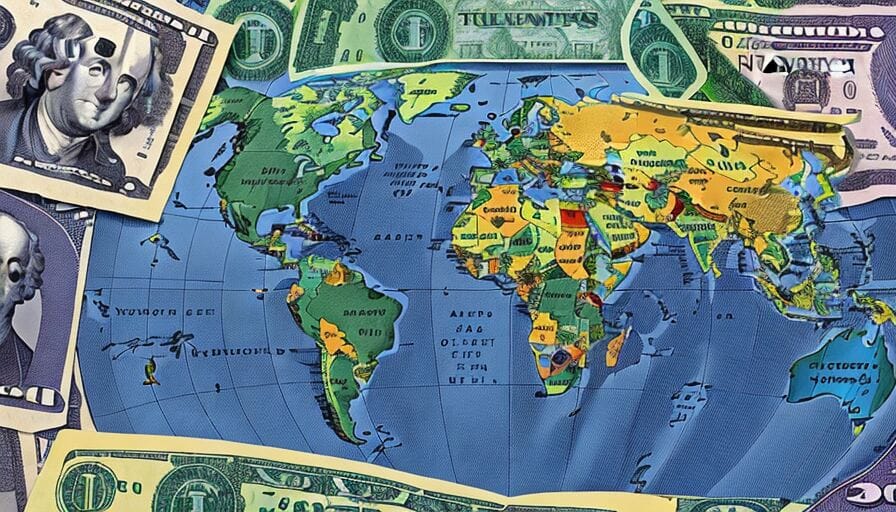
European nations during the 15th and 16th centuries were undergoing a period of rapid change and economic transformation. The Old World was experiencing overcrowding, a growing merchant class, and a demand for new trade routes to bypass the dominance of the Mediterranean powers. European nations, particularly Portugal and Spain, sought to tap into the lucrative trade networks of the East, bypassing intermediaries and securing direct access to valuable resources such as spices, silks, and precious metals.
The exploratory expeditions to the Americas were primarily driven by the desire to discover alternative trade routes to Asia. Explorers hoped to find new sources of wealth and establish colonies to exploit natural resources, including gold, silver, timber, and fertile land for agriculture. Economic motives, therefore, played a pivotal role in driving European expansion across the Atlantic.
2. Competition and Rivalries
Another significant factor that led Europeans to sail to the Americas was the intense competition and rivalries among European nations. The age of colonization was an era of fierce competition between emerging maritime powers like Spain, Portugal, England, France, and the Netherlands. These nations sought to expand their influence, increase their territories, and gain the upper hand in the balance of power.
By establishing colonies in the Americas, European nations could claim vast territories, assert dominance over other countries, and secure valuable resources and trading posts. The desire to outpace rival powers and gain a competitive edge drove many European expeditions to the New World.
3. Religious Zeal and the Spread of Christianity
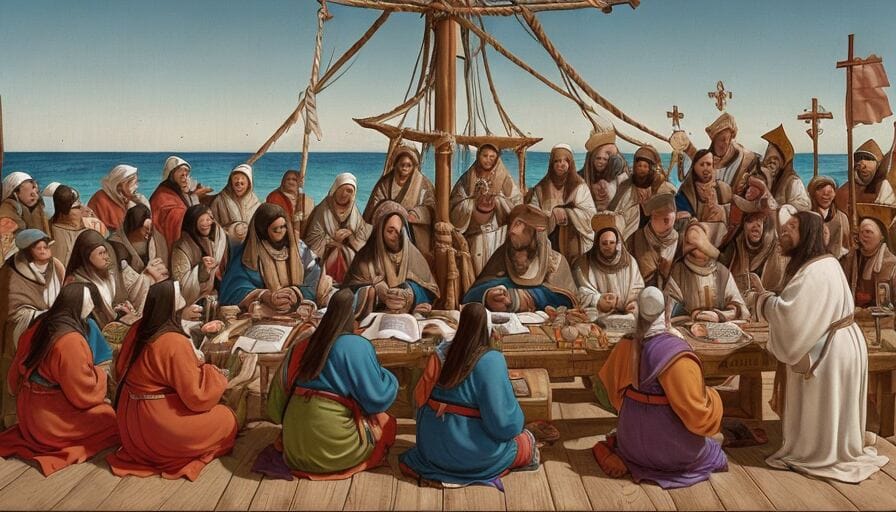
Religion played a significant role in motivating European voyages to the Americas. The Catholic Church, in particular, sought to extend its influence and spread Christianity to new lands. European explorers viewed their journeys as part of a divine mission to convert indigenous peoples to Christianity and save their souls.
The Spanish conquistadors, such as Hernán Cortés and Francisco Pizarro, who undertook expeditions to Mexico and Peru, respectively, were driven by religious fervor and the thirst for wealth. Their conquests often involved the violent subjugation of indigenous populations, with the justification that they were bringing salvation to the “heathen” and establishing a Christian empire in the New World.
4. Curiosity, Adventure, and the Spirit of Discovery
Beyond the economic, political, and religious motivations, a sense of curiosity, adventure, and thirst for discovery played a crucial role in driving European exploration. Explorers and navigators like Amerigo Vespucci, John Cabot, and Ferdinand Magellan were forced to push the boundaries of human knowledge and map uncharted territories.
Their journeys opened up a world of wonders previously unknown to Europeans, introducing them to new cultures, flora, fauna, and natural resources. These discoveries sparked a new wave of scientific inquiry, shaping the fields of geography, botany, anthropology, and astronomy.
5. Meaning
The distinction between the Old and New World primarily stems from historical and geographical contexts. The Old World refers to the continents of Europe, Asia, and Africa, which have been interconnected for millennia, fostering the development of ancient civilizations and cultures. These regions have a rich trade history, conquests, and cultural exchanges. On the other hand, the New World pertains to the Americas (North and South America), discovered by Christopher Columbus in 1492. As a result, the New World encountered a collision of previously isolated cultures, leading to significant changes in language, technology, agriculture, and societal structures. This distinction has profound implications for global history and the formation of modern civilizations.
III. Frequently Asked Questions (FAQs):
1. What were the economic motivations behind European exploration of the Americas?
The economic motivations behind European exploration of the Americas were driven by the desire to access new trade routes to Asia. European nations sought to bypass the Mediterranean powers and establish direct trade connections with the East, where valuable resources such as spices, silks, and precious metals were in high demand. The unexpected discovery of the Americas presented new opportunities for exploitation and colonization, leading to the extraction of resources, the establishment of plantations, and the development of a transatlantic trade network.
2. How did the exploration of the Americas impact Europe?
The exploration of the Americas had profound impacts on Europe. It led to the influx of vast amounts of wealth, particularly in precious metals like gold and silver, which fueled economic growth and transformed European societies. The establishment of colonies created new markets and trade networks, stimulating European economies. The cultural exchange between Europe and the Americas also introduced new crops, animals, and ideas that reshaped European life.
3. Did religion play a role in European voyages to the Americas?
Yes, religion played a significant role in European voyages to the Americas. The Catholic Church, in particular, sought to extend its influence and spread Christianity to new lands. European explorers saw their journeys as part of a divine mission to convert indigenous peoples to Christianity and save their souls. The Spanish conquistadors, in particular, were driven by religious fervor and the pursuit of wealth. Their conquests often involved the forcible conversion of indigenous populations, as they believed they were bringing salvation to the “heathen” and establishing a Christian empire in the New World.
Conclusion
In conclusion, The European voyages to the Americas were a complex interplay of economic ambitions, political rivalries, religious zeal, and the innate human spirit of discovery. These intertwined motives propelled European explorers to cross vast oceans, leading to profound consequences for both the Old and New worlds. While these expeditions brought wealth, colonization, and exploitation, they also sparked a cultural exchange, reshaped global trade, and forever altered the course of human history.