


Lesson 6 – Risk Management in IT Leadership
Introduction
Risk management is a vital practice in project management to mitigate unforeseen challenges during project execution. While predicting the future with certainty is impossible, implementing a straightforward risk management process enables the anticipation of project uncertainties, minimizing their occurrence or impact. This enhances the likelihood of project success and diminishes the consequences of potential risks.
I. Definition of Risk Management
Risk management involves identifying, assessing, and controlling threats to an organization’s capital and earnings. Financial uncertainties, legal responsibilities, technical hurdles, strategic management failures, accidents, and natural calamities are all potential risk causes. A robust risk management program enables organizations to assess a full spectrum of risks and their potential cascading impacts on strategic goals.
1. Enterprise Risk Management
Enterprise Risk Management (ERM) takes a holistic approach to risk management, emphasizing the anticipation and understanding of risks across an entire organization. Unlike traditional risk management, which tends to be reactive and siloed, ERM is proactive, collaborative, and cross-functional. It involves defining an organization’s risk appetite, determining acceptable risks, and integrating risk management with organizational strategy.
2. Significance of Risk Management
Risk management has never been more crucial in the modern landscape, characterized by complex and rapidly evolving risks due to globalization and digital technology. Recent incidents, such as the COVID-19 pandemic, have highlighted the importance of proactive risk management in addressing difficulties such as supply chain interruptions, distant work concerns, economic uncertainty, and geopolitical conflicts.
3. Traditional vs. Enterprise Risk Management
Traditional risk management, often perceived negatively, focuses on specific risk areas within business units and tends to be reactive. In contrast, ERM adopts a strategic perspective, considering risk a vital part of enterprise strategy and performance. Transformational Chief Risk Officers (CROs) in ERM are customer-centric and view risk as a strategic enabler, contrasting with transactional CROs in traditional risk management.
II. Risk Management Process
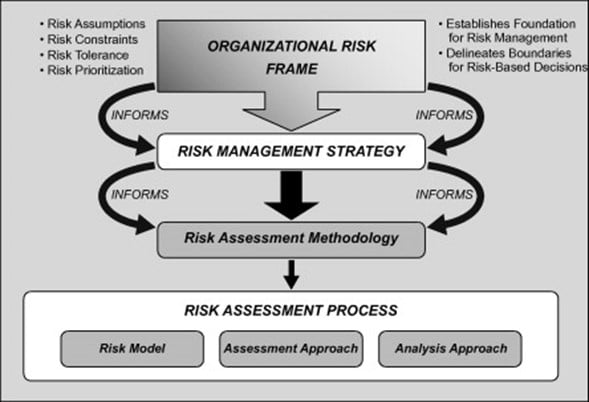
The ISO 31000 standard outlines a five-step risk management process applicable to any organization:
- Identify risks.
- Calculate the chance and impact of each risk.
- Prioritize risks based on business objectives.
- Treat or respond to risk conditions.
- Monitor results and adjust as necessary.
This process requires a deep understanding of the organization’s functions to identify risks, assess their impact, and develop strategies for risk mitigation.
Why is risk management critical?
Risk management is essential for protecting assets, optimizing resources, enhancing decision-making, ensuring compliance, maintaining business continuity, building stakeholder confidence, fostering innovation, and promoting long-term sustainability. Organizations prioritizing risk management are better equipped to navigate uncertainties and challenges and thrive in today’s dynamic and unpredictable business environment.
Protection of Assets
Effective risk management helps protect an organization's assets, including financial resources, physical infrastructure, intellectual property, and reputation. By identifying and mitigating potential risks, organizations can minimize the likelihood of financial losses, operational disruptions, and damage to their brand and reputation.
Optimization of Resources
Risk management allows organizations to allocate resources more efficiently by prioritizing and addressing the most significant risks. Organizations can optimize their investments and achieve better outcomes by focusing resources on areas with the highest potential impact.
Enhanced Decision-Making
Risk management provides leaders with valuable insights into potential threats and opportunities, enabling them to make more informed and strategic decisions. By considering risks in decision-making, leaders can assess trade-offs, evaluate alternative courses of action, and mitigate potential negative consequences.
Compliance and Regulatory Requirements
Many industries are subject to regulatory requirements and compliance standards related to risk management. Implementing effective risk management practices helps organizations comply with legal and regulatory obligations, avoid penalties, and maintain their operating license.
Business Continuity and Resilience
Risk management is essential for ensuring business continuity and resilience in unexpected events, such as natural disasters, cyberattacks, or economic downturns. Organizations can minimize disruptions and recover from adverse events by identifying potential threats and developing contingency plans.
Stakeholder Confidence
Demonstrating effective risk management practices can enhance stakeholder confidence and trust in an organization. Whether it's investors, customers, employees, or regulators, stakeholders are more likely to engage with and support organizations that proactively manage risks and prioritize their interests.
Innovation and Growth
Effective risk management fosters a culture of innovation and experimentation within organizations. By understanding and managing risks, organizations can take calculated risks to pursue new opportunities, explore innovative ideas, and drive growth and competitive advantage.
Long-Term Sustainability
Ultimately, risk management contributes to organizations' long-term sustainability and success. By proactively identifying and addressing risks, organizations can adapt to changing environments, navigate uncertainties, and position themselves for long-term viability and success.
III. Methods of Risk Management in IT Leadership
In the realm of Information Technology (IT) leadership, the effective management of risks is paramount to ensuring the smooth functioning and security of organizational systems. Here are several critical methods employed in risk management within IT leadership:
1. Risk Assessment
Conduct a thorough risk assessment to determine possible risks and weaknesses. This involves evaluating an event’s likelihood and potential impact on the organization’s IT infrastructure. Understanding the risk landscape is foundational to developing a robust risk management strategy.
2. Regular Audits and Compliance
Regular audits help assess IT systems’ compliance with industry standards and regulations. Organizations can mitigate the risks associated with noncompliance and implement security best practices by adhering to standards like ISO 27001 or NIST frameworks.
3. Cybersecurity Measures
Implement strong cybersecurity measures, including firewalls, antivirus software, intrusion detection systems, and encryption. These safeguards defend against external threats and unauthorized access, lowering the risk of security breaches.
4. Incident Response Planning
Create and routinely update incident response strategies. These plans detail the measures to be taken in the case of a security incident, providing a timely and coordinated reaction to reduce the effect and avoid additional harm.
5. Data Backup and Recovery
Back up crucial data regularly and create a solid data recovery strategy. This guarantees that critical information can be quickly recovered during data loss or a cybersecurity attack, reducing downtime and significant financial damages.
6. Employee Training and Awareness
Human error is still a significant component of IT security problems. Regularly teaching personnel about cybersecurity best practices and raising awareness about potential threats may significantly minimize the chance of security breaches.
7. Vendor Risk Management
Analyse and manage the threats posed by third-party suppliers. Many organizations rely on external suppliers to provide a variety of IT services. Evaluating these suppliers’ security policies is critical to ensuring they do not endanger the organization’s IT infrastructure.
8. Continuous Monitoring
Implement continuous monitoring solutions to provide real-time insight into the organization’s IT infrastructure. This proactive method enables early detection of possible dangers, allowing for timely risk mitigation action.
9. Regulatory Compliance
Stay informed about evolving regulations and compliance requirements related to IT security. Adhering to regulatory standards not only helps avoid legal consequences but also enhances the organization’s overall security posture.
10. Risk Mitigation Strategies
Create and implement risk mitigation measures based on the identified hazards. This might include putting in place technological controls, revising rules and processes, or investing in new technology to meet evolving dangers.
In today’s changing IT leadership landscape, successful risk management is a continuous effort that necessitates awareness, agility, and a proactive approach. Organizations may use these strategies to improve their resilience to possible attacks, protect sensitive information, and ensure the continuation of IT operations in an increasingly linked and complicated digital world.
IV. Benefits and Challenges of Risk Management
Effectively managing risks brings various benefits, including increased awareness, improved compliance, enhanced operational efficiency, and a competitive advantage. However, challenges include:
- Initial increased expenditures.
- There is a need for time and investment in governance.
- Difficulty in reaching a consensus on risk severity.
- Getting leaders to understand the importance of risk management.
V. Building and Implementing A Risk Management Plan
A risk management plan details how an organization will manage risk, covering risk approach, roles and responsibilities, resources, policies, and procedures. ISO 31000’s seven-step process guides organizations in developing comprehensive risk management plans, including communication, establishing context, risk identification, analysis, evaluation, treatment, and monitoring and review.
VI. Risk Management Limitations and Failures
Standard risk management failures stem from poor governance, overemphasis on efficiency at the expense of resiliency, lack of transparency, limitations in risk analysis techniques, lack of expertise, and an illusion of control. Learning from these failures is crucial for refining risk management practices.
VII. Risk Management for Career Professionals
Risk management professionals can stay updated on emerging trends and techniques that are reshaping the field. Trends include:
- Adopting risk maturity frameworks.
- Leveraging GRC platforms for integrated risk management.
- Formalizing the management of positive risks to add business value.
Continuous improvement and learning are essential for effective risk management.
Conclusion
Risk management is a dynamic and essential aspect of managing software projects. Despite the inability to predict the future with certainty, a well-structured risk management process contributes to anticipating uncertainties, avoiding crises, and learning from past mistakes. The journey of effective risk management is continuous, emphasizing ongoing improvement for enhanced process efficiency.