


Lesson 3 – Decision Making in Organizations
Introduction
In today’s dynamic and intricate business landscape, decision-making faces unprecedented challenges due to heightened ambiguity and uncertainty. The business arena operates within a VUCA environment—volatile, uncertain, complex, and ambiguous. As Tom Peters, a renowned management guru, aptly put it, “If you’re not confused, you’re not paying attention.” Leaders are under intense pressure to decipher uncertainty swiftly and make high-quality decisions, all the while navigating a stakeholder society marked by conflicting values and perspectives.
Leadership decisions in this environment demand a departure from past approaches, as historical methods are no longer suitable for tackling contemporary complexities. What’s imperative is a paradigm shift in decision-making approaches, aligning with the intricacies of our present-day world. An effective approach must swiftly analyze available information to craft tailored solutions that meet the demands of the situation. The primary focus of this lesson is to delve into the intricacies of decision-making within organizational settings.
I. Understanding Decision-Making in Organizations
1. Definition of Decision - Making
Decision-making is the process of identifying priorities within a group or an organization. It involves choosing a course of action from multiple alternatives to arrive at a solution for a given problem. In organizations, this process is carried out by a team of professionals dedicated to improving the company’s procedures. It is a continuous and dynamic activity, intricately woven into all facets of organizational operations, representing a blend of scientific knowledge, technical skills, and professional experience.

2. Decision – Making in Organizations
Decision-making is a critical step in every organization. Bad judgments can lead to missed opportunities and jeopardized ambitions. Businesses that make sound decisions may make the best judgments based on relevant data.
Making decisions is only sometimes straightforward; it is a process that involves thorough planning and deliberation. However, this process is also vital since it enables individuals to make sound judgments and do the right thing for themselves and their businesses.
Making a decision can be complicated, especially when there are several options to select from. However, understanding the five decision-making processes might make it easier to make practical judgments.
The five phases of decision-making comprise the following tasks:
- Clarify the question
- Gather information
- Evaluate the options
- Act on the final decision
- Review the results
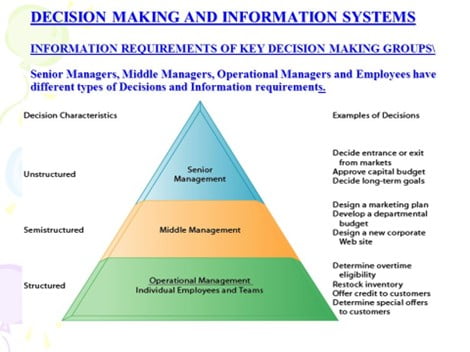
Decision-making in organizations refers to the process by which choices are made among alternative courses of action to achieve specific objectives. It’s a fundamental aspect of organizational management and involves several steps and considerations. Here’s an overview of the decision-making process in organizations:
Identification of the Problem or Opportunity
The decision-making process typically begins with recognizing a problem that needs to be addressed or an opportunity that can be exploited. This may arise from internal issues, external pressures, market changes, or strategic goals.
Gathering Information
Once the problem or opportunity is identified, relevant information must be collected and analyzed. This may involve data gathering, market research, consultation with experts, or analysis of past experiences and trends.
Generating Alternatives
A range of alternative solutions or courses of action is developed based on the information gathered. These alternatives should be evaluated based on their feasibility, effectiveness, cost, and alignment with organizational goals.
Evaluation of Alternatives
The next step involves evaluating the pros and cons of each alternative. This may include assessing each option's potential risks, benefits, costs, and implications. Decision-makers may use various tools and techniques, such as cost-benefit analysis, SWOT analysis, or decision trees, to evaluate alternatives objectively.
Making the Decision
Once the alternatives have been evaluated, a decision is made on which course of action to pursue. This decision may be made by an individual, a group, or through a collaborative process, depending on the nature of the decision and the organizational structure.
Implementation
After making a decision, it needs to be implemented effectively. This involves developing a detailed plan, allocating resources, assigning responsibilities, and executing the chosen action.
Monitoring and Feedback
The decision-making process continues after implementation. It's essential to monitor the progress of the decision and gather feedback to assess its effectiveness. This feedback loop helps identify any issues or challenges that arise during implementation and allows for adjustments as needed.
Evaluation
Finally, the decision and its outcomes are evaluated against the original objectives to determine its success. This evaluation provides insights for future decision-making and helps to improve the organization's decision-making processes over time.
Effective organizational decision-making requires a balance of rational analysis, creativity, collaboration, and leadership. Various factors, including corporate culture, leadership style, resources, external environment, and stakeholder interests influence it. Ultimately, the goal is to make decisions that contribute to achieving organizational objectives and enhance the organization’s long-term success
II. Five Tips for Effective Decision-Making
1. Establish Long-Term Goals and Align Decisions
Prioritize long-term goals from the outset, aligning all decisions with these overarching objectives to avoid the pitfalls of short-term pursuits.
2. Align Goals with Core Values
Root long-term goals in the organization’s mission and core values, ensuring that decision-makers consistently refer to these values when shaping objectives.
3. Evaluate and Reassess Spending
Regularly assess organizational expenditure to ensure alignment with priorities, preventing any deviations from strategic goals.
4. Understand Decision Impacts
Acknowledge the wide-ranging consequences of decisions, especially when they involve internal policies or processes. Consider second- and third-order effects to provide crucial context.
5. Consider Team Impact
Recognize that organizational success hinges on the quality of the team. Assess how decisions may affect team productivity and incorporate this factor into the decision-making process.
III. Impact of Emerging Technologies on Leadership Decision-Making
The impact of emerging technologies on leadership decision-making is profound and multifaceted, reshaping how leaders analyze information, communicate, innovate, and strategize. Here are some critical effects of emerging technologies on leadership decision-making:
Data-driven decision-making
Emerging technologies such as big data analytics, artificial intelligence (AI), and machine learning enable leaders to analyze vast amounts of data quickly and derive valuable insights. Leaders can make more informed decisions based on data-driven evidence rather than relying solely on intuition or past experiences.
Predictive Analytics
Advanced analytics tools allow leaders to forecast future trends, anticipate market shifts, and identify potential risks and opportunities more accurately. Predictive analytics empower leaders to proactively plan and adapt their strategies to changing circumstances, enhancing their decision-making capabilities.
Real-time Information
Technologies like Internet of Things (IoT) devices and real-time monitoring systems provide leaders instantaneous access to relevant data and information. This real-time visibility enables leaders to make timely decisions and respond swiftly to emerging issues or opportunities.
Enhanced Communication and Collaboration
Collaboration platforms, virtual meeting tools, and social technologies facilitate communication and collaboration among leaders and team members, regardless of geographical location. These technologies promote transparency, inclusivity, and teamwork, enabling leaders to make collective and well-informed decisions.
Remote Work Enablement
With the proliferation of remote work technologies, leaders can manage teams and make decisions from anywhere in the world. Remote work technologies empower leaders to maintain productivity, flexibility, and continuity even in challenging circumstances, such as during a pandemic or natural disaster.
Innovation and Experimentation
Emerging technologies foster a culture of innovation and experimentation within organizations. Leaders can leverage emerging technologies such as blockchain, augmented reality (AR), and 3D printing to explore new business models, products, and services and drive organizational growth and competitiveness.
Cybersecurity and Risk Management
Leaders must address cybersecurity and risk management concerns as organizations adopt emerging technologies. Leaders must stay informed about the latest cybersecurity threats and technologies to mitigate risks effectively and safeguard their organizations' digital assets and reputations.
Ethical and Social Considerations
Emerging technologies raise ethical and social considerations that leaders must navigate in their decision-making processes. Leaders need to consider the potential impacts of technologies on privacy, diversity, equity, inclusion, and social responsibility and make decisions that align with ethical principles and societal values.
Emerging technologies offer tremendous opportunities for leaders to enhance their decision-making capabilities, drive innovation, and create value for their organizations. However, leaders must also be mindful of the challenges and risks associated with adopting and implementing these technologies and take proactive measures to address them effectively.
Conclusion
Effective decisions are those that contribute to long-term goals while adhering to core organizational values. Continuous evaluation of spending and anticipation of decision consequences are critical. Implementing these decision-making tips empowers organizations to navigate challenges intelligently and efficiently. However, translating decisions into concrete actions requires active team engagement, ensuring optimal task performance.Consider Enhancements for Your Business:
- Create and monitor KPIs for processes, projects, and people.
- Foster agile and transparent information sharing.
- Utilize meritocracy and focused management for team motivation.
- Implement strategic planning methodologies like BSC, OKR, and SWOT.
- Integrate people, operations, and strategy.
- Facilitate seamless information exchange and communication between departments.