


Lesson 1 – Current Trends and Required Skills in Modern Technology
Introduction
In the fast-paced realm of modern technology, staying ahead of the curve is not just a choice but a necessity. The landscape is constantly evolving, presenting both challenges and opportunities for individuals and businesses alike. In this dynamic environment, understanding the current trends and acquiring the necessary skills are crucial for success. Let’s explore the key trends and the skills required to navigate the ever-changing terrain of modern technology.
I. In-Demand Tech Skills
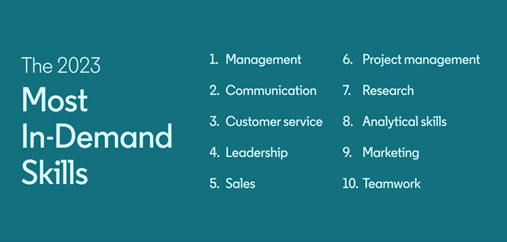
As technology progresses, the skills sought by companies also evolve. Adapting to the most sought-after skills enhances your value to the company and opens doors to jobs aligned with your interests. The ability to swiftly learn and adapt to new platforms and environments is key in maintaining these skills.
II. Top New Technology Trends
1. Computing Power
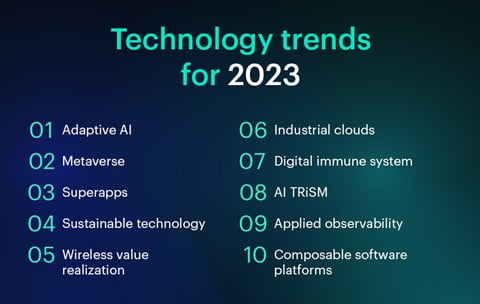
In the digital era, computing power permeates almost every facet of our lives, and its evolution continues. With the advent of 5G and the anticipation of 6G, computing power is generating more tech jobs, requiring specialized qualifications. Branches like Robotic Process Automation (RPA) are particularly relevant, offering roles like Data Scientist, AI Engineer, Robotics Researcher, and more.
2. Smarter Devices
Artificial intelligence has ushered in a new era of smarter devices, transforming our daily lives. Jobs in IT management, data science, and automation are in high demand. Proficiency in these areas, attainable through courses like RPA, can elevate your career in IT, marketing, or management.
3. Datafication
Datafication, the transformation of daily activities into data-driven technologies, is a pervasive trend. This leads to an increased demand for IT professionals, data scientists, engineers, and technicians. Certifications in data-related specializations, such as RPA, can pave the way for careers like Big Data Engineers, Robotics Engineers, and Business Intelligence Analysts.
4. AI and Machine Learning
AI continues to be a transformative force, impacting various aspects of our lives. The AI market is projected to reach $190 billion by 2025, offering diverse roles in development, programming, testing, and support. Machine learning, a subset of AI, is creating demand for skilled professionals, including AI Research Scientists, Machine Learning Engineers, and AI Architects.
5. Extended Reality
Extended reality, encompassing Virtual Reality (VR), Augmented Reality (AR), and Mixed Reality, is gaining prominence. It finds applications in gaming, medical fields, retail, and modeling, offering opportunities for roles like Extended Reality Architect, Software Developer, and Game Designers.
6. Digital Trust
The increasing integration of technology into our lives has fostered digital trust, leading to innovations in cybersecurity and ethical hacking. Specializations in these fields offer roles such as Cybersecurity Analyst, Penetration Tester, and Security Engineer.
7. 3D Printing
A key innovation, 3D printing, is instrumental in prototyping and has impacted biomedical and industrial sectors. Proficiency in AI, machine learning, modeling, and 3D printing can lead to roles like CX Program Manager, 3D Printer Engineer, and Robotics Trainer.
8. Genomics
Genomics, the study of DNA, holds the promise of improving health outcomes. Technical and non-technical roles in design, analysis, and diagnostics are emerging, creating opportunities for Bioinformatics Analysts, Genome Research Analysts, and Genetics Engineers.
9. New Energy Solutions
The global shift towards greener energy sources creates opportunities in science and social science-related careers. Roles such as Energy Specialists, Climate Strategy Specialists, and Renewable Energy Technologists are in demand.
10. Robotic Process Automation (RPA)
RPA, akin to AI and machine learning, automates tasks, creating new job opportunities. Roles like RPA Developer, RPA Analyst, and RPA Architect offer lucrative career paths for IT professionals.
11. Edge Computing
As a response to the limitations of cloud computing, edge computing is gaining prominence. Jobs like Cloud Reliability Engineer, Cloud Infrastructure Engineer, and DevOps Cloud Engineer are emerging in this field.
12. Quantum Computing
Quantum computing, leveraging quantum phenomena, is advancing rapidly and finding applications in healthcare, finance, and more. Skills in quantum mechanics, linear algebra, and machine learning are essential for roles in this field.
13. Virtual Reality and Augmented Reality
VR, AR, and ER are becoming integrated into various aspects of our lives, from training to entertainment. Roles such as Virtual Reality Architect, Front Lead Engineer, and Game Designers offer exciting opportunities.
14. Blockchain
Blockchain technology, beyond cryptocurrencies, offers secure data handling. Blockchain developers, with skills in programming languages and database fundamentals, are in demand across various industries.
15. Internet of Things (IoT)
The IoT, connecting devices over the internet, is becoming pervasive. Roles related to information security, AI, machine learning, and networking are crucial for those entering this field.
16. 5G
The advent of 5G is set to revolutionize connectivity and services, creating opportunities in AR, VR, and cloud-based gaming. Telecom companies and technology giants are actively involved in developing 5G applications.
17. Cyber Security
Cybersecurity remains a critical technology, evolving to counter new threats. Roles like Ethical Hacker, Malware Analyst, and Chief Security Officer offer promising career paths in this continually advancing field.
Conclusion
Staying abreast of these trends and acquiring the necessary skills is not just about keeping up with the times; it’s about thriving in a technology-driven future. As the digital landscape continues to evolve, those who embrace change and invest in continuous learning will find themselves at the forefront of innovation and success.