


Lesson 6 – Pharaohs
Introduction
The term “pharaoh” was originally used to refer to the Egyptian king during the New Kingdom period (from the 18th dynasty, 1539–1292 BCE). Over time, it became a respectful epithet by the 22nd dynasty (around 945–730 BCE).
However, it was never the king’s official title. The modern usage of “pharaoh” as a general term for all Egyptian kings is derived from its usage in the Hebrew Bible.
I. Definition
In ancient Egypt, the Pharaoh held both political and religious power and was referred to as the Lord of the Two Lands and High Priest of Every Temple. The term “pharaoh” comes from the Greek word for the Egyptian royal residence, which means “Great House.”
Over time, the name of the residence became associated with the ruler and eventually became exclusively used by the leader of the people. In the early days, the Egyptian monarchs were called kings, not pharaohs. The title of “pharaoh” for a ruler only emerged during the New Kingdom period (c.1570-c.1069 BCE).
Before the New Kingdom, foreign dignitaries and members of the court addressed the Egyptian monarchs as “your majesty,” while foreign rulers referred to them as “brother.” These practices continued even after the king of Egypt became known as a pharaoh.
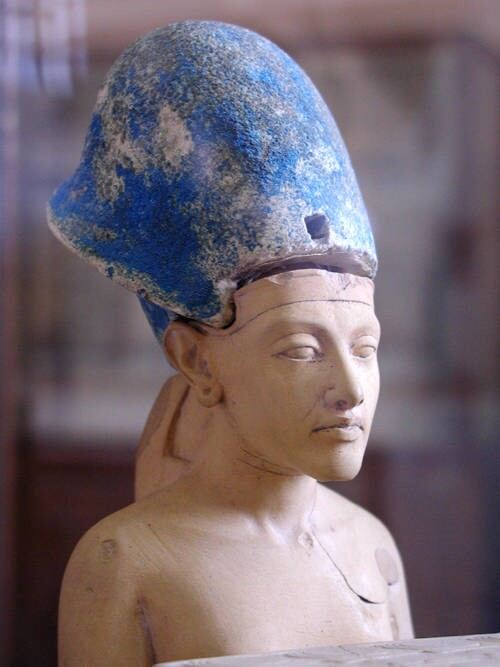
Akhenaten wearing the Egyptian Blue Crown of War
II. Art
The ancient Egyptians believed that their pharaoh was the link between the gods and the human world. Once the pharaoh became divine and took on the identity of Osiris, the god of the dead and father of Horus, he would pass on his sacred powers and position to his son, who would become the new pharaoh.
The pharaoh’s divine status was symbolized through various allegorical representations: the snake on his crown, known as the uraeus, would spit flames at his enemies; he was depicted as being able to defeat thousands of enemies on the battlefield; and he was believed to possess all-encompassing power, knowledge, and control over nature and fertility.
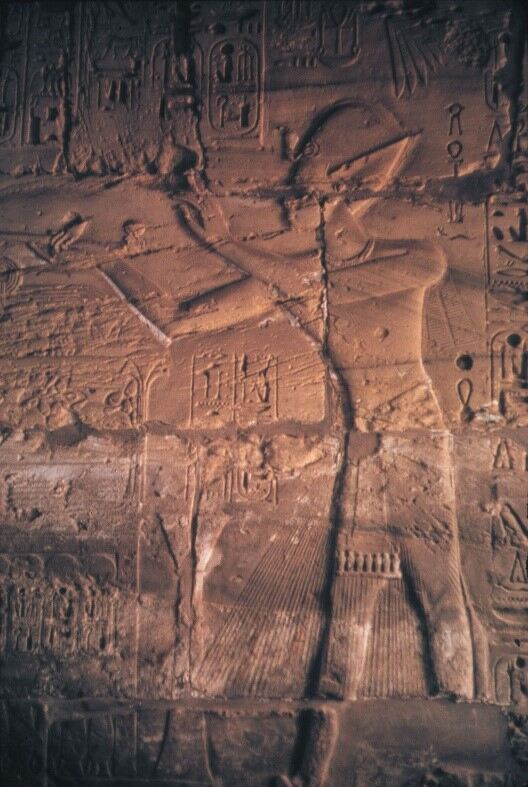
Rock carving of Pharaohs
As a divine ruler, the pharaoh had the responsibility of upholding the god-given order known as maat. He owned a significant portion of Egypt’s land and oversaw its use. Additionally, he was responsible for the economic and spiritual well-being of his people and served as the dispenser of justice. The pharaoh’s will was considered supreme, and he governed through royal decrees
However, in order to govern fairly, the pharaoh had to delegate some of his responsibilities. His chief assistant, known as the vizier, held various roles, including chief justice, head of the treasury, and overseer of all records. Below this central authority, the pharaoh’s commands were carried out through the nomes, or provinces, into which Upper and Lower Egypt were divided.
Conclusion
Osiris, the first king of Egypt, was highly respected by earthly rulers who sought to establish their own authority. They did so by carrying the crook and the flail, symbols that represented different aspects of kingship. The crook symbolized the guidance of the people, while the flail represented the fertility of the land, specifically the process of threshing wheat.
Originally, these symbols were associated with a powerful god named Andjety, but over time, they became absorbed by Osiris. As Osiris became firmly established as the first king in tradition, his son Horus also became associated with the reign of pharaohs.