


Lesson 3 – Ancient Egyptian Buildings
Introduction
Egyptology, the study of ancient Egypt, has captivated archaeologists and historians for centuries. The primary sources of knowledge about this ancient civilization are the numerous monuments, objects, and artifacts that have been unearthed from archaeological sites. These treasures are adorned with hieroglyphs, which have only been decoded in recent times.
As we delve into the world of ancient Egypt, we discover a culture that stands unparalleled in terms of its artistic beauty, architectural achievements, and the depth of its religious practices.
I. History
1. Predynastic Period (c. 5000-3100 B.C.)
During the Predynastic Period, which lasted for approximately 2,000 years, there are very few written records or artifacts that have been discovered. This period marked the gradual development of the Egyptian civilization.
2. Archaic (Early Dynastic) Period (c. 3100-2686 B.C.)
In the Archaic Period, similar to other periods, the majority of ancient Egyptians were farmers who lived in small villages. The Egyptian state relied heavily on agriculture, particularly the cultivation of wheat and barley.
The annual flooding of the Nile River played a crucial role in providing irrigation and fertilization for the crops. Farmers would sow the wheat after the floodwaters receded and harvest it before the onset of high temperatures and drought.
3. Old Kingdom: Age of the Pyramid Builders (c. 2686-2181 B.C.)
The Old Kingdom began with the third dynasty of pharaohs. These pharaohs held absolute power and established a stable central government. The kingdom did not face any significant external threats during this time. However, after the reign of King Pepy II from the sixth dynasty, who ruled for an astonishing 94 years, the Old Kingdom fell into chaos.
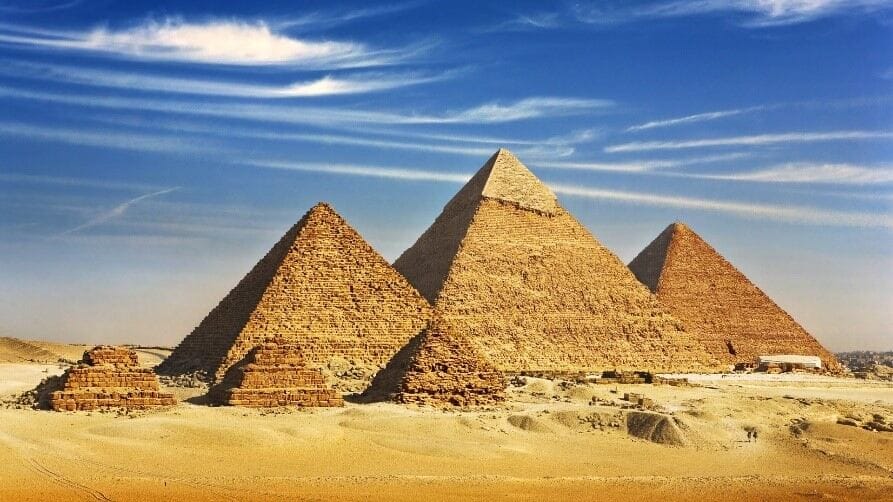
Pyramids of Giza and the Sphinx
4. First Intermediate Period (c. 2181-2055 B.C.)
This continued until around 2160 B.C., when the central authority completely dissolved, leading to a civil war between provincial governors. Around 2055 B.C., Prince Mentuhotep of Thebes managed to overthrow Heracleopolis and reunite Egypt, marking the beginning of the 11th dynasty and the end of the First Intermediate Period.
5. Middle Kingdom: 12th Dynasty (c. 2055-1786 B.C.)
During the Middle Kingdom, Egypt experienced a period of prosperity similar to the Old Kingdom. The kings of the 12th dynasty implemented a practice of having each successor serve as a co-regent, ensuring a smooth transition of power. This tradition was initiated by Amenemhet I.
6. Second Intermediate Period (c. 1786-1567 B.C.)
The 13th dynasty marked the start of a turbulent era in Egyptian history. A series of kings failed to establish a strong hold on power, leading to a fragmented Egypt during the Second Intermediate Period. The country was divided into various spheres of influence.
7. New Kingdom (c. 1567-1085 B.C.)
During the reign of Ahmose I, the first king of the 18th dynasty, Egypt was once again brought together. This led to the establishment of the world’s first great empire, which extended from Nubia to the Euphrates River in Asia.
8. Third Intermediate Period (c. 1085-664 B.C.)
The following 400 years, known as the Third Intermediate Period, witnessed significant changes in Egyptian politics, society, and culture. The centralized government under the pharaohs of the 21st dynasty gave way to the resurgence of local officials. Additionally, foreigners from Libya and Nubia seized power and left a lasting impact on Egypt’s population.
9. Late Period to Alexander’s Conquest (c.664-332 B.C.)
The Saite dynasty, starting with Psammetichus, ruled a reunified Egypt for less than two centuries. However, the conquest of Egypt by the Arabs in the seventh century A.D. and the introduction of Islam marked the end of ancient Egyptian culture’s outward aspects and propelled the country towards its modern form.
II. Characteristics
The ancient Egyptians utilized simple yet powerful tools. The architects of these massive stone structures designed them with precision and accuracy. The supervisors and masters of the construction closely oversaw the multitude of workers and the intricate details to ensure that they met the expected standards and the requirements of those who commissioned the projects.
In the architecture of ancient Egypt, important structures like temples and tombs were constructed using stone instead of bricks to ensure their longevity. The use of pure geometric forms in architecture made it easier for them to shape construction projects that were well-suited for stone, which was the most commonly used material.
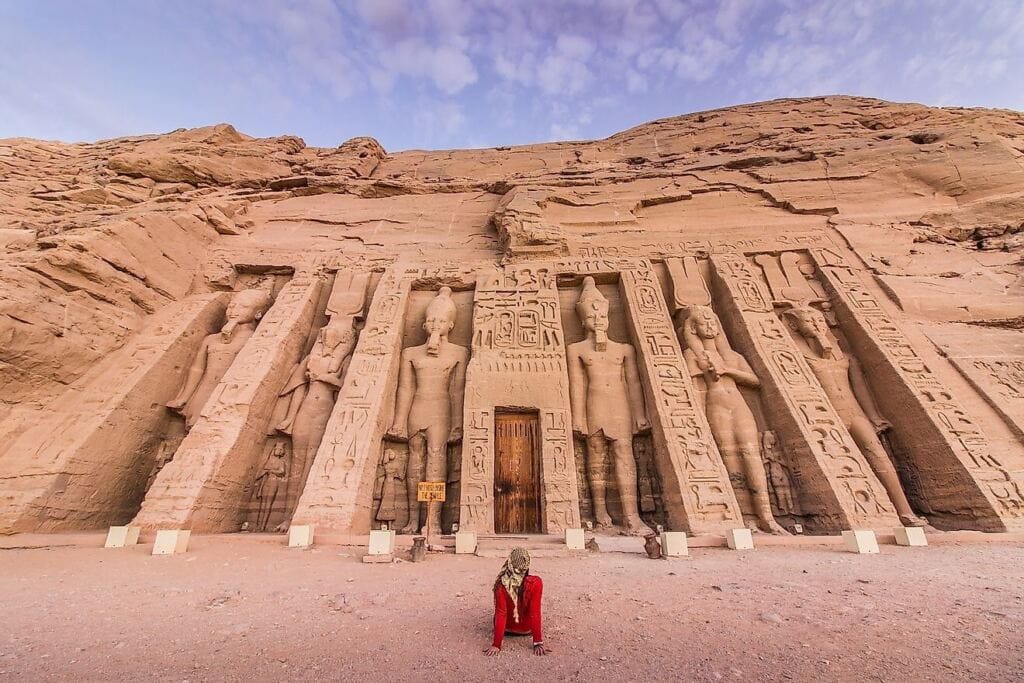
Abu Simbel Temples (Aline Fortuna /Shutterstock)
Both domestic dwellings of the elite and the rest of the Egyptians were built with short durability materials; such as bricks of mud and wood. The lack of trees in this region added to the fact that they were less used due to the difficulties of obtaining them. These constructions with these types of materials don’t last sufficiently because of the conditions of the arid desert.
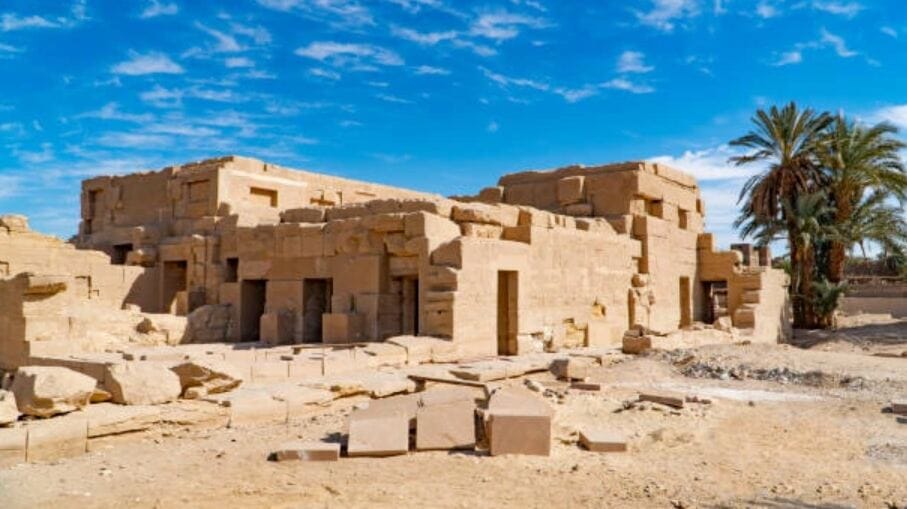
Ancient Egyptian Houses
The peasants lived in simple houses, in which of course there were no floor slabs or large columns they were made of mud bricks, while the palaces of the elite were more elaborate structures and with better materials. A few are still standing as tangible testimony of ancient Egyptian architecture.
III. Influences
Ancient Egypt flourished as the dominant civilization in the Mediterranean world for almost 3,000 years. Its influence can still be seen today through the numerous artifacts and artworks that have been discovered.
One example is the ancestral bust, a small limestone figurine that Egyptians used to keep on a shelf built into the walls of their homes. These busts served as a way for Egyptians to remember their deceased relatives, as they didn’t have cameras to take photographs.
Conclusion
Tourists from around the globe visit Egypt to immerse themselves in its rich history. Although cities like Cairo have undergone modernization, the true essence of ancient Egyptian culture can be found in its architecture. The majestic pyramids in Giza and the hidden tombs in the Valley of the Kings provide history enthusiasts with an unparalleled opportunity to witness the grandeur and magnificence of the ancient world. Egypt offers a scale of historical experience that is unmatched by most other countries.