


Lesson 1 – Ancient Egyptian Art
Introduction
Art played a significant role in Egyptian culture. Each piece of art from this period has distinct characteristics that make it easily recognizable as Egyptian. This is a unique aspect that sets Egyptian art apart from other art forms in different historical periods and cultures.
Unlike other forms of art, Egyptian art remained relatively consistent throughout its 3,000-year history. This raises the question of why it didn’t change significantly over time. To understand this, it is crucial to recognize the importance of art historians in studying and interpreting Egyptian art.
I. History
1. Early Dynasty
During the Early Dynastic, ancient Egyptian civilization witnessed the emergence of key elements that defined their culture. These included art, architecture, and various aspects of religion. This period lasted until approximately 2,686 BCE. It was during this time that the pantheon of gods was established, and the depictions and proportions of human figures in their artwork were refined. Additionally, Egyptian imagery, symbolism, and the foundations of hieroglyphic writing were established.
2. Old Kingdom
The Old Kingdom refers to the time in ancient Egypt, during the third millennium BCE when the civilization reached its highest level of complexity and accomplishment. During this period, a significant number of pyramids were built as burial sites for pharaohs, making it widely recognized as “the Age of the Pyramids.”
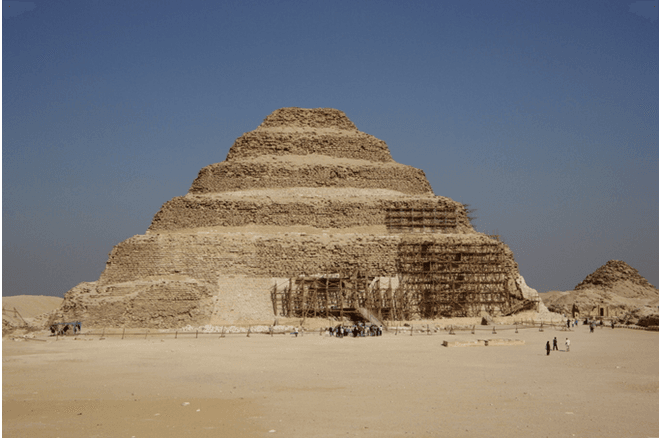
Step pyramid of Djoser at Saqqara, Egypt
3. Middle Kingdom
The Middle Kingdom of Egypt refers to a specific time in ancient Egyptian history, which lasted from the establishment of the Eleventh Dynasty to the end of the Thirteenth Dynasty, between 2055 and 1650 BCE. This era saw the rise of the funerary cult of Osiris, which became the dominant religion among the Egyptian population.
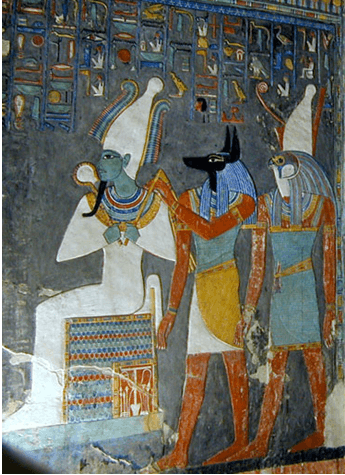
The gods Osiris, Anubis, and Horus, from a tomb painting
4. New Kingdom
Also known as the Egyptian Empire, spanned from the sixteenth century to the eleventh century BCE. This period included the Eighteenth, Nineteenth, and Twentieth Dynasties of Egypt. The New Kingdom came after the Second Intermediate Period and was followed by the Third Intermediate Period. It was a highly prosperous era for Egypt and represented the height of its influence and strength.
5. Late Period and Beyond
The Ptolemaic dynasty was a Greek royal family of Macedonian origin that governed the Ptolemaic Empire in Egypt during the Hellenistic era. Their reign lasted for 275 years, from 305 BCE to 30 BCE, making them the final dynasty of ancient Egypt.
II. Politics
Registers were employed to communicate information about the scenes. The higher a figure was placed within the scene, the higher their status. Overlapping figures indicated that the ones beneath were farther away, as were the elements positioned higher within the register.
The most frequently used technique to convey hierarchy was the difference in scale. Figures of greater importance were depicted on larger scales. Kings were often portrayed at the same scale as deities, but both were shown as larger than the elite and significantly larger than the average Egyptian.
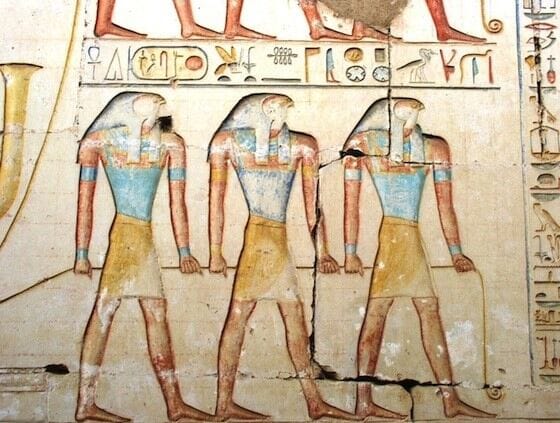
Painted sunk relief showing orderly register in the Temple of Ramses II at Abydos
(Dr. Amy Calvert, CC BY-NC)
III. Culture
The Egyptians believed in resurrection, which means they thought that the physical body would come back to life in the next world. This belief led them to see the afterlife as a continuation of the current world. They constructed durable stone tombs that were meant to endure for eternity. They adorned the walls of these tombs with painted scenes, depicting their desired treatment by the gods in the afterlife.
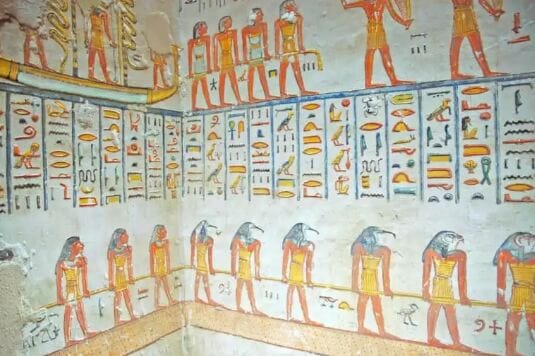
Tomb of Pharaoh Rameses VI. Egyptians (LunaseeStudios / Shutterstock)
In today’s society, it may seem strange to depict a war scene. However, the ancient Egyptians had a different perspective. As a dominant force in the ancient world, they sought to maintain their power and strength through constant warfare and victories. After a successful battle, a pharaoh would commemorate his triumph by carving the story on the outer wall of a temple. The ancient Egyptians were meticulous record-keepers, documenting everything from the number of captives and casualties to the names of the pharaoh’s horses.
Religious texts also offer valuable insights into Egyptian culture, shedding light not only on the intricacies of their religion but also on their deepest fears. It was the responsibility of Egyptian priests to document their religious beliefs, and one of the most significant texts available to historians is the “Book of the Dead.” This guidebook, written on long scrolls of papyrus, provides instructions on how to navigate the afterlife.
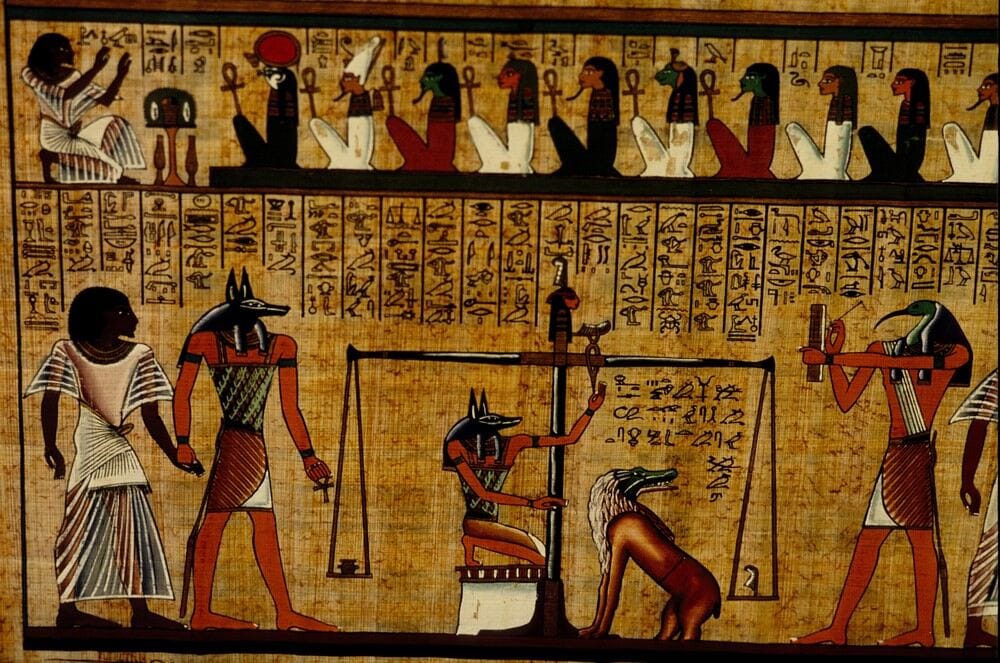
“Book of the Dead” (francesco de marco / Shutterstock)
Conclusion
The history of Ancient Egypt is a fascinating tale, especially considering it is one of the most remarkable civilizations in the world. Like any advanced society, Egyptian art provides valuable insights into the people who created it. By exploring the “art historical” perspective on Egyptian history, we can uncover what art historians can reveal about the larger narrative of ancient Egypt.