


Lesson 5 – Native Americans During the Gilded Age
Introduction
The “Gilded Age” in the 19th and early 20th centuries witnessed transformative advancements such as electricity, the transcontinental railroad, and mass immigration. Despite apparent prosperity, underlying issues of corruption and poor working conditions marred this period. The term “Gilded Age” reflects the era’s superficial glitter concealing deep social challenges and inequality.
I. The American Gilded Age
1. Definition
The Gilded Age is notorious for producing both incredibly wealthy industrialists, known as “Captains of Industry,” and those labeled as “Robber Barons.” This era marked a period of significant technological progress, introducing innovations like electricity, vacuum cleaners, refrigerators, and sewing machines, which improved the overall quality of life for Americans. The widespread availability of commercial electricity led to the establishment of factories in major cities, attracting waves of immigrants who came to America in search of employment opportunities.
2. Story
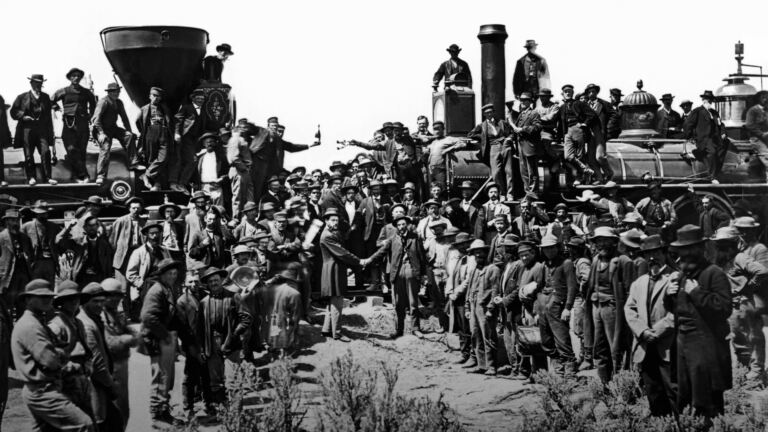
By 1880, the transcontinental railroad was responsible for transporting approximately $50 million worth of goods annually. It enabled people to order a wide range of products that could be shipped across the nation by train.
The nation experienced a rapid wave of industrialization thanks to technological advancements like railroads, steel production, and new communication technologies. For instance, the railroad was a groundbreaking technological innovation that found utility even during the Civil War, ultimately creating an efficient means of rapidly transporting goods nationwide. Manufacturing processes, such as steel production, saw improvements like the Bessemer process, resulting in higher-quality steel. Additionally, the commercial adoption of electricity allowed businesses, offices, and manufacturers to increase their production capabilities and, in turn, extended working hours. Unfortunately, the longer workday led to deteriorating working conditions and quality of life for laborers.
The Gilded Age
3. The Urban life
Economic Aspects
In the late 19th and early 20th centuries, urban centers became hubs of economic activity, driven by the rise of industries. Factories and businesses thrived, offering job opportunities that attracted a diverse workforce. This economic boom fostered innovation, technological advancements, and increased production. However, economic disparities were glaring; while some prospered, many lived in poverty, struggling to make ends meet in the rapidly growing cities.
Social Dynamics
Urbanization brought people from different backgrounds and cultures together, creating a vibrant social tapestry. Neighborhoods became melting pots of diversity, with individuals sharing traditions, languages, and customs. Social challenges emerged as well, such as overcrowded living conditions, inadequate sanitation, and limited access to education and healthcare. These conditions underscored the need for social reforms and led to the emergence of social movements advocating for better living standards.
Enforcement and Regulation
As cities expanded, the need for regulation and enforcement became paramount. Law enforcement agencies were tasked with maintaining order in bustling urban environments. Regulations were put in place to address issues like public safety, sanitation, and housing standards. However, enforcing these regulations proved challenging due to the sheer size of urban populations and limited resources. The enforcement efforts were often inconsistent, leaving many issues unresolved.
Class Divisions
Urban societies were sharply divided along class lines. The wealthy elite enjoyed luxurious lifestyles, residing in affluent neighborhoods, and had access to quality education and healthcare. In stark contrast, the working class faced grueling working conditions, lived in overcrowded tenements, and struggled to secure basic necessities. This disparity highlighted the social inequality prevalent in urban life. Efforts to bridge this gap led to the emergence of labor movements and social reforms, aiming to improve the lives of the working class and create a more equitable society.
However, despite the deplorable living conditions in many slums, some residents considered them essential social hubs, particularly for new immigrants. As Hasia Diner notes in her work “Lower East Side Memories and Erin’s Daughters in America” (2002), many urban dwellers took pride in their affiliation with these urban “slums,” which played a vital role in helping newcomers transition into American life.
In this context, a “tenement” refers to a set of rooms within a building forming a separate residence, while “slums” describe overcrowded streets primarily inhabited by lower-class individuals.
4. Immigrants in The Gilded Age
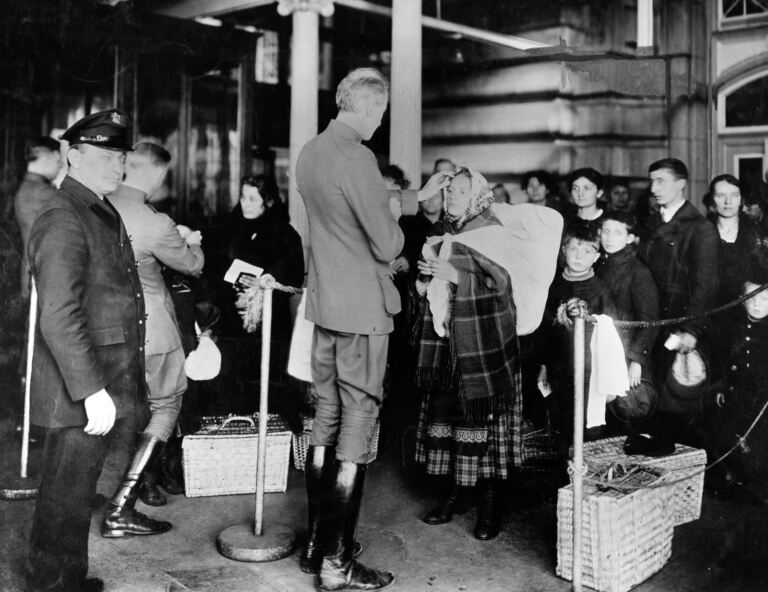
During the Gilded Age, a massive wave of immigrants, numbering around 11.7 million, flocked to the United States in pursuit of the “American Dream,” with approximately 10.6 million of them originating from Europe. These newcomers typically arrived with limited possessions or financial resources, facing a challenging start to their lives in America. They predominantly settled in major urban hubs like New York, Chicago, and Boston. Exploiting this influx of immigrants, business owners and managers offered meager wages for demanding, perilous, and long-hour jobs. Employers implemented various measures to prevent immigrants from organizing and expressing dissatisfaction with their working conditions. Over time, labor unions began to emerge and initiated protests and strikes against these factories. The so-called American Dream of this era had a tarnished quality, as many immigrants encountered complexities. These complexities included low wages and deteriorating work conditions, which in turn led to substandard living conditions, particularly in urban slums.
Immigration in the Gilded Age
II. The Conquest in Native American Issues During The Gilded Age
The conflicts involving Native Americans during the Gilded Age were multifaceted and marked by a series of challenges, often stemming from land disputes, forced assimilation policies, and socio-economic pressures. Here’s an overview of some key conflicts:
1. Land Disputes
One of the most prominent conflicts was over land. As settlers, miners, and the government expanded westward, Native Americans were often displaced from their ancestral lands, leading to conflicts over territory.
The construction of railroads, mining operations, and agricultural expansion encroached upon Native American territories, frequently resulting in violent confrontations.
2. Forced Assimilation
The U.S. government's policy of forced assimilation was a source of conflict. Native Americans were pressured to adopt Euro-American customs and abandon their traditional ways of life.
The Dawes Act of 1887 further fueled conflicts by allotting reservation lands to individual Native Americans, fragmenting communal land ownership and causing disputes.
3. Resistance Movements
The forced removal of Native American children from their families to attend boarding schools was a source of conflict. These schools aimed to strip students of their cultural identity and language, leading to tensions within Native communities.
4. Boarding Schools
Native American leaders and groups, such as the Lakota Sioux under Sitting Bull and Crazy Horse, engaged in resistance against the encroachment of settlers and the U.S. military. The Battle of Little Bighorn (1876) is a notable example of this resistance.
5. Treaty Violations
The U.S. government often violated treaties with Native American tribes, leading to disputes and legal battles over treaty rights and land claims.
6. Economic Pressures
Economic factors, such as the loss of traditional hunting and fishing grounds, contributed to conflicts. Many Native Americans struggled with poverty and limited economic opportunities.
7. Legal Battles
Native Americans sought legal remedies to address land and treaty disputes. These legal battles often pitted tribal governments and organizations against the federal government.
8. Environmental Impact
The expansion of resource extraction industries, such as mining and logging, on or near reservation lands had adverse environmental impacts, affecting Native American communities' livelihoods and resources.
9. Cultural Preservation
Native Americans engaged in efforts to preserve their cultural heritage, including language and religious practices, amidst pressures to assimilate.
Advantages of the Conflict
One advantage was the economic expansion resulting from westward expansion and industrialization. The conquest of new territories provided vast resources, stimulating economic growth and job creation. Additionally, the conflict sparked innovations and technological advancements, driving industrial progress. Moreover, it led to infrastructural developments, connecting different regions and fostering national unity. These economic and infrastructural benefits laid the foundation for America’s emergence as an industrial powerhouse on the global stage.
Disadvantages of the Conflict
Conversely, the conflict brought numerous disadvantages, notably the displacement and marginalization of indigenous communities. Native Americans suffered immense loss of land, culture, and lives, leading to enduring social and economic challenges. Moreover, labor disputes between workers and powerful industrialists often turned violent, highlighting harsh working conditions and the exploitation of laborers. The conflict of the conquest underscored glaring social inequalities, giving rise to widespread poverty and discontent among the working class. These disadvantages highlighted the dark side of progress and economic growth, revealing the stark realities faced by marginalized communities.
Meaning of the Conflict
The conflict of the conquest symbolized a pivotal moment in American history, representing the complex interplay between ambition, progress, and human cost. It showcased the ethical dilemmas arising from the pursuit of economic prosperity, often at the expense of vulnerable populations. This conflict challenged the nation’s moral compass, forcing society to grapple with questions of justice, equality, and fairness. It served as a reminder of the importance of balancing progress with social responsibility, urging future generations to learn from the past and strive for a more equitable society.
III. The Assimilation During the Gilded Age
1. Introduction
Cultural assimilation in the United States, spanning from the 1790s to the 1920s, aimed to integrate Native Americans into mainstream European-American culture. The early proponents of this assimilation effort, including George Washington and Henry Knox, believed that education was the primary tool for acculturating minority populations. The underlying idea was that by learning the customs and values of the United States, Indigenous peoples could blend their tribal traditions with American culture, facilitating peaceful integration into the larger society. Following the conclusion of the Indian Wars in the late 19th and early 20th centuries, the federal government took steps to suppress traditional religious practices and established Native American boarding schools where children were mandated to enroll. These schools enforced English language usage, standard curriculum, religious attendance, and discouraged adherence to tribal customs.
2. Laws to Assimilate The Native Culture
This passage traces the evolution of U.S. policies towards Native Americans from the early 19th century to the 1930s. It outlines the establishment of federal agencies like the Office of the Superintendent of Indian Trade and the Bureau of Indian Affairs, responsible for overseeing Indian affairs and trade. The passage delves into the grim consequences of the Indian Removal Act of 1830, which led to the forced relocation of Native Americans, often under coercive treaties. The Dawes Act of 1887 is highlighted, emphasizing how it allocated limited land to individual tribal members, disrupting communal land ownership. The narrative then shifts to the harsh reality of Native American boarding schools, where cultural assimilation was ruthlessly enforced. Children were forcibly separated from their families, stripped of their native languages, beliefs, and identities, and subjected to harsh conditions. The passage also touches on the exposure of these practices, leading to the closure of most boarding schools by the 1930s, highlighting the deeply troubled history of Native American relations with the U.S. government.
Conclusion
In the Gilded Age, Native Americans experienced a period of profound upheaval and adversity. Government policies of forced assimilation, displacement, and the establishment of boarding schools left lasting scars on Native communities. The loss of ancestral lands and the suppression of cultural practices threatened their way of life. Yet, Native Americans displayed resilience, maintaining their heritage against great odds. Despite the challenges, they preserved their identities and traditions, passing them down through generations. Today, Native Americans continue to confront the legacy of this era, seeking justice, recognition, and the revitalization of their unique cultures, contributing to the rich tapestry of American diversity.