


Lesson 3 – Westward Expansion
Introduction
The Homestead Act of 1862, a landmark piece of legislation in American history, represented a pivotal moment in the nation’s westward expansion. Enacted during the Civil War, this act offered individuals the opportunity to claim and cultivate vast tracts of public land, fostering dreams of landownership and economic independence. In just 75 words, the introduction encapsulates the significance and transformative impact of this legislation on the United States’ frontier development.
I. The Homestead Act of 1862
1. Overview
In 1785
The distribution of government-owned lands had been a contentious issue since the Revolutionary War. Disputes arose over land measurement and pricing, with early methods for allocating unsettled land being inconsistent and haphazard. The Land Ordinance of 1785 eventually introduced a standardized federal land survey system, dividing territories into townships, each comprising 36 sections, each one square mile or 640 acres. Initially, land sales were seen as a source of government revenue rather than an encouragement for settlement, and buyers had to acquire large sections at a high cost of $1 per acre. This financial barrier and the substantial labor required for land clearing made land ownership impractical for many.
By 1800
The minimum lot size was reduced to 320 acres, and a four-installment payment plan was introduced. Nevertheless, prices remained fixed at $1.25 per acre until 1854. That year, federal legislation implemented a graduated scale, adjusting land prices based on lot desirability. Sections on the market for extended periods were reduced to 12 ½ cents per acre. Additional incentives were offered to veterans and Oregon Territory settlers, making homesteading more feasible. Despite these changes, national land-use policies continued to render land ownership financially out of reach for most prospective homesteaders.
On May 20, 1862
The Homestead Act, signed into law by President Abraham Lincoln. This legislation was deeply entwined with the turmoil of the Civil War, as 11 states had seceded from the Union when it was enacted.
On January 1, 1863
Daniel Freeman, a Union Army scout, was set to depart from Gage County, Nebraska Territory, for duty in St. Louis. However, a chance encounter at a New Year's Eve gathering changed his fate. Freeman met local Land Office officials and persuaded a clerk to open the office shortly after midnight to file a land claim. In this moment, Freeman became one of the early beneficiaries of the Homestead Act
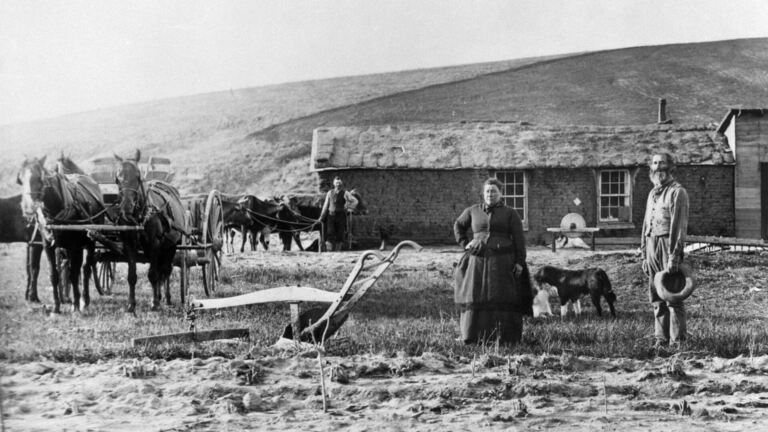
The Homestead Act of 1862
2. Mexican American war
Purpose and Background of the Mexican-American War:
The Mexican-American War, spanning from 1846 to 1848, was triggered by disputes over Texas' annexation and its southern border. The U.S. aimed to acquire territories like California and New Mexico, leading to the conflict with Mexico.
Significance of the Mexican-American War:
This war was a territorial dispute between Mexico and the United States, resulting in Mexico losing a vast portion of its territory to the U.S. through the 1848 Treaty of Guadalupe Hidalgo.
Historical Context and Progression:
Conflict erupted in 1846 along the Rio Grande, considered Texas' border by the U.S. President James K. Polk's push for war led to its declaration by Congress. Key battles, such as the Battle of Buena Vista and the Siege of Veracruz, shaped the course of the war.
Outcomes and Impact of the Mexican-American War:
The war concluded with the Treaty of Guadalupe Hidalgo in 1848, resulting in Mexico ceding territories, including California, Texas, Arizona, and more, to the United States. This expansion significantly altered the U.S. map and had long-lasting consequences for both nations.
In the mid-1800s
Before and after the Mexican American War, changing policies were influenced by shifts in the American economy, demographics, and social climate during the early 19th century. In the 1830s and 1840s, increasing prices for crops like corn, wheat, and cotton favored larger, well-funded farms, particularly in the South, leading to the displacement of smaller ventures. These displaced farmers then looked westward to undeveloped regions offering more affordable opportunities for settlement.
Prior to the War with Mexico (1846–1648)
Those moving westward demanded "preemption," the right for individuals to settle land before payment (an early form of credit). This policy was opposed by Eastern economic interests, fearing it would deplete the cheap labor pool for factories. After the war with Mexico, various factors contributed to the growth of the homestead movement. Economic prosperity attracted a surge of immigrants to America, many of whom sought new opportunities in the West. The construction of new canals and roads reduced the West's reliance on the New Orleans harbor, and the repeal of England's corn laws opened up new markets for American agriculture.
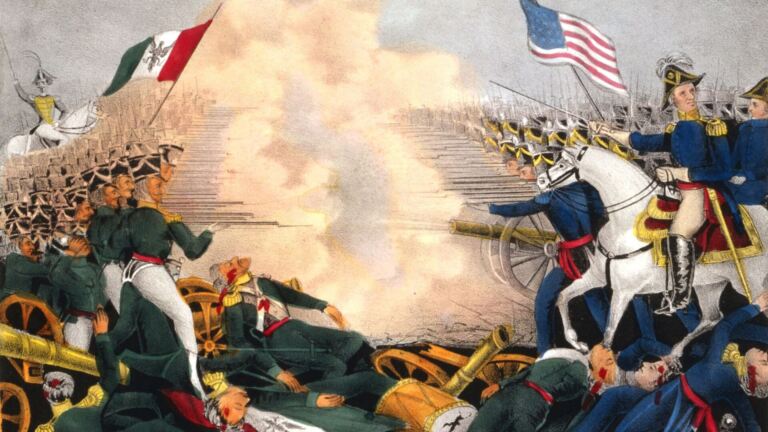
The Mexican – American war (1846-1848)
3. Destiny of Slave in This Period
In 1862
The Civil War resolved the slavery issue as Southern states had seceded from the Union. In 1862, the Homestead Act became law, introducing a three-part process for acquiring homesteads:
- Applying
- Improving the land
- Applying for title deeds
Any U.S. citizen, or intended one, who hadn’t fought against the U.S. Government could apply and claim 160 acres of surveyed Government land. For the next 5 years, the General Land Office ensured that homesteaders demonstrated a genuine effort. This involved making the homestead their primary residence and improving the land. After this period, the homesteader could request a patent (or title deed) by providing proof of residency and the necessary improvements to a local land office.
Local land offices forwarded these documents, along with a final eligibility certificate, to the General Land Office in Washington, DC. They examined the case files, granting valid claims ownership free and clear, except for a small registration fee. Title could also be obtained with 6 months of residency and minimal improvements by paying the government $1.25 per acre. Union soldiers could deduct their service time from the residency requirements after the Civil War.
The challenges in this period
Some individuals exploited legislative gaps or used fake claimants to acquire land. The underfunded General Land Office struggled to hire sufficient investigators for its widespread local offices, making investigators vulnerable to bribery. Frontier conditions posed additional challenges, including harsh weather, insect infestations, limited building materials, and scarce resources. The 160-acre plots often proved inadequate for sustaining agriculture in arid regions.
The improvement in this period
Transportation improvements, such as the transcontinental railroad, eased some hardships. Railroads facilitated access to manufactured goods, with railroad companies enticing new immigrants with land offers.
Dawes Act of 1887
This period's land distribution also intersected with Federal Indian policy, marked by a shift towards granting land allotments to individual Native Americans and opening Indian lands to settlers through the Dawes Act of 1887 as the nation's demand for land continued to grow.
The tension of slavery
The westward expansion of the United States was significantly shaped by slavery. Plantation owners migrated west, bringing enslaved people to cultivate crops. This expansion led to conflicts due to the division between slave and free states. Legislation like the Missouri Compromise and the Compromise of 1850 attempted to balance this tension. However, the Kansas-Nebraska Act intensified the issue, resulting in violent clashes in Kansas. The 1857 Dred Scott decision, categorizing enslaved individuals as property, not citizens, further deepened the controversy. These events highlighted the moral quandaries and ethical debates surrounding slavery during the nation's expansion.
The Hardships of Slaves
Enslaved people endured severe hardships during westward expansion. They were compelled to work in extreme conditions, facing exhausting labor and harsh weather. Families were frequently separated due to slave sales. Denied fundamental rights and education, they lived in overcrowded and unsanitary conditions, enduring constant fear of punishment and the possibility of being torn away from their families. The expansion of territories further exacerbated these difficulties, subjecting more individuals to the brutality of slavery as new regions became part of the United States.
II. The Leadership of War by Daniel Freeman and His Pioneers
On January 1, 1863
Daniel Freeman, along with 417 others, submitted their land claims. Subsequently, numerous pioneers followed suit, settling the land, constructing towns and schools, and forming new states from these territories. Often, these schools served as the heart of the community, taking on roles as churches, polling places, and social meeting spots.
In 1936
The Department of the Interior officially recognized Daniel Freeman as the initial claimant and established the Homestead National Monument, situated near a school constructed in 1872 on Freeman's homestead near Beatrice, Nebraska. Presently, the monument is under the administration of the National Park Service, commemorating the transformations brought about by the Homestead Act of 1862 on both the land and the nation.
By 1934
More than 1.6 million homestead applications had been processed, leading to the transfer of over 270 million acres—equivalent to 10 percent of all U.S. lands—into the hands of individuals. The Homestead Act was repealed in the 48 contiguous states with the passage of the Federal Land Policy and Management Act of 1976, though it did grant a ten-year extension on claims in Alaska.

Daniel Freeman – The Commander
III. FAQ
Why did westward expansion negatively impact Native American communities?
Westward expansion led to the loss of ancestral lands, destruction of cultural traditions, and violent conflicts with European settlers, causing significant harm to Native American communities.
Were there any efforts to protect Native American rights during westward expansion?
Despite some attempts at negotiation and treaties, many agreements were broken, leading to forced relocations and hardships for Native Americans.
What were the long-term consequences of westward expansion on Native American populations?
The enduring consequences included displacement, loss of resources, cultural erosion, and significant challenges in preserving their ways of life, leading to generational trauma among Native American communities.
Conclusion
Westward expansion profoundly harmed Native American communities, resulting in the loss of ancestral lands, erosion of cultural practices, and violent clashes with settlers. Displacement, resource depletion, and enduring hardships were common as European settlers forced Native Americans off their lands. Broken treaties and forced relocations to unfamiliar territories caused immense suffering and led to significant loss of lives.