


Lesson 2 – Accuracy and Abbreviations in Medical Terminology
Introduction
Mastering and accurately using medical terminology is crucial in the medical field because it directly impacts patients’ lives. Medical terms are exact, and misunderstanding words or numbers can harm someone and lead to severe consequences. Medical terminology varies across different fields, such as obstetrics and dentistry. Medical terminology also advances global healthcare science by facilitating collaboration among healthcare professionals, enabling rapid and accurate assessment of patient’s health and needs, thereby achieving better outcomes. An accurate understanding of medical terminology also directly influences medical translation, where there is no room for error in healthcare and medical care.
I. Medical Terminology
1. Definition
Medical terminology originates from various languages, including English, Latin, and Greek. It is used to accurately describe the human body and its components, conditions, processes, and procedures scientifically.
Hundreds of thousands of medical terms make it challenging to memorize them all. Despite their complexity, these terms generally follow a structured format. One can quickly and accurately comprehend medical terminology by understanding the principles behind these structures.
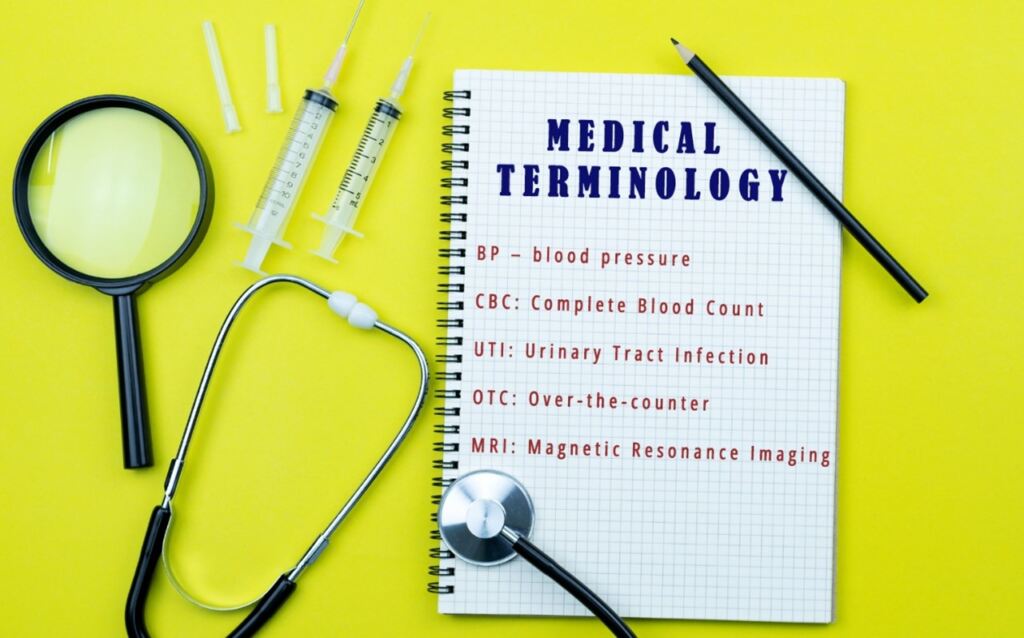
2. When Are Medical Terms And Their Abbreviations Used?
Medical terms and their abbreviations are used in various contexts throughout the healthcare industry. They are crucial not only in hospitals and clinics but also in medical education and are invaluable for medical translators, healthcare technicians, and more.
Here are some instances where medical terminology and their abbreviations are commonly used:
Patient Medical Records
Medical records stored at healthcare facilities contain numerous medical terms. These records accurately and comprehensively document personal information, physical and mental health status, medical history, and treatment plans.
Diagnostic Tests
Healthcare professionals use medical terminology to describe and analyze diagnostic test results, enabling them to generate accurate reports and treatment recommendations.
Patient Care
Medical terminology assists healthcare providers in accurately describing patients' conditions and symptoms, ensuring consistent and comprehensive patient care.
Education and Training
Medical terminology is essential in medical education and research. It provides students with the necessary knowledge for learning and enables researchers to share their findings effectively through reports and publications.
II. Understanding Some Commonly Used Abbreviations Of Medical Terms
1. Structure Of A Medical Term
To approach these medical terms, first, we need to understand how each medical term is formed. Each medical term is usually formed from several parts (elements) put together. Therefore, when we understand the meaning of each part (element), we can easily deduce the meaning of the entire term. A medical term is typically composed of the following components:
A. Prefix
This is the beginning of the term, often a single word or several short words with specific meanings in the medical field. The prefix helps determine the specialty or type of disease or describes the characteristics or conditions of a disease.
For example:
- "Cardio-" (related to the heart)
- "Neuro-" (related to the nervous system)
- "Dermato-" (related to the skin)
- "Gastro-" (related to the stomach)
B. Suffix
This is the end of the term, often a single word or a group of words with specific meanings that describe the type of disease, pathological process, or other medical terms.
For example:
- "-itis" (inflammation)
- "-oma" (tumor)
- "-logy" (study of)
- "-ectomy" (surgical removal)
C. Between components
Between the prefix and suffix, there may be connecting vowels or other elements to form more specific medical terms.
For example:
- "Gastroenteritis": "Gastro-" (stomach) + "enter-" (intestine) + "-itis" (inflammation)
- "Neurology": "Neuro-" (nervous system) + "-logy" (study of)
- "Osteoporosis": "Osteo-" (bone) + "-porous" (porous condition)
- "Cardiology": "Cardio-" (heart) + "-logy" (study of)
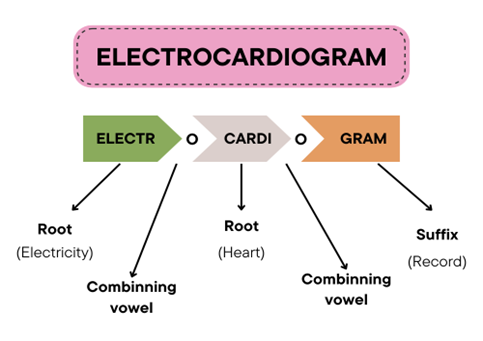
For example, the term Bronchitis consists of “Bronch-“ related to the bronchi (branches of the respiratory tract), and “-itis” which means inflammation. “Bronchitis” is inflammation of the bronchi, often occurring during colds or viral infections.
Another example is Dermatitis: it comprises two parts, “Dermat-“ meaning skin, and “-itis” meaning inflammation. Therefore, Dermatitis refers to inflammation of the skin, which can be caused by various factors such as allergies, chemical exposure, or other skin conditions.
Medical terms are constructed this way to facilitate easy recognition, description, and communication among healthcare professionals regarding different diseases, processes, or conditions.
2. Commonly Used Abbreviations Of Medical Terms
Standard abbreviations of medical terms are often long and complex, and abbreviations help make communication among healthcare professionals more efficient. Rapid and accurate information transmission between experts and healthcare staff reduces the risk of misunderstandings and errors in documentation and communication. When everyone uses the same abbreviations, information is understood consistently and more accurately. This is crucial for diagnosis and treatment.

Here are some commonly used abbreviations of medical terms:
• CPR: Cardiopulmonary Resuscitation – an emergency to restore heart and lung function.
• MRI: Magnetic Resonance Imaging – a medical imaging technique using strong magnets and radio waves to create detailed images of organs and tissues.
• CT Scan: Computed Tomography Scan – a medical imaging method that uses X-rays to create detailed cross-sectional images of internal organs.
• ICU: Intensive Care Unit – hospital department providing specialized care for critically ill patients.
• CBC: Complete Blood Count – a comprehensive blood test to evaluate the presence of cells and other components in blood.
• UTI: Urinary Tract Infection – a common infection caused by bacteria entering the urinary tract that leads to inflammation.
• ECG: Electrocardiogram – a test that records the heart’s electrical activity to detect heart rhythm issues.
• ENT: Ear, Nose, and Throat – medical specialty treating ear, nose, and throat issues.
• IV: Intravenous – delivering fluids or medications into a vein for rapid absorption into the body.
• Rx: Prescription – instructions for medications prescribed to a patient for treatment.
• OTC: Over-the-counter – medications available for purchase at pharmacies without a prescription.
• GYN: Gynecology – medical specialty focused on care and treatment of female reproductive health.

III. Benefits Of Accuracy In Medical Terminology
Accuracy in the use of medical terminology brings several significant benefits:
Ensuring Quality Healthcare
Applying accurate medical terminology supports healthcare professionals in understanding patients' health conditions clearly and precisely. This helps save time and enables appropriate treatment and care planning.
Precise Information Transmission
Accurate medical terminology facilitates rapid, consistent, clear, and accurate information exchange among healthcare professionals, avoiding misunderstandings and errors.
Medical Record Management
Managing medical records becomes easier and ensures completeness when using accurate medical terminology. Patient-related information is recorded accurately and comprehensibly. Inaccurate or incomplete medical records may lead to inappropriate treatment.
Global Exchange of Medical Knowledge
Standardized medical terminology enables efficient and accurate communication among healthcare experts and scientists worldwide, overcoming language barriers and ensuring scientific integrity and reliability in research outcomes.
In summary, the precision in using medical terminology not only enhances efficiency in healthcare tasks but also significantly contributes to improving healthcare quality and advancing global health.
IV. Some Notes On Using Abbreviations
When using abbreviations in English medical communication, it is important to remember the following:
Use widely understood abbreviations
Use abbreviations that are widely recognized within the medical community to ensure consistency and accuracy. This also minimizes the risk of errors when exchanging medical information.
Use abbreviations accurately and carefully
While abbreviations save time, their use should be carried out with caution and accuracy to avoid confusion and mistakes.
When explaining health conditions to patients
Limit complex medical terminology or abbreviations that patients may not understand. Instead, use appropriate expressions, examples, and specific descriptions to help patients quickly visualize and understand.
Using medical abbreviations is necessary, and applying these guidelines ensures the effectiveness and accuracy of medical terminology and abbreviations. However, this should be done responsibly and accurately to communicate medical information efficiently and safely.
Conclusion
Accurately using medical terminology and its abbreviations brings numerous benefits, such as saving time and enhancing precision in medical communication. It also plays an indispensable role in ensuring patient safety and the effectiveness of healthcare processes. However, these terms must be carried out responsibly and safely to leverage these advantages fully. Employing simple, understandable language and always being ready to explain to patients improves their understanding of their health conditions. It establishes a foundation for a cooperative, trusting relationship between doctors and patients. In this way, medical terminology will fully realize its benefits for healthcare professionals and patients alike, and effectively combining the accuracy of medical terminology in medical communication with advancements in current medical science will further promote global healthcare development.