

Lesson 1 – Epic Poetery
Introduction
Epic poetry is a genre that has been around for thousands of years. It tells grand stories about heroic individuals or cultures. Certain key elements make up an epic poem, such as a hero who is larger-than-life, supernatural elements, vast settings, and themes that explore what it means to be human. One of the earliest examples of this type of poetry is the Gilgamesh epic from ancient Mesopotamia. This epic gives us valuable insights into the culture and beliefs of that time. As we follow Gilgamesh on his adventures, we can see rich symbolism and timeless themes like mortality and the search for wisdom. By studying this important piece of literature, we can better understand and appreciate other works influenced by it. The Gilgamesh epic has a universal appeal and is still relevant today, so it provides a solid foundation for understanding the broader scope and significance of epic poetry throughout history.
I. Definition
Epic poetry is one of the five forms of poetry that Aristotle examines in his work, Poetics. Like tragedy, Aristotle argues that epic poetry imitates admirable individuals, but he believes that epic is not held in as high regard as tragedy. Unlike tragedies, epic poems are written in verse and follow a narrative structure. They do not include spectacle or lyric elements. Epics are longer than tragedies and have no time limitations. However, Aristotle argues that epics should still imitate a complete action and maintain unity. An epic poem can be simple, complex, or based on suffering. Although epics generally have a broad scope, the plot should not be so vast that it cannot be understood in a single view. Aristotle suggests that achieving unity in an epic can be challenging, which is one of the reasons why tragedy is considered superior to epic. Aristotle claims that tragedy surpasses epic in various aspects, primarily because tragedy leads to catharsis. While epic poetry can evoke any emotion in the audience, tragedy specifically elicits fear and pity, which are necessary for catharsis. Aristotle mainly uses Homer’s Iliad and Odyssey as examples of epic poetry.

1. Using Poetry in Reading Instruction
1.1. Introduce students to different types of poems
Poetry can be simple and enjoyable or complex and abstract, which can make it intimidating for both teachers and students. Start by selecting simple poems that are not too abstract or complicated. You can gradually introduce more challenging poems, like those by Shakespeare. Depending on the student’s English proficiency level, there are various ways to incorporate poetry into the classroom. You can find many examples of poetry collections and novels in verse on our National Poetry Month resource page.
Discuss the differences between stories and poems. Provide students with a copy of a short story they have already read and a short poem. Ask them to work in groups and create a list of the differences between the two pieces, such as length or style. Have students share their findings with the class.
Begin with manageable poems. Make sure the initial poems you present have simple and familiar language, images, and themes so that English language learners can easily understand them. One ESL teacher suggests using poetry with predictable language patterns, repeated words, phrases, lines, and identifiable rhymes, as they are easier for students to read (Alpha, 2009).
Allow students to illustrate poems. Pair students up and have them discuss and illustrate a short poem or a couple of lines from a longer poem. This activity encourages them to think about the meaning of the poem and express their interpretation in their way. Ask students to share their illustrations with the class to explore the different meanings discovered by their classmates.
Read a variety of poems aloud. Reading a poem aloud brings it to life. Students will begin to understand and appreciate different rhythms, rhymes, and emotions conveyed in the poem. They will also learn how the language creates images or moods. The poem should be read naturally, and the teacher can emphasize that pauses should be based on the poem’s punctuation, rather than at the end of each line.
Include poems written for children and young adults. Children’s poetry can be enjoyable and provide an opportunity for students to discuss important ideas and emotions. Share the works of poets like Juan Felipe Herrera, Francisco X. Alarcón, Pat Mora, Naomi Shihab Nye, Rene Saldana Jr., Janet Wong, Margarita Engle, Nikki Grimes, and Nikki Giovanni. You can also share video interviews with poets from PBS Teachers.
Discuss the vocabulary used in different poems. Poems offer a great opportunity to teach new vocabulary related to a topic or idea and to think about language. Encourage students to consider why the poet chose a specific word and how it evokes certain feelings or sounds. Students can select meaningful words or phrases from a poem and create a poetic word wall, where they can add new items or their poems. In pairs, students choose a word of interest from a poem and place it in the center bubble. They then fill in surrounding bubbles with synonyms or related words. For example, if the word is “longing,” students can write words like “missing,” “nostalgic,” “sorrow,” “homesick,” and “desire.” Pairs can share their word lists with other students and ask questions about new words they learn.
Use novels in verse. There are novels in verse available on a wide range of topics by diverse authors. These novels can help build students’ confidence and reading stamina. Check out some of the titles available in our National Poetry Month resource collection by authors like Margarita Engle, Elizabeth Acevedo, and Thanhha Lai.
1.2. It is important to encourage students to engage with poetry.
As students become more comfortable, they can have deeper discussions about different forms of poetry, its meaning, and its language. Here are some ideas for more advanced students:
Use graphic organizers:
These tools can be useful when discussing the structure or rhyming scheme of a poem. They help students reinforce their understanding of the form and meaning of poetry.
Discuss grammatical and syntax patterns in poems:
Poems often have unique sentence structures that students may not encounter in prose. Analyzing these sentences can help English language learners (ELLs) develop a better understanding of conventional English syntax.
Continue reading poetry aloud to students:
When introducing more complex poems with challenging vocabulary, read the poem aloud and ask students for their initial impressions of its meaning. For example, a student might say, “I think it’s about someone who lost someone they love.” This can lead to a discussion with questions like, “Why do you think that? Is there a specific word or phrase that makes you think that? Does anyone else have a different idea?”
Encourage students to share their interpretations:
Students will soon realize that each reader can find a different meaning in a poem, and that’s okay. They shouldn’t feel pressured to find the “right” or “wrong” answers.
2. Using Poetry to Improve Speaking Skills
One effective way to help English Language Learners (ELLs) improve their pronunciation and fluency is by having them read poetry out loud. This activity also allows students to have fun with rhymes and language.
To build confidence and fluency, start by reading poems together as a class. Then, have students choose a poem they like and practice reading it aloud in pairs. Encourage them to experiment with expression, volume, and speed. After some practice, listen to their readings and provide feedback on their expression and pronunciation. Once they have had another round of practice, ask them to share their poems with the class.
Poems can be used for class presentations in various ways. Students can read different poems from a collection, act out a longer dramatic poem, or take turns reading a rhyming text. For example, in a program described by ELL teacher Andrea Spillett, students presented poems from “Chicken Soup with Rice” by Maurice Sendak to their parents. Each student recited the poem corresponding to their birth month, using simple costumes and a backdrop for the presentation. This shows that poetry doesn’t have to be complex to be engaging.
There are numerous online resources available for incorporating poetry into the classroom. The ones mentioned in the Hotlinks section below are just a starting point. I hope you enjoy exploring poetry as much as I have. Once you begin, you’ll wonder why you didn’t start sooner!
II. Oral Poetry
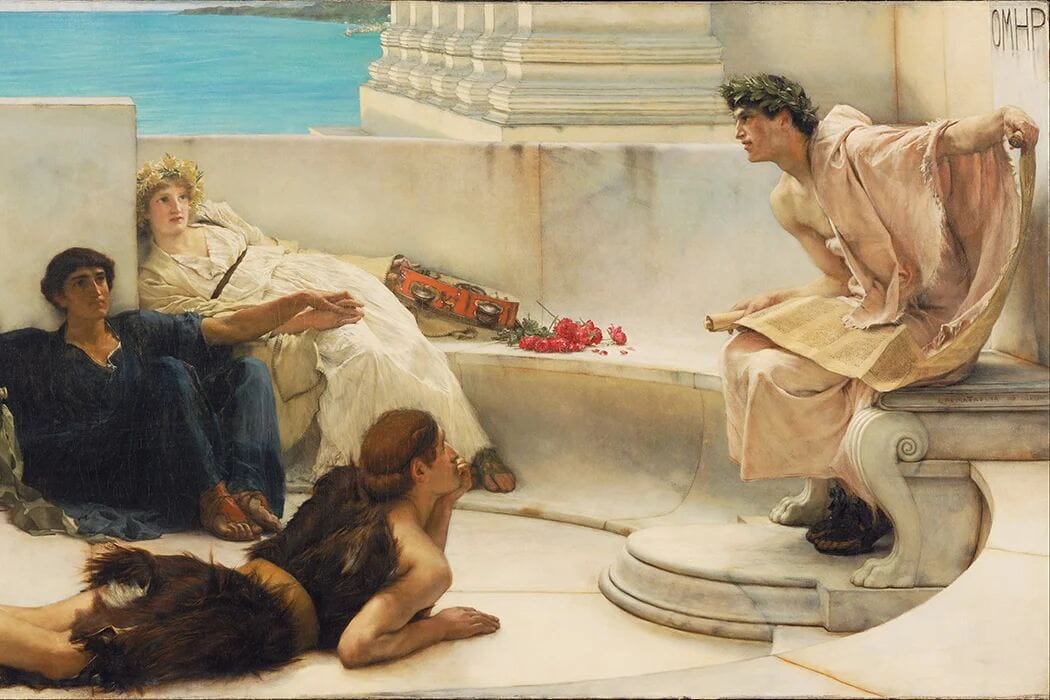
In this chapter, Beye raises several questions that readers of Homer may have. He advises against being too certain about the origins of the poems, but he strongly supports the idea that they were originally performed orally. He explains that an audience listening to a performance wouldn’t have the luxury of going back to review the text or pause the performance to analyze a scene. Beye highlights the importance of traditional performance by pointing out that the audience would already be familiar with the details of the story, making the chronology of events dependent on tradition. He provides examples of the “deep” structures that underlie an oral telling, such as repeated similes, shifts from three to four in folkloric patterns, ring composition, and the repetition of elements within speeches. He also acknowledges the challenges in defining what exactly constitutes a formula.
III. The Poet’s World
This chapter focuses on the world depicted in the Homeric epics. According to Beye, this world is influenced by both Mycenaean and Eastern cultures, but it also reflects the migrations and evolving culture of the Greeks during the archaic age. However, the epics exist in a sort of “temporal limbo” because they contain artifacts, places, and items that remind the audience of a past time. For example, the audience would have known that Mycenae was once a magnificent city but now lay in ruins. Professor Beye emphasizes the social assumptions and possible performance settings of the epics, which were aristocratic and male-dominated. However, he also acknowledges the significant roles played by strong female characters in the Odyssey. The relationships between heroes and groups are explored, such as Achilles and Patroclus, Odysseus and Thersites, and Alcinous and his people. It is worth noting that the poet does not have a specific word for “the people” as distinct from the aristocracy. The chapter also provides an overview of the major Olympian gods and their roles in the epics.
IV. Poetic Technique
The chapter starts by discussing topics related to the Homeric Question. Throughout the chapter, there is a focus on folk tale motifs, stock stories, stereotypical characters, and type scenes. According to Beye, these elements hinder the use of individualized characterization. However, he acknowledges that there is still some differentiation between characters, and heroes like Odysseus stand out. Beye also warns against interpreting oral poems as novels or placing too much importance on the Alexandrian book divisions.
One aspect of the Homeric technique is the clustering of formulas and phrases. Beye believes this indicates that the oral poet held onto certain phrases until they slipped from his memory. Beye also demonstrates the influence of type scenes in oral and written composition. Additionally, the chapter delves into the significance of the catalog, which is seen as a monumental gateway. Similes are described as an important epic feature that reflects the everyday world of events, known as the “contemporary world of quotidian events”, in addition to the divine and heroic realms.
The chapter concludes by discussing the appositional nature of narrative and emphasizing the central importance of ring composition.
V. The Iliad
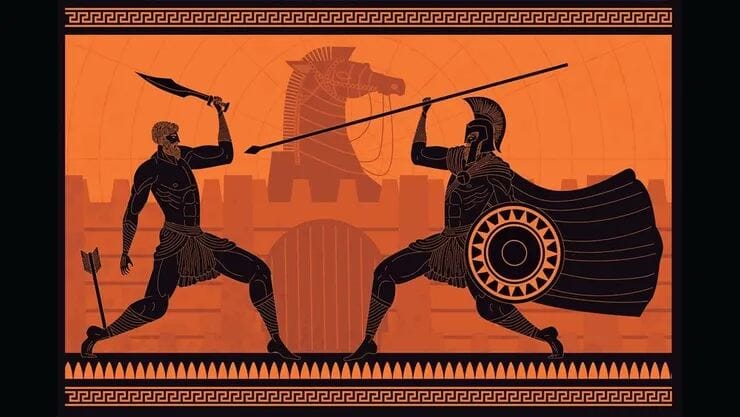
This chapter builds upon the previous chapters by examining specific epics and providing detailed summaries from the perspective of oral-derived literature. The author argues that Agamemnon’s testing of the troops in the Iliad is seen as irrational and is not understood by the troops or the narrator. This suggests that the Iliad was intended for an aristocratic audience rather than a democratic one. The author demonstrates a strong understanding of scholarly arguments from secondary sources but does not overwhelm the reader with excessive information. The focus is on the Presbeia, which plays a central role in the tragedy of Achilles, who isolates himself from society and finds solace in his individuality. The concept of mortality is explored as a defining factor in human actions within the epic, while the quarrel between Agamemnon and Achilles is seen as necessary to maintain one’s sense of self in the face of the inevitable. The author also compares Hector to other glory-seeking heroes who are victims of their audience in a shame culture.
VI. The Odyssey
The Odyssey is divided into three distinct parts, each with its focus. The first part follows Telemachus and draws from heroic narratives and sagas. The second part takes place in a fantastical world, filled with folklore and fairy tales. The third part centers around Odysseus’ journey to reclaim his home and kingdom, presenting a more social and domestic story. The Telemacheia serves as a rehearsal for Odysseus’ later adventures. The Odyssey aims to provide an ethical foundation for understanding human actions as acts of will and personal responsibility. Beye notes that the narrative control in The Odyssey is more pronounced than in The Iliad, with each episode featuring variations of the typical scene of arrival and hosting. Unlike Hesiod’s poetry, which is openly misogynistic, The Odyssey portrays women with strength, although their power also carries a hint of danger. Characters like Circe, Calypso, Arete, Nausikaa, and Penelope exemplify this portrayal. The stories and tales told by Odysseus, including the Cretan tales, may reveal male fear, but they also showcase his skill and serve as creative fiction rather than absolute truths.
VII. The Argonautica
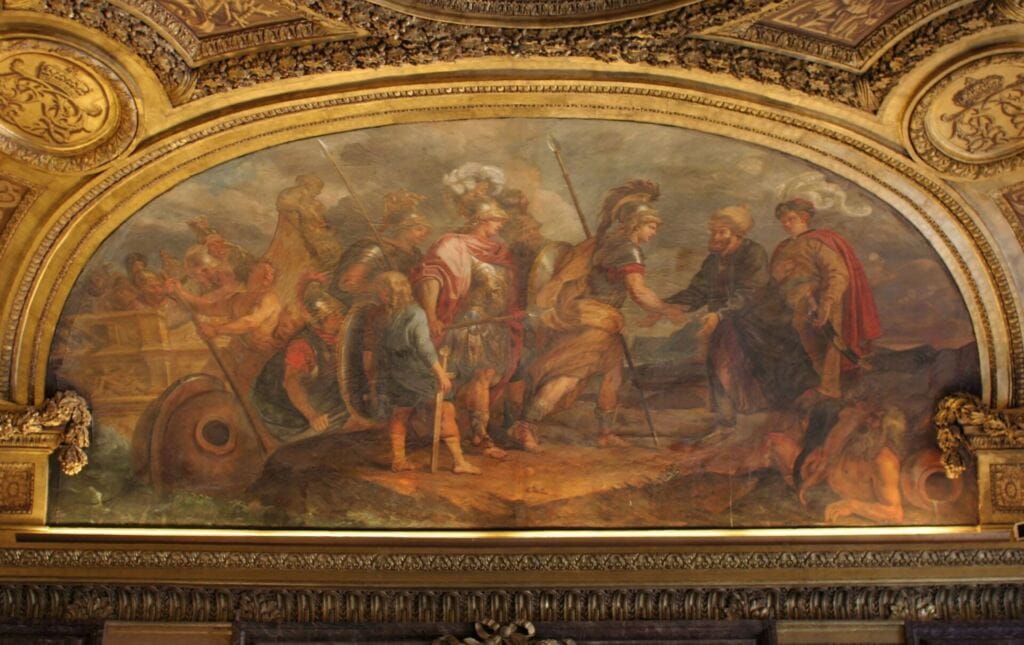
Figure 1:
Beye starts by discussing the impact of the Alexandrian enterprise on the interpretation of Homer, who was now seen as a written artifact. Alexandrian compositions, unlike their Homeric predecessors, were characterized by wit and an entertaining tone. The Argonautica, written for the elite, required a deep understanding of Homer but was aimed primarily at the knowledgeable few. It serves as an important source for the scholarly interests of the time, with Apollonius deviating from traditional forms and conventions, such as battle scenes and the embassy. The characters in the Argonautica are more private and less public compared to those in Homer, constantly defying readers’ expectations. Beye provides the example of Jason to illustrate this point. This chapter also explores the differences between written Alexandrian literature and the earlier oral tradition, going beyond formula counting to discuss the aesthetics of perspective and presentation.
One notable difference is how Medea, unlike characters in the Iliad, says no while meaning yes. Beye argues that characters in oral epics do not deceive themselves, and there is a stronger connection between the speaker and the audience compared to Apollonius’ work. The chapter concludes by defending Apollonius’ various approaches to the epic task, highlighting his creative use of ring composition and simile, as well as his more developed and expressive portrayal of passion.
VIII. The Aeneid
Beye begins his analysis by providing a brief history of Latin epic. He acknowledges the precursors of the Aeneid and discusses the limitations of the hexameter meter on word choice in Latin epic. Beye emphasizes the significant influences that shaped Latin epic, including history, political structures, and religious and philosophical ideas like Stoicism. He also examines Virgil’s work about its Alexandrian predecessors. However, Beye argues that Virgil doesn’t simply borrow from the Alexandrians and Homer, but rather makes clever references to texts that he expects his audience to be familiar with (although this viewpoint is not universally accepted).
Furthermore, the chapter explores the main features of Virgil’s masterpiece using the same analytical approach to story patterns that were used in the analysis of the Argonautica. Unlike the Homeric epics, the Aeneid deviates by focusing on two central figures, Aeneas and Turnus, in the second half of the epic. Beye concludes by asserting that Turnus must die and that his death is brought about by a male warrior-hero displaying “consummate rage”. Beye clarifies that this portrayal is not necessarily anti-Augustan, as he has already suggested that Virgil likely had a pro-Augustan poetic intention.
IX. Gilgamesh
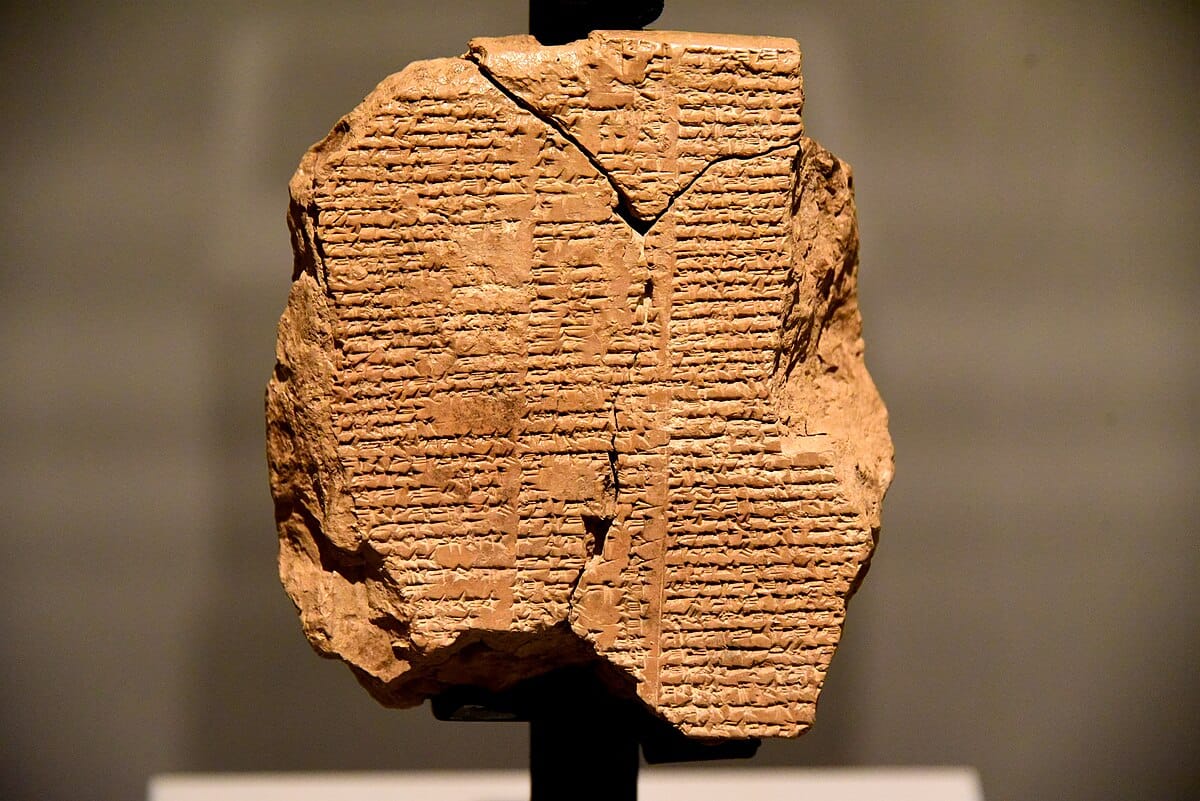
Beye suggests that the discovery of cuneiform tablets containing the stories of Gilgamesh has had a significant impact on Western literary history. These stories, which were originally transmitted orally, have been classified into different categories based on their chronology and language. However, there is some overlap between these categories, as scholars use different tablets to fill in missing parts of the narrative. Beye also notes that the style of the Gilgamesh stories is different from that of the Homeric epics, but there are similarities in terms of oral aesthetics. Beye suggests that the Gilgamesh epic may have been used as a reference for oral performances. Beye also discusses the influence of the Gilgamesh stories on the Odyssey, particularly Penelope’s fidelity. Beye argues that surprise is not necessary for a good plot and that tension and speculation can still be created even when the outcome is known. Beye also examines the portrayal of Jason in Apollonius’ work and suggests that it contradicts the expectations of the readers. However, there is an alternative perspective that suggests Apollonius may have been influenced by Euripides’ portrayal of Jason in Medea.
Conclusion
In conclusion, studying epic poetry, specifically the Epic of Gilgamesh, is a crucial opportunity for students to deepen their understanding of ancient literature and its lasting impact on contemporary culture. By thoroughly analyzing the themes, structure, and poetic devices of the Gilgamesh narratives, students can develop a nuanced understanding of the purpose and significance of the epic genre throughout history. This final lesson not only introduces students to one of the earliest recorded epics but also encourages critical thinking and reflection on universal human experiences such as friendship, loss, and mortality. Through exploring the complex character development of Gilgamesh and his profound journey of self-discovery, students are prompted to contemplate timeless philosophical questions about power, heroism, and legacy. This serves as a testament to the enduring relevance of epic poetry in shaping our collective consciousness. Overall, this lesson fosters intellectual growth and cultivates an appreciation for literary traditions that continue to resonate with readers across cultures and generations.