


Lesson 9 – How to Find Evidence in a Reading Passage
Introduction
Have you ever struggled to find evidence to support your arguments while reading a passage? Knowing how to locate and cite relevant proof is crucial for building a strong case and bolstering your understanding of a text. Without solid evidence, our interpretations and analyses may lack credibility. This lesson will unravel the art of finding evidence in a reading passage. We will provide practical strategies and techniques that will empower you to locate and utilize evidence to support your claims.
In this comprehensive guide, we’ll be sharing how to teach text evidence to kids from different age groups, why that’s important, and how to turn it into a fun, stimulating activity, as well as give you tips on the best activities and strategies you can incorporate in your classroom or home.
I. What Is Text Evidence?
Text evidence plays a crucial role in literary analysis, allowing us to support our ideas and arguments by referring to specific information from a text. While literary analysis can be complex, especially for kids, it can be simplified into five fundamental steps:
Identifying a Topic:
Selecting a specific topic or theme to analyze within a literary piece, such as a passage, novel, play, or poem.
Gathering Textual Evidence:
Collecting relevant information and details from the text that support or relate to the chosen topic. This evidence serves as the foundation for constructing arguments or answering questions.
Presenting the Main Idea:
Articulating the central idea or thesis that will guide the analysis. This main idea should be supported by the gathered textual evidence.
Concluding:
Summarizing the analysis and drawing conclusions based on the interpretation of the text and the presented evidence. This step allows for a thoughtful reflection on the significance of the main idea and its implications.
In this discussion, we will focus on teaching kids how to effectively find and mark textual evidence, which will assist them in answering questions or writing essays based on their age and educational level.
Textual evidence encompasses information derived from the text that aids in supporting our ideas, beliefs, opinions, and arguments. There are two primary ways to utilize textual evidence:
Paraphrasing (inferential text evidence):
Expressing a statement from the text in our own words to reinforce our argument or provide an answer to a question.
Quoting (explicit text evidence):
Directly including the exact statement from the text in our response to substantiate our idea.
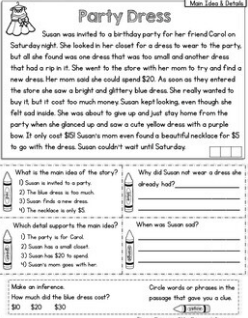
II. Why Are Text Evidence Skills Important?
Teaching text evidence skills to children has vital benefits for their cognitive development and educational potential. It alters their reading approach, fostering critical thinking and comprehension. Success in higher education relies on the ability to extract and present key information from texts.
Text evidence teaches trustworthiness, emphasizing the importance of supporting ideas with facts. It also enhances children’s ability to discern poorly written and biased literature. Developing these skills empowers children to become analytical readers and effective communicators, setting them on a path to intellectual growth and success.
III. How to Teach Text Evidence
Here’s a table outlining the steps involved in teaching text evidence to kids:
| Steps | Description |
|---|---|
|
1. Finding a Topic |
Introduce the concept of text evidence using relatable examples, such as sharing a story with a friend and needing to provide proof. |
|
2. Gathering Textual Evidence |
Engage student in a fun and interactive activity, like being “little detectives,” and provide tools such as anchor charts, worksheets, reading passages, highlighters, and magnifying glasses. Gui de them to read independently, comprehend the text, and answer text-dependent questions. Ask them to identify and highlight evidence in the passage using different colors and numerical labels. |
|
3. Presenting The Main Idea |
Explain the meaning of text evidence through simple concepts and introduce acronym like RACE (read, answer, cite, explain) to help students remember the process. Tech them to provide evidence by paraphrasing or using direct quotations. Emphasize the difference between the two and the grammatical rules that apply. Encourage note-taking and provide worksheets for practice. |
|
4. Concluding |
Ask students text-dependent questions and guide them to support their answers with text eivdence. Provide examples of how to start their responses, such as “The author wrote…” or “According to the text…” Discuss and analyze the evidence as a group, ensuring students understand how to incorporate it effectively. |
|
5. Revise and Practice |
Review the entire process and provide opportunities for additional practice. Encourage students to revise their work, reinforcing the omportance of citing evidence. |
This table presents a sequential approach to teaching text evidence, guiding students from understanding the concept to effectively using textual evidence in their responses.
Conclusion
In conclusion, finding and utilizing evidence within a reading passage is more than a skill; it is an art that enhances our understanding and critical thinking. As we navigate the vast realm of literature, let us remember that evidence can substantiate our claims, challenge assumptions, and ignite insightful discussions. Through the careful examination and interpretation of evidence, we unlock new perspectives, foster intellectual growth, and contribute to the advancement of knowledge.