


Lesson 7 – How to Identify and Analyze a Text’s Structure
Introduction
Have you ever been confronted with a dense and complex text, wondering how to navigate its structure and organization? Understanding a text’s structure is essential for comprehending its content and extracting critical information effectively. We must decipher the structural elements to avoid getting lost amidst the sea of words. This lesson will unravel the art of identifying and analyzing a text’s structure. We will equip you with practical strategies and techniques that will empower you to solve the organizational patterns within texts, allowing you to navigate with clarity and purpose.
I. Text’s Structure Analysis Meaning
Text structure analysis involves deconstructing a text to examine how the author has organized it. Whether it is a narrative or an informational text, analyzing the structure requires different analytical approaches depending on the type of text.
The structure of a text refers to how the writer organizes language and information to fulfill a specific purpose. It varies based on the writer’s goal, enabling effective communication with the reader. The arrangement of a text’s beginning, middle, and end is directly influenced by the writer’s intention and purpose.
The problem and solution text structure, for instance, aims to present a problem and propose a solution. This structure provides compelling arguments for the existence and importance of the problem, as well as the effectiveness of the proposed solution. It is commonly found in political literature, speeches, as well as business and technology contexts.
- For example: In the text “10 Solutions for Climate Change” by scientificamerican.com
The problem and solution structure is employed to address transportation-related greenhouse gas emissions. The text highlights the problem of transportation emissions and presents solutions such as moving closer to work, using mass transit, or opting for alternative modes of transport that rely on human energy.
Understanding text structure is beneficial for both readers and writers. It allows readers to grasp the writer’s intention from the outset, providing a clear roadmap for comprehension. Writers, on the other hand, can leverage structure to support the purpose of their work. By appreciating the value of text structure, readers and writers can enhance their understanding and communication.
II. Types of Text Structure
Here’s an updated table with different examples:
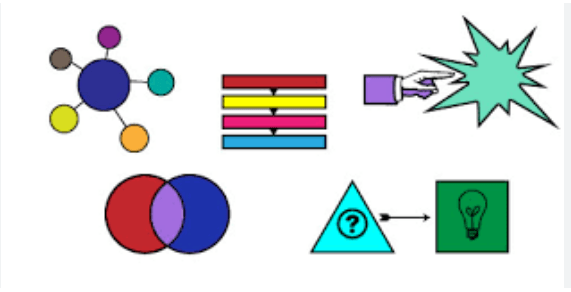
| Type of Structure | Definition | Example | Keywwords/Phrases | Analytical Questions |
|---|---|---|---|---|
|
Cause and Effect |
The writer demonstrates the causal relationship between concepts. |
An article about how excessive screen time affects sleep quality. |
Due to…, Leads to… |
How does this structure help readers understand the cause and effect relationship? |
|
Comparison and Contrast |
The writer notes the similarities and/or differences between concpets. |
A research paper comparing and contrasting two political ideologies. |
On the other hand, |
How does the structure aid readers in understanding the similariities and differences between the concepts? |
|
Description |
The writer provides a detailed portrayal of a concept. |
A scientific article describing the life cycle of a butterfly. |
Is…, For instance, |
How does the descriptive structure contribute to an objective understanding of the concepts? |
|
How-To |
The writer explains the process of doing something in sequential order. |
An instructional video on how to tie a bowtie. |
Step 1, Step 2, |
How does the squential structure assist readers in learning the process effectively? |
III. Example of Analysis of a Text Structure
Here’s an example of analyzing the structure of a text:
Text Structure:
Cause and Effect
Text:
Article on the Effects of Air Pollution
Example:
The article explains the causal relationship between air pollution and respiratory diseases. It provides evidence and research studies to support the claim that exposure to polluted air can lead to various respiratory ailments such as asthma, bronchitis, and lung cancer. The author highlights the harmful effects of air pollution on human health and emphasizes the need for environmental regulations to reduce pollution levels.
Keywords/Phrases:
Due to, Leads to, Because of, Result in
Analytical Questions:
- How does the structure of the article help readers understand the cause and effect relationship between air pollution and respiratory diseases?
- What evidence and research studies are provided to support the claims made in the article?
- How does the author emphasize the harmful effects of air pollution on human health?
- In what ways does the author advocate for environmental regulations to address the issue of air pollution?
IV. How to Write a Literary Analysis Essay
Step 1:
Reading the Text and Identifying Literary Devices
The first step in writing a literary analysis essay is to thoroughly read the text(s) and make initial notes. Pay attention to intriguing, surprising, or confusing elements in the writing that you can explore in your analysis. Remember, the goal of literary analysis is not just to explain the events in the text, but to delve into the writing itself and discuss its deeper meaning. Focus on identifying and analyzing the literary devices used by the author to convey meaning and create effects. If you're comparing multiple texts, look for connections between them.
Key Areas of Focus:
- Language choices: Consider the style of language used by the author. Are the sentences simple or complex? Are there any interesting or unusual word choices? Look for figurative language, such as metaphors and similes, and pay attention to recurring imagery.
- Narrative voice: Determine who is telling the story and how they are telling it. Is it a first-person narrator personally involved in the story, or a third-person narrator providing a distant perspective? Consider the narrator's knowledge and reliability.
- Structure: Examine how the text is structured and how the structure relates to the story being told. Look for divisions like chapters, stanzas, or scenes, and consider why the author chose those specific structures. Analyze the plot progression, chronological order, and the impact of rhyme and meter in poetry.
Thesis Development: Develop a strong, arguable thesis statement that provides a clear direction for your essay. Your thesis should address the prompt or focus on an original topic related to the text. It should go beyond a simple observation and be complex enough to support with evidence and arguments.
Step 2:
Finding Textual Evidence
To support your thesis statement, gather textual evidence from the text that demonstrates your point. Look for relevant quotations, imagery, and narrative elements that can be quoted and analyzed in your essay. Collecting textual evidence early on will help you structure your arguments and assess their effectiveness.
Step 3:
Writing a Title and Introduction
Create a concise and engaging title that clearly indicates the focus of your analysis. The title can include the author's name and the text(s) being analyzed. Craft an introduction that provides an overview of your argument, including your thesis statement and a summary of the essay's structure. Start with a general statement about the text and gradually lead into your thesis statement. Consider referencing commonly held ideas or specific literary devices you intend to focus on. You can write the introduction later in the process, after you have a better sense of your arguments.
Step 4:
Writing the Body of the Essay
The body of your essay should present and develop your arguments using textual evidence. In a high school literary analysis essay, each paragraph should focus on one topic or aspect of your analysis. Use topic sentences to introduce each paragraph and maintain a clear focus. In longer essays, divide the body into sections with multiple paragraphs, each addressing a specific aspect. Use transition words to create smooth transitions between paragraphs and sections.
Step 5:
Writing a Conclusion
The conclusion of your essay should not introduce new quotations or arguments. Instead, summarize your key points and emphasize their significance. Briefly recap your main arguments and highlight the new perspective your thesis provides on the text as a whole. Leave the reader with a clear understanding of your analysis and its implications.
Conclusion
In conclusion, the ability to identify and analyze a text’s structure opens the gateway to a deeper understanding and engagement with written works. By unraveling the intricate web of headings, paragraphs, transitions, and other structural elements, we gain insights into the author’s purpose, arguments, and overall message. Through this process, we become active participants in the text, deciphering its hidden patterns and organizing principles. So, dear reader, embrace the power of structural analysis, for within its grasp lies the key to unlocking profound interpretations and connecting with the deep tapestry of human expression.