


Lesson 5 – How to Identify the Point of View and Tone of the Author
Introduction
Have you ever read a passage and wondered about the author’s intentions? Do you find it challenging to grasp a text’s underlying tone and point of view? Understanding the author’s perspective is crucial for constructing meaning and gaining a deeper understanding of the message conveyed. In this lesson, we will unlock the secrets of identifying the tone, point of view, and word structure to construct meaning. We will equip you with valuable strategies and insights that will enable you to unravel the author’s intentions with clarity and precision.
I. What is the Tone and Point of View meaning?
1. Tone
Tone refers to the author’s attitude, emotions, and feelings toward a written work’s subject matter, characters, or audience. It sets the piece’s overall mood and influences how readers perceive and interpret the content. Tone can be conveyed through the choice of words, sentence structure, figurative language, and general writing style. Different tones can evoke various emotional responses, such as joy, sadness, humor, anger, or seriousness. Identifying the tone of a piece of writing is crucial for understanding the author’s intentions and the emotional atmosphere they aim to create.
For example, a piece with a sarcastic tone might use irony and sharp language to convey humor or criticism. In contrast, a formal tone might use sophisticated language and a respectful demeanor to discuss serious matters.
2. Point of View (POV)
Point of view refers to the perspective from which a story or narrative is told. It determines who the narrator is and how much information the narrator possesses. Different points of view provide varying degrees of insight into characters‘ thoughts, feelings, and actions. The three primary points of view are:
First Person:
The narrator is a character within the story and uses pronouns like “I” or “we.” This point of view offers direct insight into the narrator’s thoughts and experiences.
Second Person:
The narrator addresses the reader using pronouns like “you.” This point of view is less common in fiction and is often used in instructional or interactive writing.
Third Person:
The narrator is external to the story and uses pronouns like “he,” “she,” or “they.” There are variations within third-person narration, including limited (knowledge of one character’s thoughts) and omniscient (knowledge of multiple characters‘ thoughts) points of view.
Understanding the point of view is important because it shapes the reader’s connection with the characters, their understanding of events, and the reliability of the narrative. The choice of point of view impacts how much the reader is immersed in the story and the level of objectivity or subjectivity in the description.
II. Strategies for Identifying Textual Tone
Identifying the tone of a text is crucial for understanding the author’s attitude and the overall message being conveyed. The style sets the mood and can influence how readers interpret the content. However, recognizing the technique can sometimes be challenging, requiring careful analysis of the author’s language and style.
To identify the tone of a text, consider the following strategies:
1. Pay attention to word choice
Look for words or phrases that evoke certain emotions or convey a specific attitude. For example, if the author uses words like “exuberant” or “ecstatic,” the tone might be positive or enthusiastic.
2. Analyze sentence structure
Notice the length and complexity of sentences. Short, direct sentences indicate an assertive or authoritative tone, while long, flowing sentences suggest a more contemplative or reflective tone.
3. Consider the author's perspective
Evaluate the author’s point of view and how it shapes the tone. Are they presenting an argument, expressing empathy, or sharing personal experiences? Understanding their perspective can provide insights into the overall style.
4. Look for tone indicators
Watch for explicit indicators that reveal the author’s tone, such as adjectives, adverbs, or rhetorical devices like irony or sarcasm. These elements help convey the intended tone more explicitly.
III. Describing the Author's Attitude towards the Treadmill
In contrast, Passage (ii) showcases a positive view of the treadmill. The specific details, comparisons, and word choices convey the author’s favorable perspective. Phrases like “Power Run” and “broken out of a ten-year slump” demonstrate ambition, confidence, and the positive impact of the workout. Comparisons such as the heart speeding up faster than the belt and the red lines resembling a pulse create an energetic and lively image. The author’s use of words like “farther and faster” and “sleek” highlight the benefits and positive opinion of the treadmill’s features. Overall, the tone is exuberant, enthusiastic, and excited.
It is important to note that authors‘ tones can vary widely, and other descriptions may include adjectives like cynical, depressed, hopeful, wistful, sympathetic, cheerful, outraged, positive, angry, sarcastic, ironic, solemn, vindictive, and intense. These different tones contribute to the diversity of perspectives found in literature.
In Passage (i), the author’s attitude towards the treadmill is clearly negative. This is evident through the specific details, comparisons, and word choices the author employs. The mention of the treadmill moving the author backward indicates a sense of frustration or dissatisfaction. Comparisons such as the red squares as burning coals create an unpleasant image. Additionally, the author’s use of words like “begrudgingly,” “outdated,” and phrases like “cruel parts” all carry negative connotations. These choices in verbs, adverbs, and adjectives reflect a sardonic, pessimistic, and critical tone.
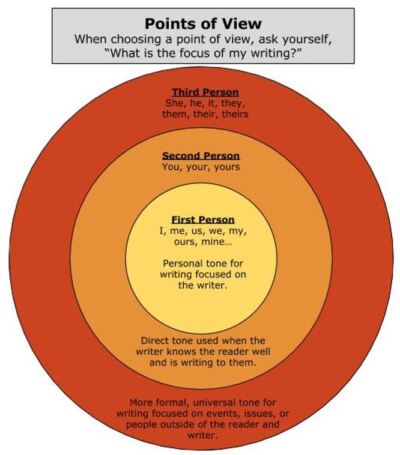
IV. What is point of view?
Point of view refers to the perspective or stance from which a story, narrative, or argument is presented. It represents the position, attitude, or outlook of the narrator, author, or speaker. Point of view shapes how events, characters, and information are portrayed, influencing the reader’s understanding and interpretation of the text.
There are three primary types of points of view:
1. First-person point of view
The story is narrated by a character within the story, typically using pronouns like “I,” “me,” and “my.” This perspective provides a direct and personal account, allowing readers to experience the events through the narrator’s lens.
- Example: “I walked down the street, feeling excited as I approached the old house.”
2. Second-person point of view
The narrative addresses the reader directly, using pronouns like “you” and “your.” This point of view is less common in traditional storytelling but is often utilized in instructional or self-help writing
- Example: “You step into the room, unsure of what lies ahead. Your heart races as you face the unknown.”
3. Third-person point of view
The story is told by a narrator external to the events and characters. This perspective uses pronouns like “he,” “she,” and “they.” The third-person point of view can further be categorized into limited and omniscient.
Third-person limited:
The narrator focuses on the thoughts, feelings, and experiences of one character, providing a more restricted view of the story.
- Example: “She watched as the rain poured down, reminiscing about the memories she had made in that spot.”
Third-person omniscient:
The narrator has access to the thoughts and feelings of multiple characters and possesses a broader knowledge of the story’s events
- Example: “As the sun set, the townsfolk went about their daily routines, unaware of the impending storm that would change their lives forever.”
The choice of point of view affects how readers connect with the characters, perceive the events, and understand the overall narrative. It plays a crucial role in storytelling, shaping the reader’s engagement and interpretation of the text.
V. The Point of View of the Author
The point of view of the author refers to the author’s perspective, beliefs, and opinions expressed in their writing. It encompasses the author’s stance on the subject matter and their unique voice and style. The author’s point of view influences how they present information, develop arguments, and engage with the reader.
The author’s point of view can manifest in various ways:
1. Tone
The author’s attitude or tone towards the subject matter can reveal their point of view. They may adopt a formal, objective manner to present information impartially or exhibit a passionate, subjective tone to advocate for a particular viewpoint.
2. Word Choice
The words and language used by the author convey their point of view. They may employ positive or negative connotations, specific vocabulary, or loaded language to shape the reader’s perception of the topic.
3. Bias
Every author has biases influenced by their experiences, values, and beliefs. These biases can subtly or overtly impact the author’s point of view, potentially affecting their selection and interpretation of evidence or their presentation of arguments.
4. Examples and Evidence
The examples and evidence the author presents can reflect their point of view. They may selectively choose evidence that supports their perspective while disregarding opposing viewpoints or counterarguments.
VI. How do I know which one to use?
When determining which point of view to use in your writing, consider your piece’s purpose, audience, and context. Here are some factors to consider:
1. Purpose
Identify the purpose of your writing. Are you aiming to inform, persuade, entertain, or reflect? The goal will influence the appropriate point of view to use. For example, an informative piece may require an objective and neutral point of view, while a persuasive essay may benefit from a subjective and passionate point of view.
2. Audience
Consider your intended audience. Are you writing for experts in a specific field, a general audience, or a specific demographic? Understanding your audience’s knowledge, background, and expectations can guide your choice of point of view. Adapt your tone and level of formality accordingly.
3. Subject Matter
The nature of the subject matter can also influence your choice of point of view. Some topics require a more objective and balanced approach, while others may benefit from a personal and subjective perspective. Consider the complexity, sensitivity, and controversy surrounding the subject matter.
4. Context
Reflect on the larger context in which your writing will be presented. Is it an academic paper, a blog post, a social media post, or a personal reflection? Each context may have its conventions and expectations for points of view. Ensure your chosen point of view aligns with the norms of the specific context.
5. Authorial Voice
Consider your writing style and voice. Are you comfortable adopting a more authoritative or personal tone? Choose a point of view that allows you to express yourself effectively and authentically.
Conclusion
In conclusion, as we delve into the realms of tone and point of view, we discover that every text holds a unique voice and perspective. By identifying the author’s style and point of view, we unlock a deeper understanding of their message and intentions. Through this exploration, we expand our horizons, challenge our assumptions, and foster empathy for diverse perspectives. So, let us embrace the power of interpretation, for it allows us to connect with the voices of authors, navigate the complexities of literature, and embark on a journey of discovery that transcends the boundaries of words on a page.