Welcome to Lesson 8, where we embark on a journey into the world of aesthetics and landscape through the lens of William Gilpin. Born in 1724, Gilpin was not just an artist and cleric; he was a visionary who transformed the way we perceive beauty in the natural world. In this lesson, we delve into the life, ideas, and legacy of William Gilpin, a central figure in the picturesque movement of the 18th century.
Throughout this lesson, we’ll not only learn about the picturesque but also engage in activities that allow us to experience and express these aesthetic principles. From visual analysis of picturesque landscapes to creative expressions inspired by Gilpin’s ideas, our goal is to foster a deeper appreciation for the unique and often overlooked beauty that surrounds us.
William Gilpin, born in 1724, emerged as a significant figure in the 18th-century cultural landscape, leaving an indelible mark on the artistic and aesthetic discourse of the time. Educated at Oxford, Gilpin’s journey took an unexpected turn as he transitioned from academia to become a clergyman. However, it was through his unique blend of professions that he would make a lasting impact on the world of art and aesthetics.
Gilpin’s voyages, notably through the picturesque landscapes of the Lake District and Wye Valley, proved to be transformative. These travels ignited a profound interest in the beauty of nature and the irregularities found within it. The landscapes he encountered, characterized by their roughness and variety, would inspire him to develop and articulate the principles of the picturesque.
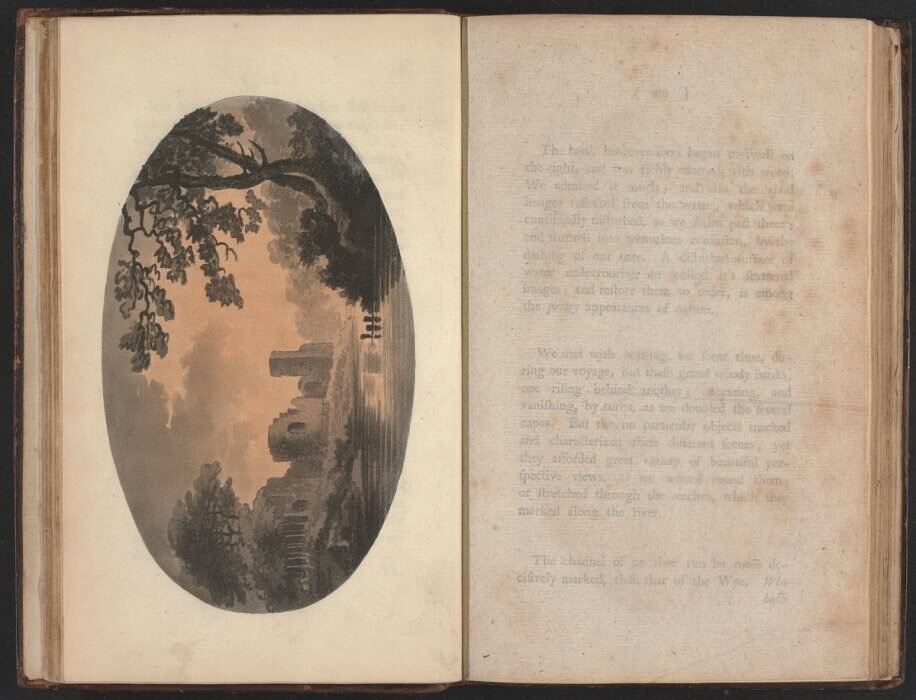
In 1782, Gilpin published “Observations on the River Wye,” a seminal work that encapsulated his thoughts on the aesthetics of the picturesque. This publication served as a guide, not only documenting his experiences along the River Wye but also offering insights into his evolving ideas on landscape beauty.
Another significant contribution came in the form of “Three Essays: On Picturesque Beauty; On Picturesque Travel; and On Sketching Landscape,” published in 1792. In this collection, Gilpin further elaborated on the principles that defined the picturesque aesthetic. From discussing the qualities that make landscapes picturesque to providing guidance on the art of sketching, these essays became foundational texts, shaping the discourse on aesthetics and influencing artists and thinkers of his time.
William Gilpin’s legacy extends beyond his own artistic endeavors; he became a key influencer in the larger cultural shift towards appreciating the irregular, rustic, and varied aspects of nature. His ideas laid the groundwork for the picturesque movement, emphasizing the value of imperfection in a world often characterized by a pursuit of perfection. Through his writings and observations, Gilpin left an enduring impact on the way we perceive and appreciate the beauty inherent in the world around us.
William Gilpin’s concept of the picturesque stands as a distinctive and influential aesthetic philosophy, challenging traditional notions of beauty and the sublime. Defined by its celebration of irregularity, roughness, and variety, the picturesque encapsulates a unique approach to appreciating the world around us.
According to Gilpin, the picturesque quality emerges when objects are composed of distinct parts in a manner that appeals to the viewer’s eye. It’s not about seamless harmony but, rather, the arrangement of elements in a way that captures attention and invokes a sense of visual pleasure.
Unlike the pursuit of smooth and harmonious beauty, the picturesque revels in imperfections. Irregular landscapes, rugged terrains, and elements of roughness contribute to the charm of the picturesque. It is a departure from the polished and refined aesthetics that were prevalent during Gilpin’s time.
Variety is a key component of the picturesque. The aesthetic values diversity in forms, textures, and colors. Rather than seeking uniformity, the picturesque finds beauty in the eclectic and the diverse, encouraging a dynamic visual experience that engages the viewer’s senses.
The picturesque, in essence, celebrates the charm found in imperfections. It is an acknowledgment that beauty doesn’t always conform to conventional standards of perfection. Instead, it is discovered in the asymmetrical, the untamed, and the unpolished aspects of nature and art.
The picturesque stands apart from the beautiful, characterized by smoothness and harmony, as well as the sublime, which elicits awe through vastness and grandeur. While the beautiful and sublime capture specific forms of aesthetic appeal, the picturesque carves its niche by embracing the allure inherent in the irregular and the diverse.
In the picturesque world, symmetry takes a back seat, and irregular, asymmetrical forms take center stage. Embracing the beauty of uneven terrain, skewed compositions, and unexpected juxtapositions, asymmetry becomes a guiding principle. It challenges the conventional preference for perfect balance, inviting viewers to appreciate the allure found in the unbalanced and the irregular.
Rusticity in the picturesque context is an embrace of the unpolished and unrefined. It involves finding charm in rural elements, whether it be the weathered appearance of a farmhouse, the simplicity of a country landscape, or the authenticity of untouched natural scenes. Rusticity encourages a departure from the overly cultivated and invites an appreciation for the genuine and unpretentious.
Variety is a cornerstone of the picturesque aesthetic. It extends beyond asymmetry to include diversity in forms, textures, and colors. A picturesque landscape or artwork is characterized by its eclectic elements, capturing the eye with a rich tapestry of visual stimuli. The celebration of variety ensures that the viewer’s experience is dynamic, engaging, and multi-faceted.
Aesthetic distance in the picturesque encourages the viewer to appreciate scenes from a specific vantage point. Often achieved through framing elements, this principle guides the observer to distance themselves physically or mentally from the scene. This intentional perspective allows for a more contemplative and discerning gaze, enabling the viewer to appreciate the overall composition and details that contribute to the picturesque quality.
While William Gilpin is primarily known for his writings and contributions to the picturesque movement, he was not a prolific painter himself. Instead, he often worked closely with artists and illustrators to visually depict the landscapes and scenes he described in his writings. Therefore, there is no comprehensive collection of paintings directly attributed to William Gilpin.
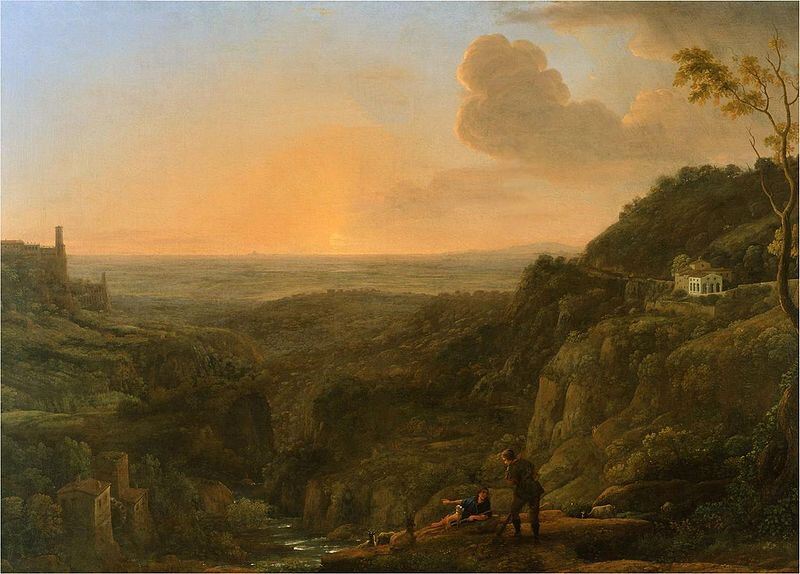
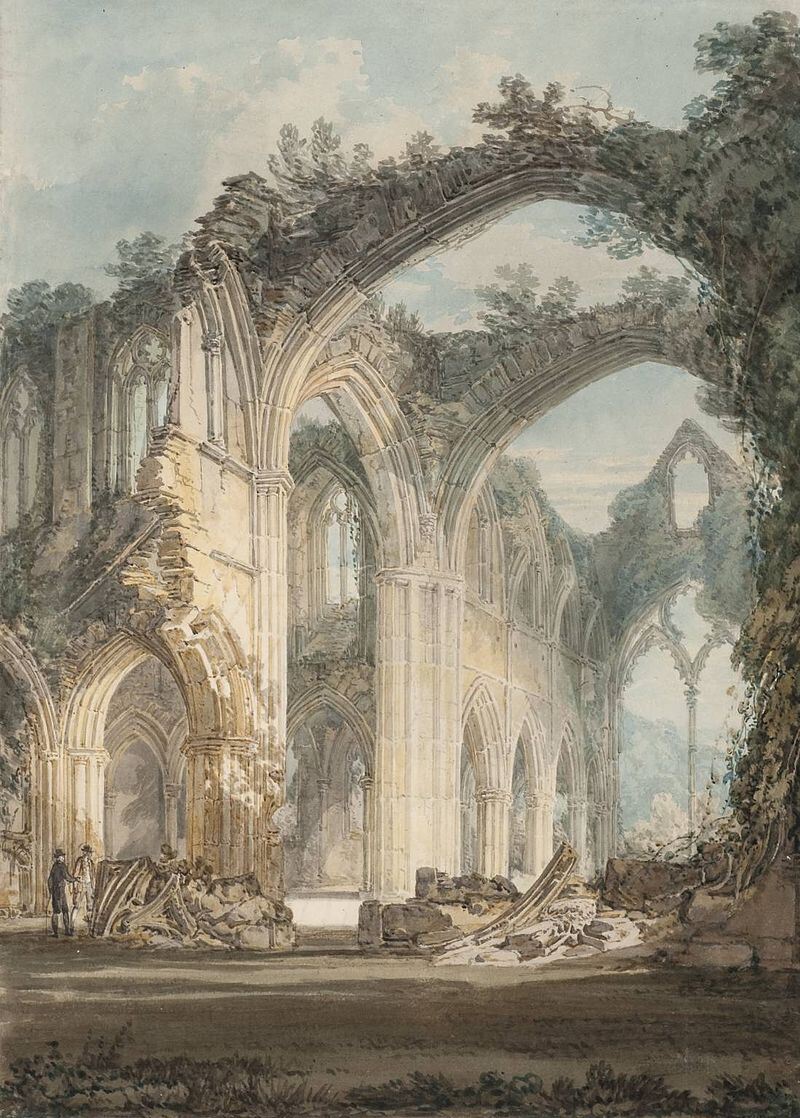
However, the influence of Gilpin’s ideas on picturesque aesthetics can be seen in the works of artists who were inspired by his writings. Some landscape painters of the 18th and 19th centuries embraced the principles outlined by Gilpin, incorporating asymmetry, rusticity, variety, and aesthetic distance into their own creations. These artists, while not directly affiliated with Gilpin, contributed to the visual expression of the picturesque movement.
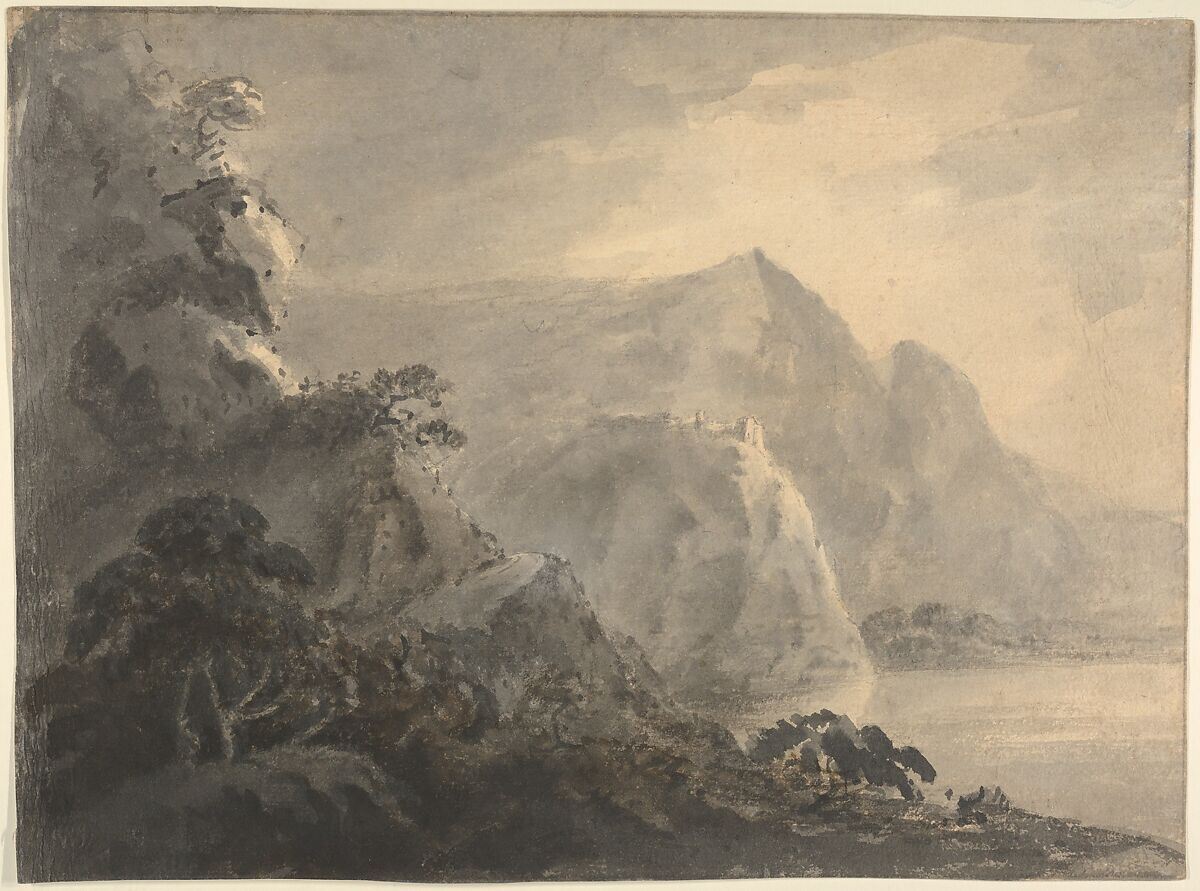
Here are some of his key works:
Landscape with hills and a lake
These selected works showcase William Gilpin’s dedication to exploring and articulating the principles of the picturesque. His writings not only influenced his contemporaries but also had a lasting impact on subsequent generations of artists, writers, and landscape designers.
As we conclude Lesson 8, our exploration into the world of William Gilpin and the picturesque has unraveled a captivating aesthetic philosophy that celebrates beauty in its most unconventional forms. From the rolling landscapes of the Lake District to the pages of Gilpin’s insightful writings, we’ve journeyed through a landscape of ideas that has left an indelible mark on the understanding of art and nature.
As we carry the lessons of William Gilpin forward, let us continue to cultivate a discerning eye, appreciating the picturesque qualities in the landscapes we encounter and the art we create. The journey into the picturesque, guided by Gilpin’s wisdom, reminds us that true beauty often lies in the unexpected, the diverse, and the authentic.