


Chapter 1, Lesson 7
In Progress
Lesson 7 – Jean Fouquet
Chapter Progress
0% Complete
Introduction
Welcome to Lesson 7! Today, we embark on a journey into the captivating world of Jean Fouquet, a luminary of the French Renaissance whose artistic brilliance left an indelible mark on the canvas of European art history. Born in 1420, Fouquet’s life unfolded during a period of profound cultural transformation, and his works reflect the rich tapestry of influences that shaped the vibrant landscape of 15th-century France.
As we delve into this lesson, we will unravel the layers of Fouquet’s biography, exploring the pivotal moments that defined his artistic trajectory. From his early training to his sojourn in Italy, where he absorbed the artistic currents of the Italian Renaissance, Fouquet’s journey is a testament to the dynamic interplay of artistic ideas across borders.
I. Biography Jean Fouquet
1. Early Life and Education:
Born in 1420, in Tours, France, Jean Fouquet emerged as a luminary in the realm of art during the transformative years of the French Renaissance. Little is known about his early life, yet the echoes of his genius would resonate through the corridors of art history.
Fouquet’s journey into the world of art began with his training in Paris, where he honed his skills as a painter and manuscript illuminator. His early works hinted at a talent that surpassed the ordinary, foreshadowing a career that would redefine the artistic landscape of 15th-century France.
2. Travels to Italy:
In the mid-15th century, during a pivotal juncture in his career, Fouquet embarked on a transformative journey to Italy. Italy, the epicenter of the burgeoning Renaissance, became the crucible in which Fouquet’s artistic vision would undergo a metamorphosis. The encounter with the Italian Renaissance masters, such as Fra Angelico and Piero della Francesca, left an indelible imprint on his artistic sensibilities.
Exposed to the revolutionary techniques, perspective, and humanism of the Italian Renaissance, Fouquet absorbed these influences like a sponge, integrating them into the fabric of his own evolving style. This sojourn became a crucible where the alchemy of artistic cross-pollination occurred, shaping Fouquet into a visionary whose work transcended geographic boundaries.
3. Return to France and Artistic Evolution:
Fouquet’s return to France marked a watershed moment in his career. Infused with the spirit of the Italian Renaissance, he began to infuse his art with a newfound dynamism and sophistication. The synthesis of Northern European and Italian elements became the hallmark of his style, setting him apart as a true innovator.
Key Moments in His Career:
- Patronage of Étienne Chevalier: One of the pivotal chapters in Fouquet's career unfolded with his collaboration with Étienne Chevalier, a prominent French official. The commissions from Chevalier, including the iconic "Melun Diptych," not only showcased Fouquet's artistic brilliance but also solidified his position as a sought-after court painter.
- Royal Commissions: Fouquet's talents attracted the attention of the French royal court. He received numerous royal commissions, becoming the preferred portraitist for King Charles VII and later, his successor, Louis XI. These engagements elevated Fouquet's standing in the artistic circles of the time.
- Innovations in Manuscript Illumination: Fouquet's contributions to manuscript illumination, notably in the "Book of Hours of Étienne Chevalier," demonstrated his mastery of the delicate art form. His miniatures, adorned with intricate details and vibrant colors, illuminated not just the pages but also the minds of those fortunate enough to witness them.
Jean Fouquet’s life and career, marked by artistic exploration, cultural cross-pollination, and royal recognition, stand as a testament to the transformative power of creativity. His journey from the studios of Paris to the ateliers of Italy and back to the courts of France encapsulates the dynamic spirit of the Renaissance, echoing through the centuries as an enduring legacy in the annals of art history.
II. Jean Fouquet Education
While there is limited information available about Jean Fouquet’s early life and education, it is widely believed that he received his artistic training in Paris. During the 15th century, Paris was a thriving center for the arts and intellectual pursuits, making it an ideal environment for aspiring artists.
Fouquet’s education likely encompassed traditional artistic techniques, including drawing, painting, and manuscript illumination. It’s important to note that during this period, artistic apprenticeships were a common method of learning the craft. Young artists would often work under the guidance of a master, learning through hands-on experience and exposure to various artistic projects.
The specifics of Fouquet’s formal education and the identity of his early mentors remain unclear. However, his early works indicate a proficiency in the skills expected of a trained artist. As he honed his craft, Fouquet’s unique style began to emerge, blending influences from both Northern European and Italian artistic traditions.
The transformative phase in Fouquet’s artistic development occurred during his travels to Italy. While details about his time in Italy are not extensively documented, it is widely acknowledged that his exposure to the Italian Renaissance, characterized by advancements in perspective, humanism, and new artistic techniques, significantly influenced the evolution of his style.
Upon his return to France from Italy, Fouquet integrated the lessons learned during his travels into his work, creating a distinctive fusion of Northern and Italian Renaissance elements. His innovative approach to composition, use of light and shadow, and meticulous attention to detail set him apart as a masterful painter and illuminator.
In essence, Jean Fouquet’s education was likely a combination of formal training in Paris and experiential learning through his travels and exposure to diverse artistic traditions. His ability to synthesize these influences contributed to his status as a key figure in the French Renaissance art scene.
III. Style and Techniques of Jean Fouquet
1. Mastery of Light and Shadow:
Jean Fouquet’s art is characterized by a profound understanding and masterful manipulation of light and shadow. In his paintings, he employed chiaroscuro techniques, creating a striking interplay between light and darkness to achieve a sense of depth and three-dimensionality. This mastery added a level of realism to his works, allowing figures to emerge from the canvas with a tangible presence.
Fouquet’s careful study of light sources and the resulting cast shadows demonstrated an advanced understanding of how light interacts with surfaces. This technique not only showcased his technical prowess but also contributed to the emotional and narrative depth of his paintings. Figures and objects bathed in light drew attention, while those in shadow created a sense of mystery and drama.
2. Skillful Handling of Color:
Fouquet’s palette was both rich and nuanced, reflecting his keen sensitivity to color harmony. His paintings often feature vibrant hues that convey a sense of opulence and sophistication. The skillful use of color not only enhanced the visual appeal of his works but also played a crucial role in conveying emotional undertones.
The artist’s ability to modulate color temperature – from warm, glowing tones to cooler shades – added complexity and depth to his compositions. This nuanced approach to color contributed to the overall atmospheric quality of his paintings, creating a sense of realism and capturing the subtleties of light and mood.
3. Intricate Details and Realism:
Fouquet’s attention to detail was meticulous, and this trait is evident in the intricate rendering of fabrics, textures, and intricate patterns within his works. Whether portraying sumptuous garments, ornate accessories, or the delicate features of his subjects, Fouquet’s commitment to realism was unwavering.
The artist’s penchant for detail extended beyond the main subjects to the background and surrounding elements, creating a cohesive and immersive visual experience for the viewer. Each brushstroke, each finely rendered detail, contributed to the overall tapestry of his compositions, inviting observers to delve into the narrative and explore the richness of the depicted world.
4. Fusion of Northern and Italian Renaissance Elements:
One of the most distinctive aspects of Fouquet’s style is the harmonious fusion of Northern European and Italian Renaissance influences. Having spent time in Italy, he absorbed the innovations of artists such as Masaccio and Fra Angelico. The linear perspective and compositional techniques of the Italian Renaissance seamlessly blended with the detailed realism and symbolic richness characteristic of Northern European art.
In Fouquet’s works, this fusion is palpable – from the refined elegance of Italian portraiture to the narrative depth and attention to detail reminiscent of Flemish painters. This synthesis of influences resulted in a unique artistic language that set Fouquet apart, making him a bridge between the artistic traditions of the North and the burgeoning Renaissance in Italy.
In essence, Jean Fouquet’s innovative techniques, brilliant use of light and shadow, skillful handling of color, and the fusion of diverse artistic influences collectively define his distinctive style. His ability to weave these elements together created a visual language that transcended borders and marked him as a pivotal figure in the landscape of 15th-century European art.
IV. "The Melun Diptych" (c. 1452-1460)
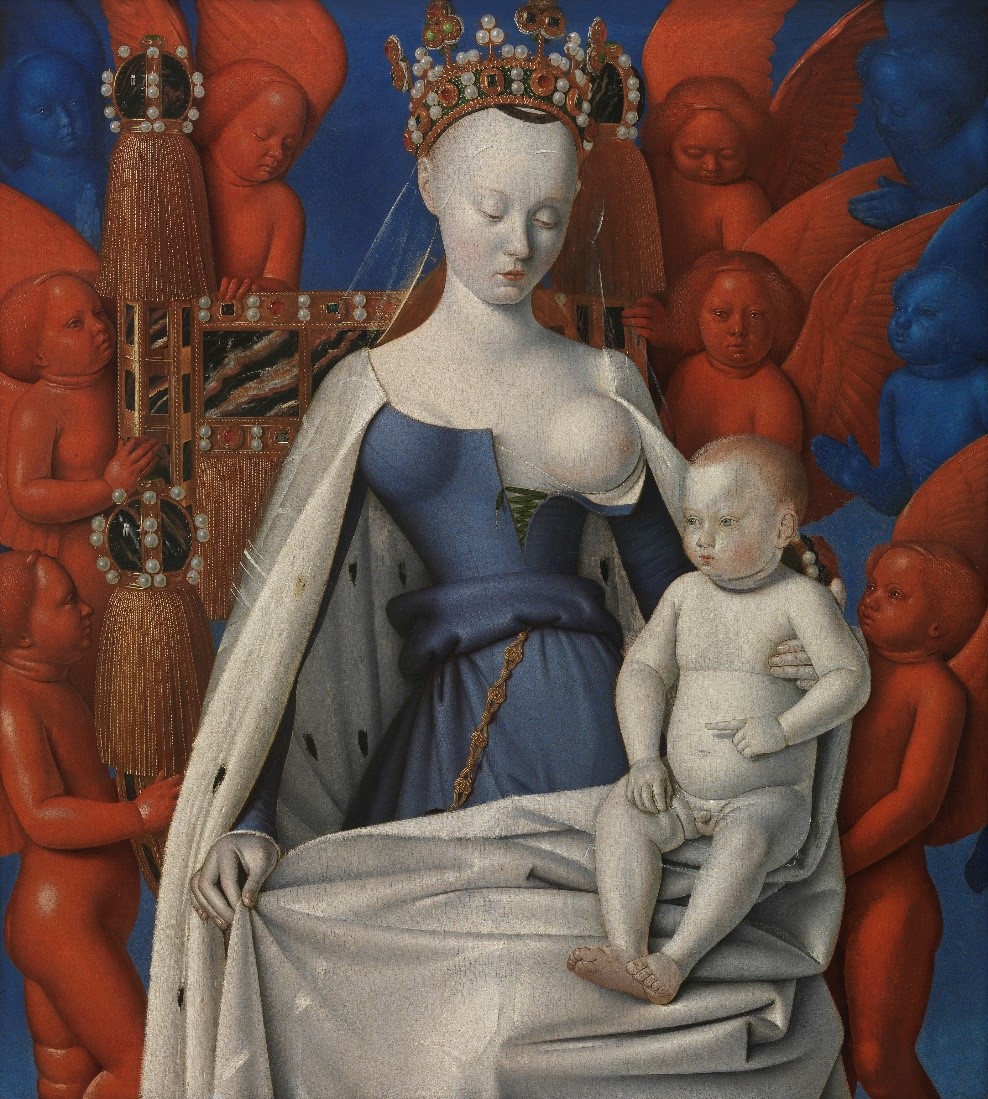
The Melun Diptych
1. Composition:
Jean Fouquet’s “The Melun Diptych” stands as a testament to his artistic brilliance, showcasing a meticulously crafted composition that harmoniously merges earthly and celestial realms. The diptych format, with its two hinged panels, unfolds a visual narrative that captivates the viewer.
The left panel features the portraits of the patrons, Étienne Chevalier and his wife, Catherine Budé. Their graceful poses and delicate expressions draw attention to the earthly realm, grounding the viewer in the reality of their devout patronage. In contrast, the right panel presents the celestial realm, adorned with the ethereal presence of the Madonna and Child. The composition skillfully balances the sacred and the secular, creating a visual dialogue that transcends the physical boundaries of the diptych.
2. Symbolism:
The symbolism embedded in “The Melun Diptych” is rich and layered, inviting viewers to delve into the spiritual and personal narratives interwoven within the artwork. The Madonna and Child, centrally positioned on the right panel, symbolize divine grace and motherly love. The Christ Child, holding a goldfinch, foreshadows his future sacrifice, while the Madonna’s gentle gaze conveys a sense of compassion and maternal tenderness.
The left panel, dedicated to the patrons, bears symbols of their piety and devotion. Étienne Chevalier is presented in the role of a kneeling donor, hands clasped in prayer, acknowledging the sacred significance of the scene. Catherine Budé, elegantly adorned, embodies the virtues of a virtuous wife and mother. The symbolic language extends to the landscape, where lush flowers and plants allude to fertility, renewal, and the Garden of Eden.
3. Emotional Resonance:
The emotional resonance of “The Melun Diptych” is palpable, emanating from the delicate interplay of expressions, gestures, and symbolic elements. The patrons’ expressions convey a sense of reverence, humility, and genuine piety, reflecting their devotion to the sacred figures depicted. The Madonna’s countenance, filled with serenity and love, contrasts with the more contemplative expression of the Christ Child, creating a nuanced emotional dynamic.
The diptych as a whole evokes a sense of spiritual intimacy, inviting viewers into a sacred space where the earthly and divine converge. The emotional resonance is heightened by Fouquet’s masterful use of light, which gently caresses the figures and imbues the scene with a transcendent glow.
4. Significance of Étienne Chevalier and Catherine Budé:
Étienne Chevalier and Catherine Budé, depicted on the left panel, hold a pivotal role in the narrative of “The Melun Diptych.” As patrons, their inclusion not only signifies their financial support but also underscores their spiritual devotion. The act of presenting the patrons in prayerful poses emphasizes their humility and submission to the divine, positioning them as intermediaries between the earthly and heavenly realms.
The inclusion of the patrons is not merely a symbolic gesture; it establishes a personal connection between the viewers and the sacred scene. Étienne Chevalier and Catherine Budé become conduits through which the observer can engage with the religious narrative, fostering a sense of participation and shared devotion.
In conclusion, “The Melun Diptych” is a masterful tapestry of composition, symbolism, and emotional resonance. Fouquet’s ability to seamlessly weave together the earthly and divine, the symbolic and the personal, elevates this diptych to a transcendent masterpiece that continues to resonate with viewers, inviting them to contemplate the intersection of the sacred and the human experience.
V. "The Book of Hours of Étienne Chevalier" (c. 1452-1460)
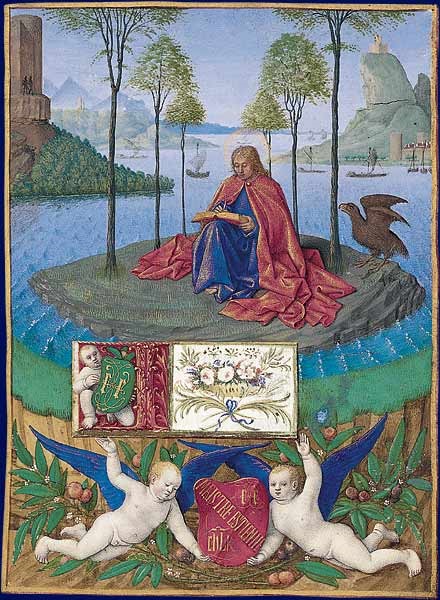
The Book of Hours of Étienne Chevalier
1. Fouquet's Contributions to Manuscript Illumination:
“The Book of Hours of Étienne Chevalier” stands as a luminous jewel in the crown of Jean Fouquet’s artistic legacy, showcasing his unparalleled skill in manuscript illumination. This illuminated prayer book, a cherished treasure commissioned by Fouquet’s patron Étienne Chevalier, exemplifies the meticulous artistry and devotion to detail that characterize Fouquet’s contributions to the craft.
The detailed miniature paintings within the Book of Hours are a testament to Fouquet’s mastery of the intricate art of illumination. These miniatures, often measuring only a few inches, are exquisite visual narratives that accompany the text, enhancing the spiritual experience of the reader. Fouquet’s miniatures breathe life into the pages, creating a delicate dance between text and image.
The miniatures are marked by a remarkable attention to detail, with figures rendered in vibrant colors and adorned with luxurious garments. The backgrounds often feature intricate landscapes or architectural elements, transporting the viewer into a meticulously crafted world. Fouquet’s use of gold leaf, a hallmark of medieval illumination, adds a luminous quality to the miniatures, symbolizing the divine and elevating the spiritual significance of the Book of Hours.
2. The Cultural and Religious Context of the Book of Hours:
“The Book of Hours” was a genre of illuminated manuscripts that gained immense popularity during the medieval period, particularly in the 14th and 15th centuries. These prayer books were designed for private devotion and were often tailored to the needs and preferences of individual patrons. The term “Hours” refers to the specific times for prayer throughout the day, emphasizing the role of these books in guiding personal devotions.
In the cultural and religious context of the time, the Book of Hours became a significant expression of piety and literacy among the laity. It allowed individuals, even those who were not part of the clergy, to engage in daily prayer rituals, fostering a more personal and direct connection with the divine. The Book of Hours became a cherished possession, passed down through generations and often personalized with individual prayers and annotations.
Fouquet’s commission of “The Book of Hours of Étienne Chevalier” reflects the cultural and religious milieu of 15th-century France. As a court painter, Fouquet was not only catering to the spiritual needs of his patron but also participating in a broader cultural movement that valued both religious devotion and artistic expression.
3. Impact on Medieval Art:
Fouquet’s illuminated manuscripts, including “The Book of Hours of Étienne Chevalier,” played a pivotal role in shaping the trajectory of medieval art. The Book of Hours became a platform for artistic experimentation and innovation within the constraints of its intimate scale. Artists like Fouquet elevated manuscript illumination from a functional craft to a refined art form, blurring the lines between the sacred and the aesthetic.
The impact of illuminated manuscripts extended beyond religious circles. The rich visual language, intricate details, and vibrant colors employed in these manuscripts influenced other art forms of the time, including panel painting and sculpture. The fusion of text and image in the Book of Hours paved the way for a more holistic and immersive artistic experience, foreshadowing the developments that would unfold in the Renaissance.
In essence, “The Book of Hours of Étienne Chevalier” not only attests to Fouquet’s unparalleled talent in manuscript illumination but also reflects the broader cultural and religious currents of medieval France. As a cultural artifact, it stands as a testament to the enduring interplay between artistic expression, spiritual devotion, and the evolution of medieval art.
FAQs
1. Who was Jean Fouquet?
Jean Fouquet (c. 1420–1481) was a French painter of the Northern Renaissance. He is known for his contributions to both manuscript illumination and panel painting, and he was active during the 15th century.
2. What are some notable works by Jean Fouquet?
Jean Fouquet is renowned for his illuminated manuscripts, such as the “Book of Hours of Etienne Chevalier.” One of his notable panel paintings is the “Melun Diptych,” featuring portraits of Etienne Chevalier and the Virgin Mary.
3. What is the "Melun Diptych"?
The “Melun Diptych” is a two-panel painting created by Jean Fouquet. It depicts Etienne Chevalier, the court treasurer, kneeling in prayer on one panel, and the Virgin and Child on the other. The diptych is known for its detailed depiction and vibrant colors.
4. How did Jean Fouquet contribute to the Northern Renaissance?
Jean Fouquet played a significant role in bridging the artistic styles of the Northern Renaissance with Italian Renaissance influences. His works reflect a combination of Northern precision and Italian humanism.
5. What distinguishes Fouquet's style in manuscript illumination?
In manuscript illumination, Fouquet is recognized for his attention to detail, use of vibrant colors, and innovative compositions. His illuminated manuscripts often feature intricate borders and finely detailed miniatures.
Conclusion
In the tapestry of art history, Jean Fouquet emerges as a masterful weaver, threading together the rich hues of Northern European and Italian Renaissance influences to craft an indelible legacy. Our exploration of Lesson 7 has been a journey through the life, style, and significant works of this luminary of the French Renaissance.
In bidding adieu to Lesson 7, let us carry forward the vibrant hues of Fouquet’s palette, the dance of light and shadow, and the profound symbolism that defined his art. May our exploration inspire continued fascination with the realms where artistic innovation, cultural context, and spiritual devotion converge, paving the way for deeper connections with the luminaries who shaped the canvases of our shared heritage.