

Lesson 2 – Role of Art
Introduction
In the last lesson, we have our own definition of art. The way how art is defined plays an important role in the influence of art on that man. Therefore, the must-answer question today is: What are the influences of art on humans? Which role does art play in education for kids? This article would discuss these questions in more detail.
I. What are The Influences of Art on Humans?
Art comes in many different forms. Whatever the kind of art is, people benefit from enjoying or creating the art. Art provides incredible emotional, mental, and educational benefits and more.
1. Emotional & mental advantages
We consume a lot of audio art in the form of music, songs and more, because of the fact that they help us to relax our mind. Moreover, it also has the ability to change our mood and brighten it up.
Moreover, it also motivates us and strengthens our emotions. Poetries are audio arts that help the author express their feelings in writings. We also have music that requires musical instruments to create a piece of art.
2. Educational advantage
Art improves soft skills of both creators and enjoyers.
Art is advantageous for our social skills. To be a part of a play or music choir, for example, we must learn how to work in a team, so that the most fantastic works are created. Additionally, we stand a good chance of improving our focusing ability and leadership skills, which is vital for other different aspects of life.
Thanks to art, our decision making skill is strengthened. The arts enhance problem solving and critical thinking skills. How do I express this feeling through my dance? How should I play this character? Learning how to make choices and decisions will certainly carry over into our education and other parts of life.
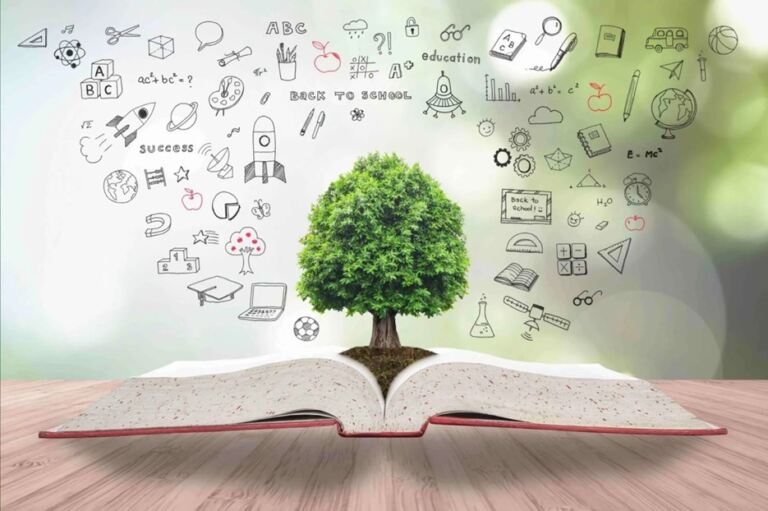
Some important characteristics are also improved with the help of art.
Naturally art plays an important role in enhancing creativity. People develop innovation skills when they’re encouraged to express themselves and take risks in creating art and playing music.
Building self-confidence is also a benefit of art. Getting up on a stage and singing gives people a chance to step outside their comfort zone. As they improve and see their own progress, their self-confidence will continue to grow.
3. Other advantages
Without art, the world would be a dull place. Take the recent pandemic, for example, it was not the sports or news which kept us entertained but the artists. Their work of arts in the form of shows, songs, music and more added meaning to our boring lives.
Art is essential for the success of events. Whatever kind of event, sport, education and anniversary events, etc., art in the forms of music, images, songs, and more, is an integral part of them.
II. Which Role Does Art Play in Educating Kids?
Art has beneficial influences on society, thus there is no doubt that art should play a vital role in educational programs for kids. There are some potential reasons improving that art helps children with better development.
1. Improved academic achievements
Art inspires kids to stand out in and out of the classroom. It helps students increase motivation, improve attitudes and attendance, and improve academic performance.
According to PBS: “A report by Americans for the Arts states that young people who participate regularly in the arts (three hours a day on three days each week through one full year) are four times more likely to be recognized for academic achievement, to participate in a math and science fair or to win an award for writing an essay or poem than children who do not participate.”
2. Development of Social Skills and Some Vital Characteristics
As the mentioned information, decision-making skill is developed through the arts, and this is certainly a valuable skill in adulthood. Others, including teamwork skills, focusing ability and leadership skills, are required in their different future jobs.
If you want to encourage language learning, communication, and reading in your kids, art and music are essential. Children’s brains develop faster with music, which is the audio form of art, particularly in areas associated with language acquisition and reading skills, according to a 2016 study at the University of Southern California’s Brain and Creativity Institute. For young children, making art provides opportunities for language development. Toddlers learn words for colors and shapes as they create art.
The creativity involved in art education strengthens critical thinking skills for kids. Visually learning through drawing, sculpting, and painting develops visual-spatial skills, which teach kids how to interpret and use visual information. On the other hand, music plays a vital role in the enhancement of spatial-temporal reasoning skills, which is a precursor to logical thinking, abstract thinking, and problem-solving needed for the brain to function in mathematics, engineering, and physics.
In addition, creativity can open doors later in life: 72% of employers say that creativity is the #1 skill they look for when hiring. Self-confident employees naturally have better opportunities to get a well-paid job.
3. Other advantages
Art can be considered a hobby so that children use their time in a meaningful way. They spend time listening to music, drawing, making pottery, etc. By the way, kids can not only reduce stress after a hard-working school day, but they also develop themselves. Doing art or playing an instrument, like holding a paintbrush and scribbling with a crayon, are important elements in developing a child’s fine motor skills. Art helps people feel more connected to one another. As students interpret visual imagery from artists or explore different types of music, it helps them understand the concept of cultural diversity. Seeing a different culture explored through sculptures, paintings or songs helps kids process information differently than reading about it in a textbook. One stone kills two birds!
III. FAQs
- What does this artwork teach us about the past?
- How does this artwork teach us about the future?
- What does this painting say about the world in which we live?
- Was this intended to be a work of art or not? Why do you think that? How does that impact your understanding of the artwork?
- How do you think this artwork was used by the people who made it? What was its function?
Conclusion
In conclusion, art advantageously influences various fields of life. Enjoying and creating help people with emotional, mental, educational and other advantages. Knowing the roles of art helps us to apply effectively for educating children. In the revolution of science and technology, people should take advantage of the Internet to bring more art into education for kids. More online programs, videos, and games connected with art should be produced and carefully checked, rather than billions of meaningless things available on social networks like Facebook, YouTube, etc.