


Chapter 1, Lesson 9
In Progress
Lesson 9 – Exclamation Mark
Chapter Progress
0% Complete
Introduction
Mastering the art of expressing emotions in writing can be a challenge. How do you capture your excitement, astonishment, or urgency? The answer lies in the power of the exclamation mark! In this lesson, we will unravel the secrets of this distinctive punctuation mark and unlock its potential to breathe life into your words. From understanding its purpose to knowing when and how to use it effectively, we will provide the tools and techniques to make your writing exclaim with impact.
I. Definition
An exclamation mark, or exclamation point, is used to convey intense feelings and emotions. It is utilized with interjections and exclamatory phrases. The Cambridge Dictionary defines an exclamation mark as “the symbol! written immediately after an exclamation,” whereas the Oxford Learner’s Dictionary defines it as “the mark (!) that is written after an exclamation.” The two most important punctuation symbols in writing are parentheses and dashes, which are employed to give clarification and detail. They are excellent tools for emphasizing points and elaborating on phrases when used appropriately.
II. Why Use an Exclamation Mark in a Sentence?
Hold on if you have questions about utilizing exclamation points in academic or professional writing. There is something you need to be aware of. Exclamation points should only be used in casual writing. Here is what you can do if you wonder how some severe and strong ideas can be communicated in academic writing. When writing for academic audiences, you should pick vocabulary that effectively conveys your message. For example, to indicate the gravity of a specific action, use terms like “vital,” “crucial,” and “essential” rather than “really important.”
To better grasp how to use exclamation points in sentences, examine the examples below.
Exclamation marks are punctuation marks used to convey strong emotions, excitement, surprise, or emphasis in written communication. However, using them judiciously and adhering to specific rules is essential. Consider the following guidelines:
1. Expressing solid emotions: Exclamation marks are appropriate when conveying strong emotions like joy, anger, excitement, or astonishment. For example: “What a beautiful sunset!”
2. Avoid overuse: It’s crucial to use exclamation marks sparingly. Using too many can diminish their impact and make the writing appear overly dramatic or unprofessional. Limit their usage to truly impactful statements.
3. Avoid using formal writing: Exclamation marks are generally discouraged in legal or academic writing. Maintain a more neutral tone and rely on other means, such as careful word choice or sentence structure, to convey emphasis or excitement.
4. Be cautious in professional communication: When writing emails, reports, or other professional documents, use exclamation marks judiciously. They can be perceived as unprofessional or overly informal if used excessively.
5. Tone awareness: Consider the tone and context of your message. Exclamation marks can alter the perceived style to align with the intended emotional impact and overall message.
6. Dialogue and quotations: Exclamation marks are often used in direct quotes or conversations to depict the speaker’s emotions or exclamatory statements accurately. Maintain consistency with the original text.
III. Examples of Sentences Using an Exclamation Mark
Here are some examples of sentences using an exclamation mark to help you comprehend and remember the usage of exclamation marks.
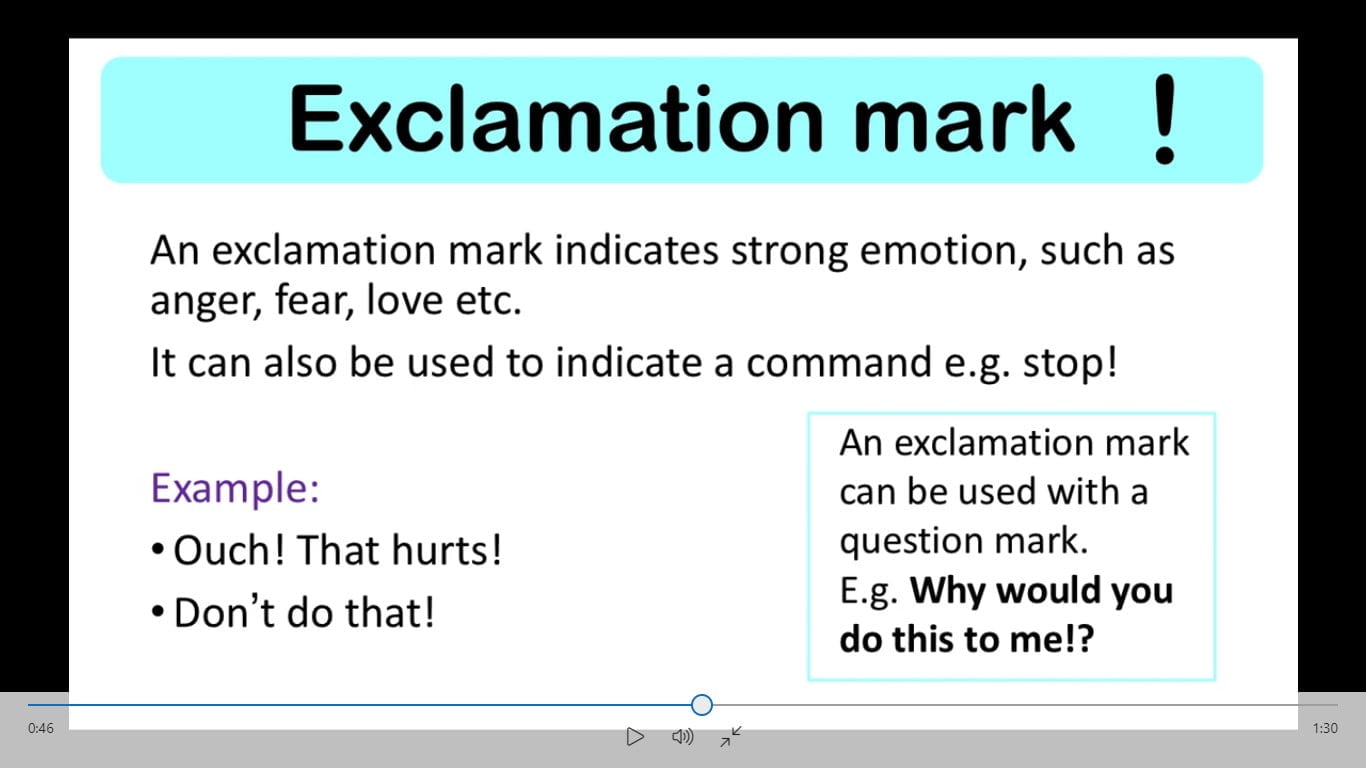
1. Using an Exclamation Mark in Exclamatory Sentences
– How careless can you be!
– What a fantastic life!
– That is wonderful!
2. Using an Exclamation Mark at the End of an Interruption
– Wow! That is great news.
– Oh! I am so sorry.
– Alas! That isn’t good.
3. Using an Exclamation Mark in Direct Oral communication
– Sam said, “I love this movie!”
– What nerve she has to say, “You are rude”!
– The team shouted together, “Whoa! We finally did it.”
4. Using an Exclamation Mark at the End of Phrases/Individual Words
– Careful! Will you?
– Get out! You have pulled the last straw.
Conclusion
In conclusion, an exclamation mark is a powerful tool that adds emphasis and emotion to our writing. It is a beacon, guiding readers to the most impactful moments and allowing our words to leap off the page. However, we must also exercise caution and not overuse this full punctuation mark, for its true power lies in its selective deployment. So, as we navigate the realm of exclamation marks, let us wield them with intention, savoring their ability to ignite excitement and convey our deepest emotions.