


Chapter 1, Lesson 8
In Progress
Lesson 8 – How to Use Dashes and Parentheses in Writing
Chapter Progress
0% Complete
Introduction
Navigating the intricacies of punctuation marks is essential for crafting clear and effective writing. Dashes and parentheses, two commonly used punctuation marks, are crucial in providing additional information, clarifying ideas, and adding emphasis. However, many writers need clarification on when and how to use dashes and parentheses correctly, which can lead to confusion and impact the overall coherence of their writing. This lesson will delve into dashes and parentheses, unraveling their functions and offering practical strategies to help you confidently wield them.
I. Definition
1. Parentheses:
Parentheses, represented by the symbols (), serve various purposes in writing. They commonly provide additional explanations or clarifications within a word, sentence, or paragraph. Additionally, parentheses can emphasize specific elements within lists or verdicts that require special attention.
1.1 Uses of Parentheses
Parentheses serve various purposes beyond their primary function of adding specifics to a claim, term, or phrase. They offer valuable information and play different roles in writing.
1.2 Providing additional details
Parentheses are useful for inserting extra details about an adjective, phrase, or entire sentence that follows them. The enclosed information can be removed without altering the overall meaning or coherence of the statement.
Examples:
- The concert (which lasted for three hours) was a memorable experience.
- She is studying psychology (her favorite subject) at the university.
- The painting (depicting a serene landscape) caught everyone's attention.
1.3 Clarifying references
Parentheses can be used to provide references or citations for sources mentioned in the text. They help readers locate the relevant information or direct them to additional sources.
Examples:
- The study concluded that sleep deprivation affects cognitive abilities (Smith et al., 2022).
- The theory of relativity (as proposed by Albert Einstein) revolutionized our understanding of physics.
1.4. Explaining acronyms or abbreviations
Parentheses are employed to provide the meanings or expanded forms of abbreviations or acronyms used in writing.
Examples:
- The United Nations (UN) promotes international cooperation and peace.
- The virus is spread through close contact, such as respiratory droplets (CDC, Centers for Disease Control and Prevention).
1.5 Presenting optional information or alternatives
Parentheses can be used to present additional information or alternatives that are not essential but provide further context or choices.
Examples:
- The project (if approved) will commence next month.
- We are organizing a trip to Paris (or any other European city of your choice).
1.6 Creating lists or enumerations
Parentheses can be used to organize lists or enumerations within a sentence.
Examples:
- The requirements for the job include fluency in three languages (English, French, and Spanish) and strong communication skills.
- The recipe calls for three main ingredients (flour, sugar, and butter) and various spices.
2. Dashes:
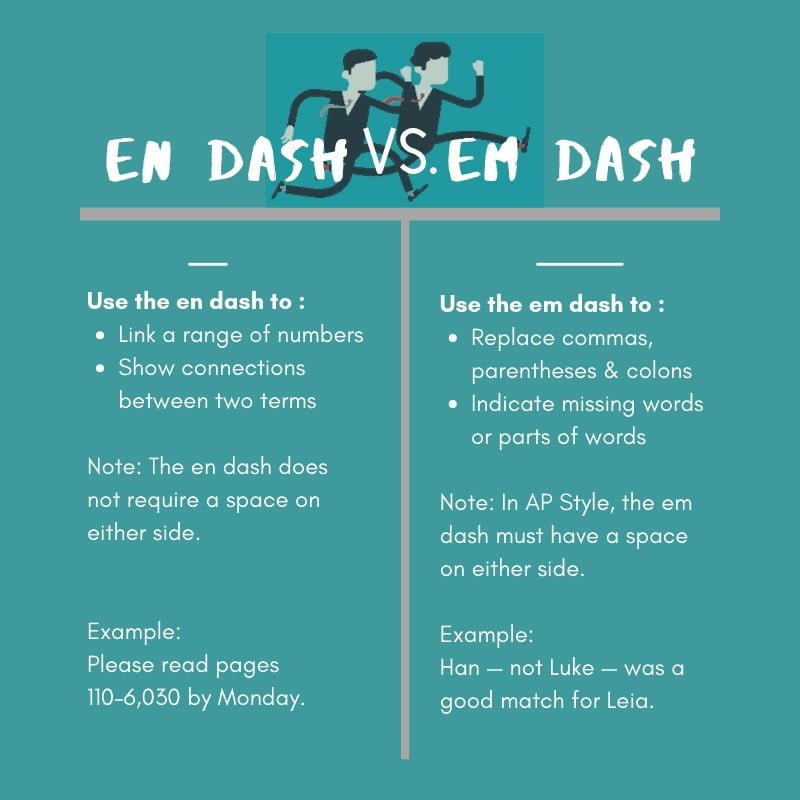
An interruption, stop, or minor break in a phrase is symbolized by the dash (-). It emphasizes a statement and focuses on it. No space should be left on either side of a dash when employing it in writing.
- Uses of Dashes
Dashes are frequently employed in fiction and informal writing, but it’s important to avoid overusing them, as excessive dash usage can create an impression of haste and carelessness. In certain cases, two dashes are required, one before and one after the word or phrase being introduced.
Dashes can be used to introduce explanations or repetitions, often preceded by terms like “in other words” or “namely.” The sentence following the dash begins with a lowercase letter.
Examples:
- Michael patiently waited for the grammar teacher—he was determined to get his assignment marked.
- The models bowed—except for their leader—amidst the cheers.
- They bought several items at the fair—clothes, jewelry, and shoes.
Conclusion
In conclusion, mastering the use of dashes and parentheses can greatly enhance the clarity and precision of your writing. These punctuation marks are useful for setting apart important information, clarifying meaning, and adding emphasis. However, it is important to use them judiciously and in accordance with established conventions of grammar and style. Following the guidelines outlined in this lesson, you can use dashes and parentheses effectively and confidently in your writing. With practice, you will use these punctuation marks to convey your message with greater impact and clarity.