


Chapter 1, Lesson 4
In Progress
Lesson 4 – How to Comprehend Generalizations of a Passage
Chapter Progress
0% Complete
Introduction
Reading comprehension is an essential skill that every student should develop. It allows individuals to understand the meaning of the written text and extract meaningful information from it. However, understanding the generalization of a passage can be a challenge for some students. By the end of this lesson, students should be able to identify and understand abstractions in a course correctly.
I. Definition
A generalization is when you take one or a few facts and turn them into a more broad-based, universal claim. You might assume that all girls play with dolls if that’s how all the girls you know behave. Based on their research, scientists attempt to draw generalizations; the more data they have, the more accurate the conception. Stereotypes and generalizations can both be damaging and inaccurate at times. It’s typically advisable to stick to specifics and steer clear of generalizations.

II. Critical components of reading comprehension
To properly understand the general ideas of a passage, you need to analyze the text carefully. You can apply some tips on how to analyze paragraphs:
1. Underline the main ideas:
To understand the main idea of a passage, you need to find the main ideas to understand what the passage means. This is the experience of people who score high on tests because they read seriously, determining the purpose of each paragraph while reading the text.

2. Identify the inferences implied by the author through quotations, for example:
Authors can use quotation marks to refer to something. Consider these factors to make these inferences to make sense of the text.
3. Identify the article topic:
Understanding the subject of the article helps in general understanding. It is essential to identify why the author wrote the article and what they are trying to convey.
4. Determine the role of each sentence and each paragraph:
Each sentence and each section in the text is essential in conveying the author’s message. It is necessary to determine how each sentence and paragraph contributes to the overall argument of the text.
5. Analysis of the author's argument:
Critically critical readers wonder how and why arguments are constructed. It is essential to understand what the author is doing and why they are doing it.
Instead of focusing too much on what is being said, focus on why it is being said. Ask yourself questions as you continue to use deductive methods for a general understanding of the text. Understanding why the author wrote a particular sentence or paragraph can help understand generalizations.
III. Practical strategies for tackling reading comprehension
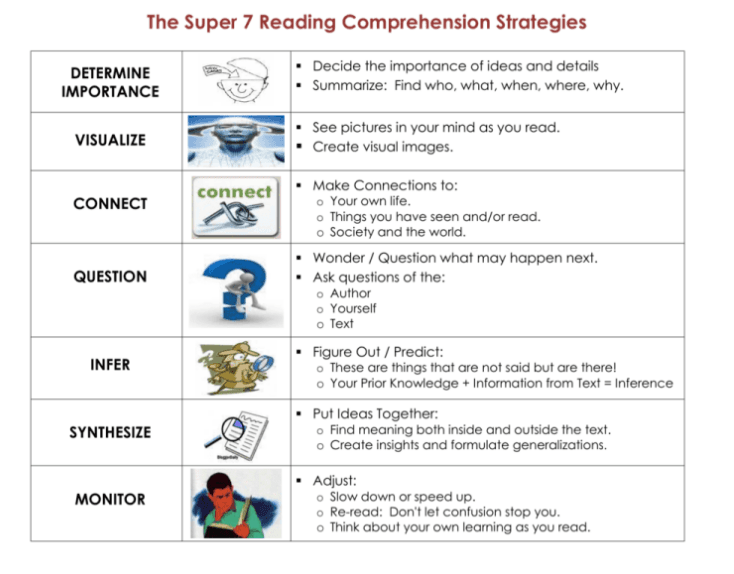
IV. Dos and Don'ts
As you start to construct a strategy for the Reading Comprehension part that works best for you, keep the following principles in mind:
- Don't strive to read more quickly; reading comprehension on the LSAT isn't about memorization and speed. Students who think of themselves as slower readers can do very well on the test if they learn how to read to spot the most crucial information actively. Specific passages, for instance, can be read less carefully because they provide evidence supporting a more critical proposition or point.
- Do read actively and with a pencil to avoid "zoning out" and better understand reading comprehension sections. Many students like to highlight or circle keywords, such as "however," "therefore," "argues that, "first/second," and many others that you'll learn throughout your studies with us. When reading aloud while using a pencil, it is much less likely that you will suddenly question what you just read. Instead, you can concentrate on the action's structure and transitions.
- Be quick: You don't have to complete the readings and questions in order or answer a particular question. Many students find that they can increase their scores by skipping several questions.
- Do familiarize yourself with each question: Even though the passage is the same, a successful approach to a central point question differs significantly from a practical approach to an inference question.
- Do take time to study the basics: Learning and using regular reading habits takes time. Before checking numerous sections in succession, learn to recognize essential keywords (and why they are important). The system's tips and explanations will significantly aid this. Characterizing the connections between distinct points of view and determining a paragraph's goal are two other crucial abilities. Don't be too hard on yourself!
- Respect the author's use of precise language. For example, if the author says, "This explanation isn't well-supported," an inference inquiry can ask you to speculate on how the author feels about the explanation. The incorrect response would be "vehement skepticism," whereas the appropriate response may be "cautious doubt." In other words, they detect some degree of disagreement and think any choice that reflects conflict would be accurate. This causes many students to read too roughly, which lowers their LSAT scores. The term "most" in the passage can cause them to think "all" when they encounter it mistakenly.
IV. FAQ
1. What is a generalization in the context of a passage?
A generalization is a broad assertion that covers a more comprehensive idea, pattern, or trend derived from specific details provided in the passage. It streamlines the specifics into a bigger-picture idea.
2. How do I identify generalizations in a passage?
Look for recurring ideas, patterns or trends that are mentioned multiple times or across different examples. Generalizations often summarize the main point or theme of a passage.
3. Why are generalizations important to comprehend?
Generalizations help distill complex information into concise statements, making it easier to grasp the main ideas of a passage and remember key points.
4. How can I ensure I'm accurately comprehending a generalization?
Compare the generalization to the supporting details and examples in the passage. Verify that the generalization accurately reflects the information presented and isn’t an oversimplification.
5. Can a generalization be supported by just one example?
While a single example can suggest a generalization, it’s generally more reliable if a generalization is supported by multiple examples or instances in the passage.
6. What if a generalization contradicts specific details in the passage?
Reconsider your understanding of the generalization and the specifics if you come across a contradiction. The text may contain subtleties or complexities that call for further investigation.
7. How do generalizations contribute to understanding the main idea of a passage?
The main idea or theme of a passage is frequently encapsulated in generalizations. Understanding the generalization gives you insight into the author’s larger point.
8. Are generalizations the same as summaries?
While generalizations are similar to summaries, they focus on broader concepts rather than providing a comprehensive overview of every detail in the passage.
9. Are generalizations limited to certain types of texts?
Generalizations can be found in a variety of texts, including academic articles and essays as well as works of fiction and nonfiction. They are a crucial component of effectively conveying important ideas.
Conclusion
Understanding the main idea of a passage can be challenging. Still, students can develop the skill to overcome this weakness by carefully analyzing the text and focusing on why it is said. It is essential to master the skills of identifying the main ideas, understanding the author’s argument, and determining each sentence and paragraph’s role in conveying its message. With consistent practice, anyone can develop reading comprehension skills and excel at learning.