

Back to Course Overview

Mathematics- 8th

0% Complete
0/0 Steps
  1. Notes
Chapter 1, Lesson 4
In Progress

Lesson 4 – Rays and Line Segments

Chapter Progress
0% Complete
Introduction

This lesson will explore the fundamental concepts of rays and line segments in geometry. Rays and line segments are essential elements in understanding the properties of lines and angles. We will learn to identify, name, and represent rays and line segments and examine their characteristics and relationships. By the end of this lesson, you will clearly understand how rays and line segments contribute to the broader study of geometry and their practical applications in various mathematical and real-world contexts. Let’s dive in and discover the fascinating world of rays and line segments!

I. Definition

1. Introduction about ray and line segments

2. What is a ray?

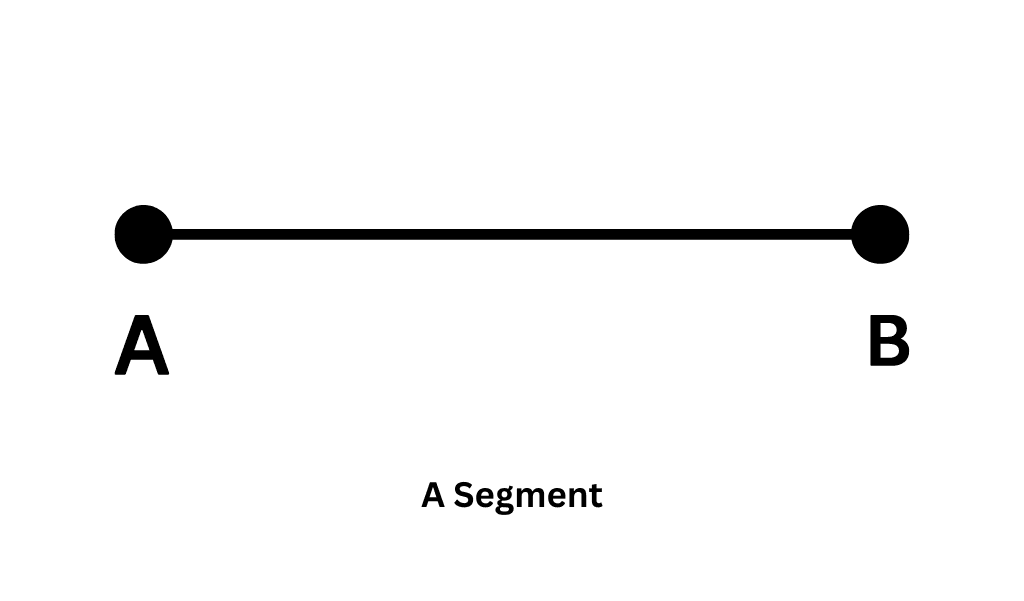
3. What is a line segment?

II. Explanation

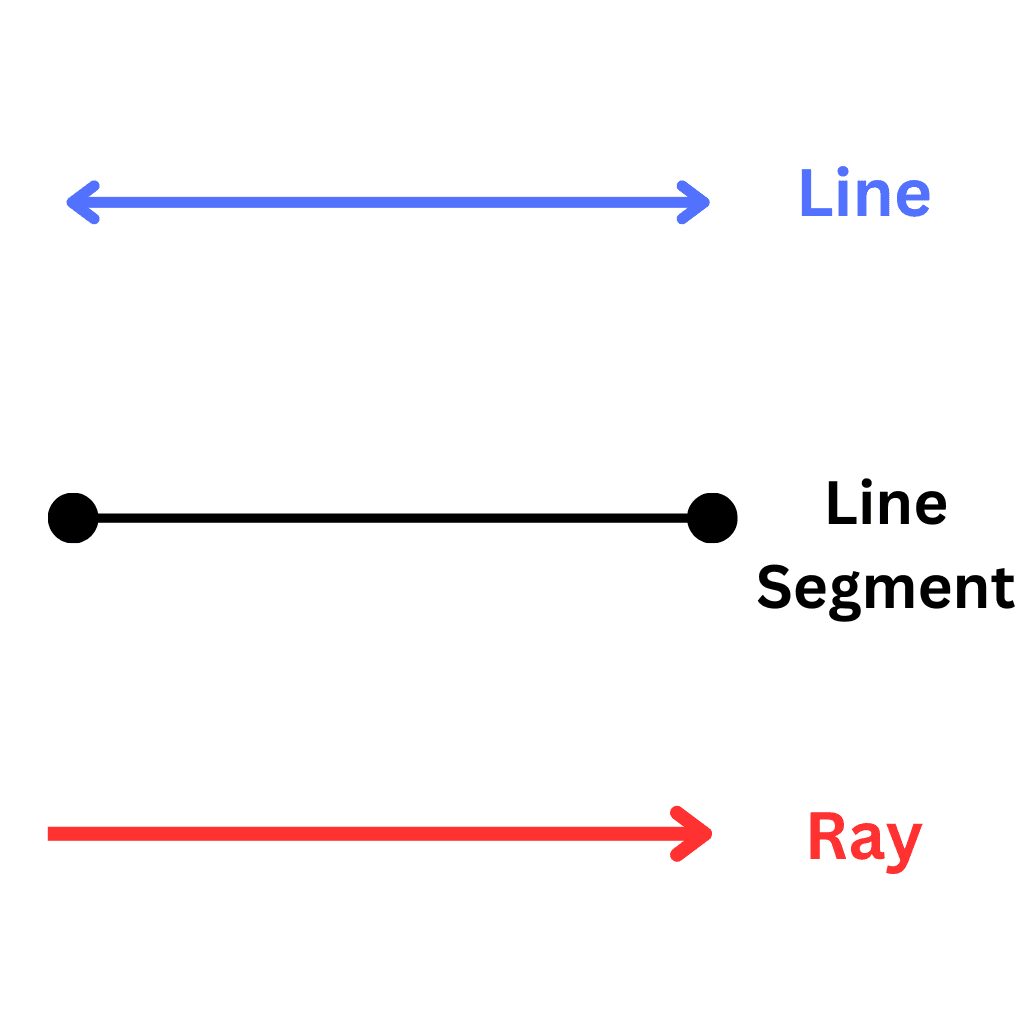
1. Differences between ray and line segment

Category Ray Line segment
Limitation
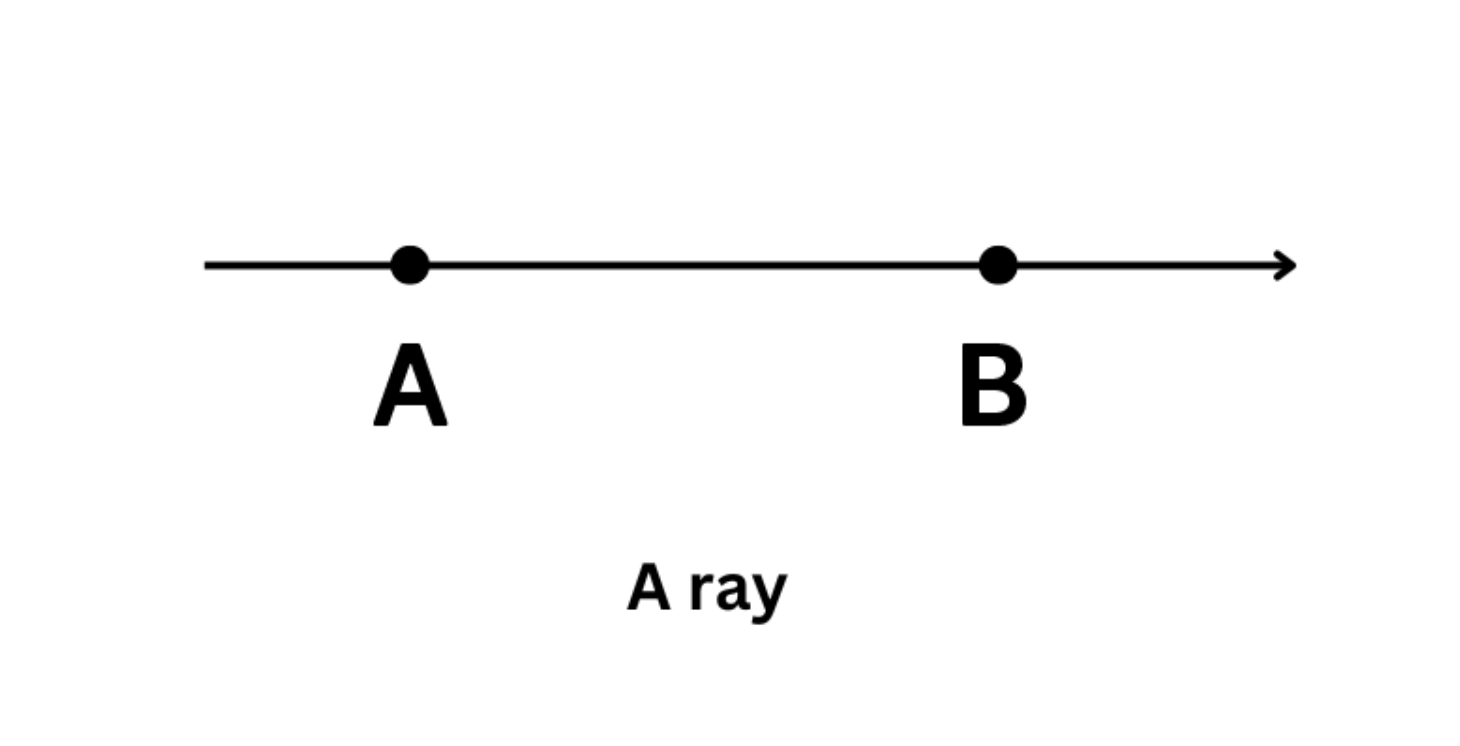
Has a starting point and goes on endlessly to the other side
Limited by two fixed points
Length
Unspecified length, unmeasurable
Length is the distance between 2 limit points
Symbol


2. Differences between line and line segment

Category Line Line segment
Definition
It is a group of points that extends in both directions indefinitely.
The least travel time exists between the two places.
Figure
There is no beginning or finish to a line.
Beginning and ending points are present in line segments.
Symbol

3. How to measure the length of a line segment?

Step 1:

Use a ruler or any measuring instrument with marked units (such as centimeters or inches) to ensure accurate measurements. 

Step 2:

Place the ruler with one end aligned with an endpoint of the line segment. 

Step 3:

Read the measurement at the other endpoint of the line segment. This measurement represents the length of the line segment. 

Step 4:

Take note of the unit of measurement used, such as centimeters or inches, to provide a complete measure. 

III. Example

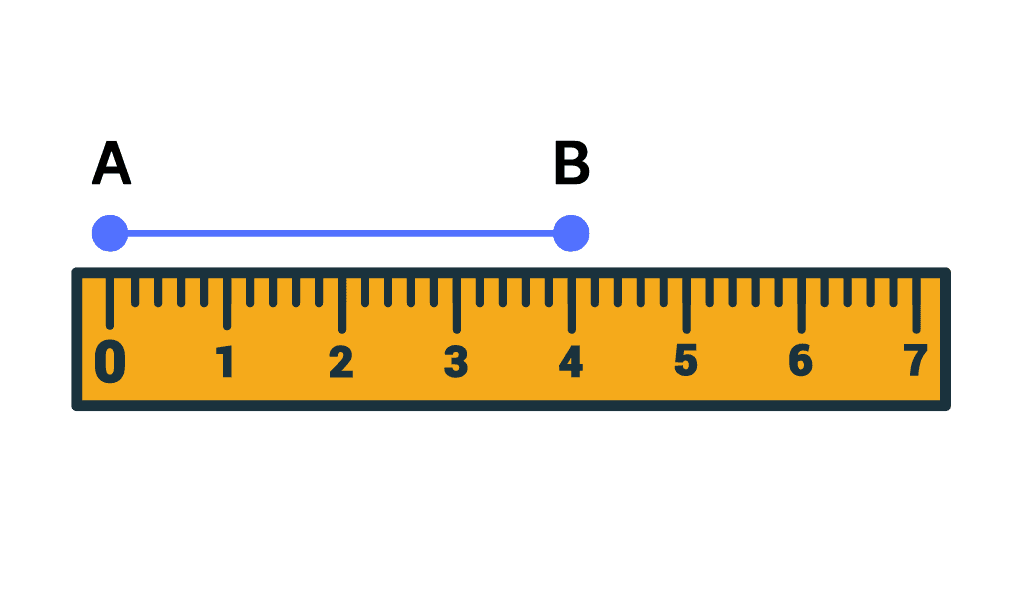
A ruler (scale) can be used to measure line segments. Let’s see how to calculate the AB of a given line segment. 

Step 1:

Carefully position the ruler’s tip to zero at the supplied line segment’s starting point A. 

Step 2:

Read the values on the ruler now and locate the number on endpoint B. 

Step 3:

The line segment’s length is 4 inches, which may be expressed as AB = 4 inches. 

IV. FAQS

1. What is a line, line segment, or ray?

2. How to draw line segments and rays?

Key lesson summary

1. Rays

2. Line Segments

3. Properties and Relationships:

Conclusion

The “Ray and Line Segmentslesson provided a solid foundation for understanding these fundamental geometric concepts. We have learned that a ray is a portion of a line that extends infinitely from an endpoint, while a line segment is a finite portion of a line with distinct endpoints. We have explored how to identify, name, and represent rays and line segments and measure their lengths using appropriate tools. Understanding rays and line segments are crucial for comprehending the broader concepts of lines, angles, and geometric constructions. We can analyze and solve geometry-related problems more effectively by grasping these concepts. Remember to apply the knowledge gained from this lesson in various mathematical and real-world situations. With a solid understanding of rays and line segments, you are ready to embark on further explorations in geometry and its practical applications. 

Upgrade Plan

Sign up for our fortnightly newsletter with the best travel inspirations.

Monthly
Yearly

Simple Start Plan

Online Self-Education
  • Simple Start includes:
  • (25) Prepaid Tutorial Hours
  • Grade-Level Course Organization
  • Coursework Management Tools
  • Interactive User Reports
  • End-User Support Ticketing Tool
  • Calendar-Booking integration
  • Zoom integration
$179/Month

Essential Plan

Asynchronous Online Learning
  • Everything in Simple Start, plus:
  • (50) Prepaid Tutorial Hours
  • Access to Virtual Classroom
  • Live Chat and Direct Messaging
  • Email Communication
  • Group Discussion Board
  • Social Learning Features
  • Notebook Functionality
$279/Month

Simple Start Plan

Online Self-Education
  • Simple Start includes:
  • (25) Prepaid Tutorial Hours
  • Grade-Level Course Organization
  • Coursework Management Tools
  • Interactive User Reports
  • End-User Support Ticketing Tool
  • Calendar-Booking integration
  • Zoom integration
$1,800/Year

Essential Plan

Asynchronous Online Learning
  • Everything in Simple Start, plus:
  • (50) Prepaid Tutorial Hours
  • Access to Virtual Classroom
  • Live Chat and Direct Messaging
  • Email Communication
  • Group Discussion Board
  • Social Learning Features
  • Notebook Functionality
$2,800/Year

Testimonial

Kindly Submit your Testimonial