

Back to Course Overview

Mathematics- 8th

0% Complete
0/0 Steps
  1. Notes
Chapter 1, Lesson 2
In Progress

Lesson 2 – Parallel, Perpendicular and Transverse Lines

Chapter Progress
0% Complete
Introduction

In geometry, lines play a fundamental role in forming the basis for understanding shapes, angles, and spatial relationships. In particular, the concepts of parallel, perpendicular, and transverse lines are essential for analyzing the interactions and properties of lines. This lesson introduces students to the characteristics and relationships of these types of lines.

Students will explore the properties, characteristics, and interactions of parallel, perpendicular, and transverse lines throughout this lesson. They will learn how to identify these lines in various geometric configurations, use their properties to solve problems and make deductions about angles and shapes. By mastering these concepts, students will develop a solid foundation in geometric reasoning and spatial thinking that will serve them well in further mathematical explorations and real-world applications. 

I. Definition

1. Parallel lines and transverse lines:

Parallel lines

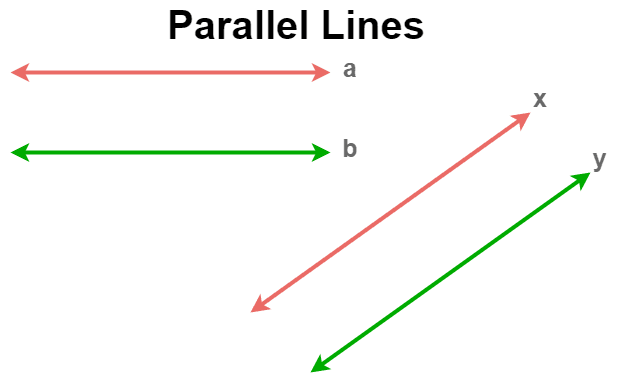
are lines that do not intersect or cross each other at any point in a plane. They are always equidistant from one another and parallel. Non-intersecting lines are parallel lines. Parallel lines meet at infinity. They are equally spaced apart and have the same incline. The symbol forparallel to” is //.

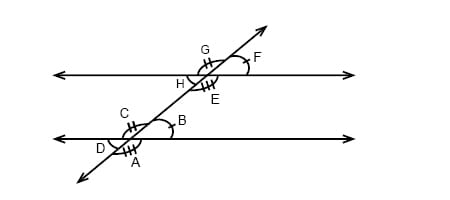
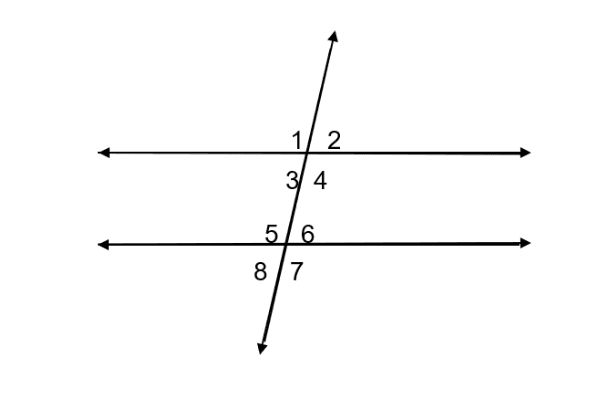
If we draw parallel lines and then draw a line transversal through them, we will get eight different angles. 

angles

For a more in-depth understanding, you can watch the details in the video below: 

2. What is a perpendicular line?

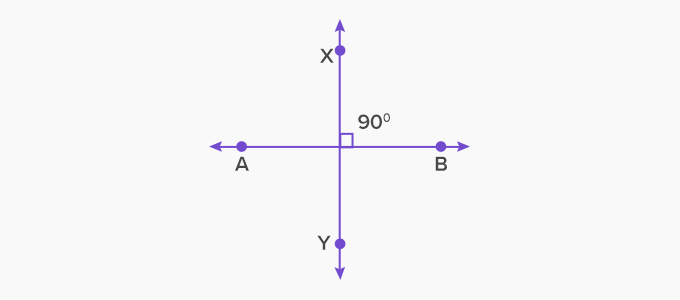
A straight line that forms a 90° angle with another line is said to be perpendicular. 90° is also called a right angle and is marked by a little square between two perpendicular lines, as shown in the figure below. When two lines are perpendicular, we express them using a perpendicular sign “⊥.” 

For example, in the below image, we can see AB is perpendicular to XY because AB and XY cross each other at a 90-degree angle. If two lines AB and XY are perpendicular, we can write them as AB  XY.  

We can see what the perpendicular lines look like. All crossing lines are not necessarily perpendicular to one another, but perpendicular lines always cross each other. The two main properties of perpendicular lines are: 

3. Difference between Perpendicular and Parallel Lines

Parallel and perpendicular lines are an important part of geometry, and they have distinct characteristics that help to identify them easily. Let us learn characters to distinguish more about parallel and perpendicular lines in this table: 

Parallel Lines Perpendicular Lines
Lines that are always the same distance apart and have no points of intersection are said to be parallel.
Lines that intersect each other forming a right angle, are called perpendicular lines.
The symbol used to denote two parallel lines: //
The symbol used to denote two perpendicular lines: ⊥

Example:  

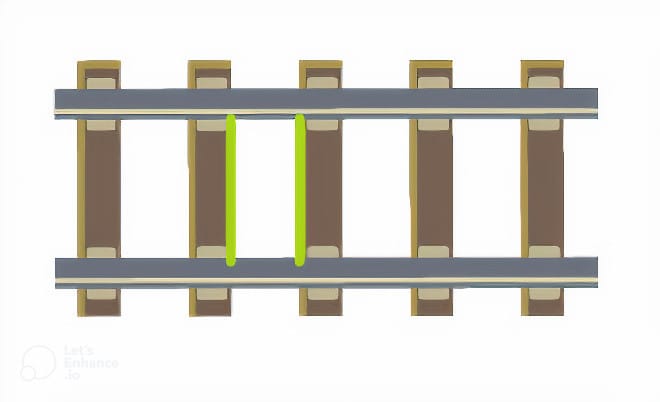
Railway tracks

railway

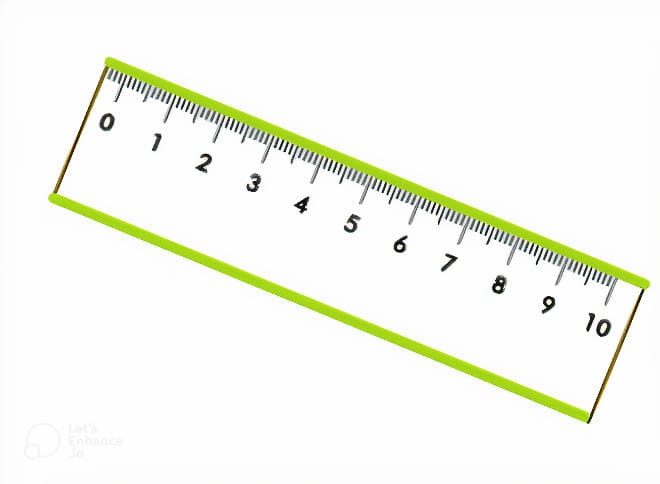
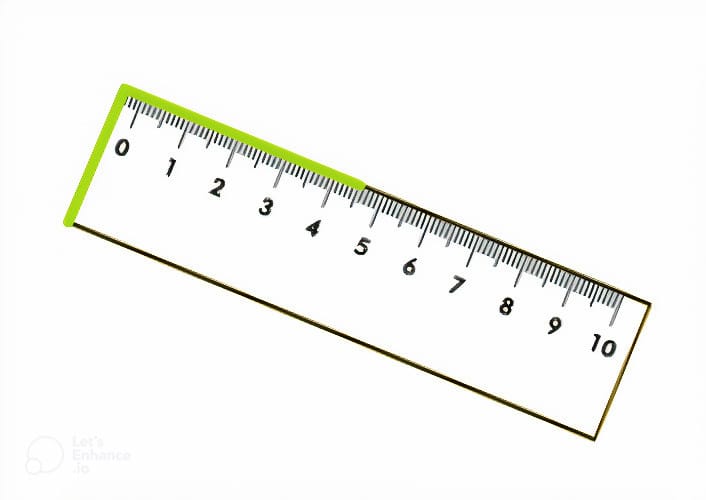
Edges of the ruler

edges of the ruler


Example:

Corner of the letter

corner of the letter

Corner of the ruler

corner of the ruler

II. How to find if lines are parallel, perpendicular, or transverse?

To determine if two lines are parallel, perpendicular, or neither, you can use various methods depending on the information available. Here’s a summary of the different approaches: 

Equations of the lines:

If you have the equations of the lines in the form y = mx + b (slope-intercept form) or ax + by = c (standard form), compare the coefficients. For lines in slope-intercept form, if the coefficients of x (m) are equal, the lines are parallel. If the coefficients of x are negative reciprocals, the lines are perpendicular. For lines in standard form, if the coefficients of x (a) are equal, the lines are parallel. If the coefficients of x are negative reciprocals, the lines are perpendicular.

Slopes of the lines:

Two lines are parallel if their slopes are equal. Calculate the slopes of the lines using the formula: slope = (change in y)/(change in x). If the slopes are the same, the lines are parallel. If the slopes are negative reciprocals (one is the negative inverse of the other), the lines are perpendicular. Otherwise, they are neither parallel nor perpendicular.

Graphical approach:

Plot the lines on a coordinate plane. If the lines are parallel, they will never intersect and maintain the same distance. If the lines are perpendicular, they intersect at a right angle (90 degrees). If neither of these conditions is met, the lines are transverse.

III. Example

Determine the other angles in the following figure if ∠5 = 70 degrees. 

example

SOLUTION

We have ∠5 = 70° 

So, ∠5 = ∠1 = 70° (corresponding angles) 

∠1 = ∠4 = 70° ( vertically opposite angles) 

∠5 = ∠7 = 70° ( vertically opposite angles) 

Now, ∠1+ ∠2 = 180° (linear pair) 

So, 70° + ∠ 2 = 180° 

∠ 2 = 180° – 70° 

∠ 2 = 110°

Now that we know the value of ∠2, we can find the remaining angles as follows:  

∠2 = ∠6 =110° (corresponding angles) 

∠2 = ∠3 = 110° ( vertically opposite angles)  

∠6 = ∠8 = 110° (vertically opposite angles) 

IV. FAQs

1. Is parallel equal to perpendicular?

No, parallel and perpendicular are not equal. They are two different concepts related to lines in geometry. 

2. What is an example of a perpendicular line?

An example of perpendicular lines can be observed in the corners of a square or rectangle. All four sides are equal in length in a square, and the opposite sides are parallel. Additionally, each square corner forms a 90-degree angle, making the adjacent sides perpendicular. 

3. How do you know if a line is perpendicular or parallel?

We can identify perpendiculars and parallels by determining the characteristics of each type mentioned above. 

Conclusion

Parallel and perpendicular lines and transverse lines are very important lines in geometry. They are very much applied in geometry and our daily lives. This lesson provides knowledge about characteristics and how to distinguish them easily. 

Upgrade Plan

Sign up for our fortnightly newsletter with the best travel inspirations.

Monthly
Yearly

Simple Start Plan

Online Self-Education
  • Simple Start includes:
  • (25) Prepaid Tutorial Hours
  • Grade-Level Course Organization
  • Coursework Management Tools
  • Interactive User Reports
  • End-User Support Ticketing Tool
  • Calendar-Booking integration
  • Zoom integration
$179/Month

Essential Plan

Asynchronous Online Learning
  • Everything in Simple Start, plus:
  • (50) Prepaid Tutorial Hours
  • Access to Virtual Classroom
  • Live Chat and Direct Messaging
  • Email Communication
  • Group Discussion Board
  • Social Learning Features
  • Notebook Functionality
$279/Month

Simple Start Plan

Online Self-Education
  • Simple Start includes:
  • (25) Prepaid Tutorial Hours
  • Grade-Level Course Organization
  • Coursework Management Tools
  • Interactive User Reports
  • End-User Support Ticketing Tool
  • Calendar-Booking integration
  • Zoom integration
$1,800/Year

Essential Plan

Asynchronous Online Learning
  • Everything in Simple Start, plus:
  • (50) Prepaid Tutorial Hours
  • Access to Virtual Classroom
  • Live Chat and Direct Messaging
  • Email Communication
  • Group Discussion Board
  • Social Learning Features
  • Notebook Functionality
$2,800/Year

Testimonial

Kindly Submit your Testimonial