


Lesson 5 – Prezygotic Reproductive Barriers
Introduction
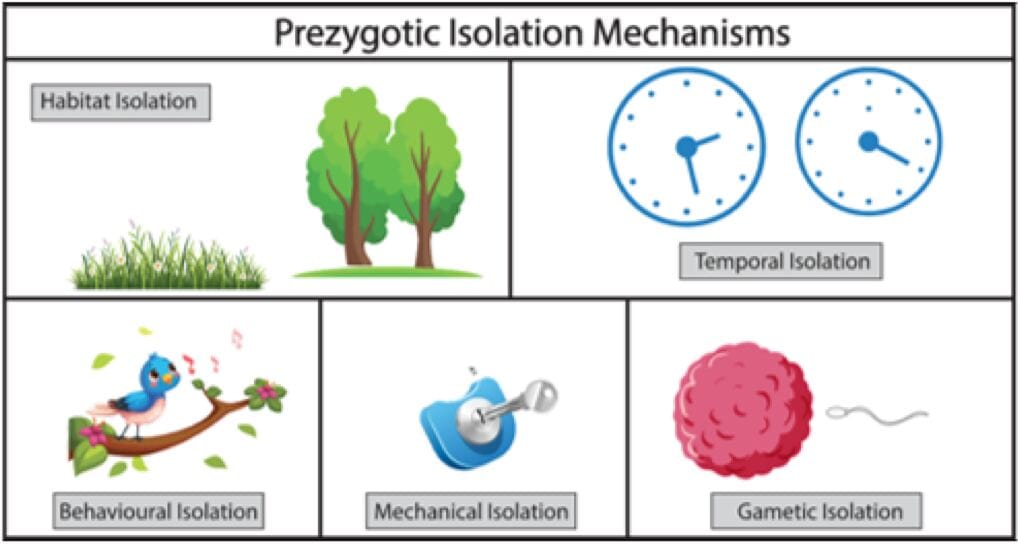
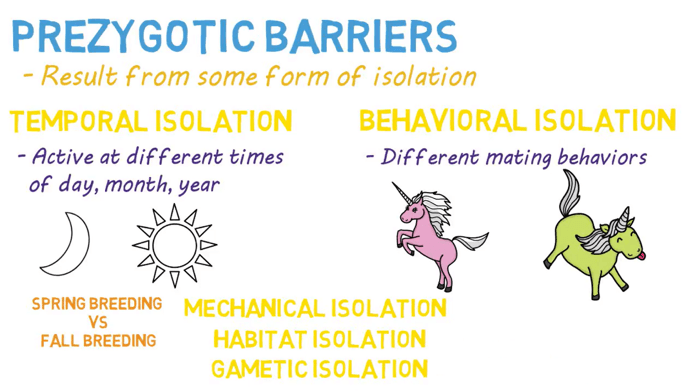
Prezygotic reproductive barriers are essential mechanisms that prevent mating and fertilization between individuals of different populations or species. These barriers act as safeguards to maintain reproductive isolation, ultimately leading to the formation of distinct species. Prezygotic barriers operate before forming a zygote, encompassing various mechanisms, including behavioral isolation, temporal isolation, ecological or habitat isolation, mechanical isolation, and gametic isolation. Each of these barriers contributes to the preservation of genetic uniqueness and plays a vital role in the process of speciation. In this article, we will learn about the definition, classification, and specific examples of each type of prezygotic reproductive barrier.
I. Definition
Prezygotic reproductive barriers are mechanisms that prevent mating or fertilization between individuals from different populations or species, thus maintaining reproductive isolation. These barriers act before the formation of a zygote (fertilized egg) and play a crucial role in the speciation process by limiting gene flow and promoting the divergence of populations into separate species. Prezygotic barriers can be classified into several categories based on the mechanisms by which they operate.
II. Types of of postzygotic reproductive barriers
1. Behavioral Isolation:
Behavioral isolation involves differences in mating behaviors, courtship rituals, or signals between individuals of different populations or species. These behaviors serve as important cues for mate recognition and selection. When individuals have distinct behaviors or signals that are specific to their population or species, it can prevent successful mating attempts with individuals from other populations or species. This barrier helps maintain reproductive isolation by ensuring that individuals only mate with others who share similar behavioral patterns.
The consequences of behavioral isolation are two fold:
Prevention of Mating Attempts:
Individuals with incompatible behavioral cues may not recognize or respond to each other’s courtship rituals or signals. As a result, mating attempts between individuals from different populations or species are less likely to occur or may be unsuccessful. This can reduce the frequency of interbreeding events, further reinforcing reproductive isolation between the people or species.
Reinforcement of Reproductive Isolation:
Behavioral isolation is vital in maintaining reproductive isolation and preventing hybridization between distinct populations or species. By ensuring that individuals only mate with others who share similar behavioral patterns, this barrier helps preserve the genetic integrity of each population or species. Over time, this reinforcement of reproductive isolation contributes to the divergence of traits and the formation of distinct evolutionary lineages.
The behavioral isolation results are significant for species’ evolution and diversification. As populations become more genetically and behaviorally distinct over time, they are less likely to interbreed successfully, increasing reproductive isolation. This isolation can contribute to developing unique adaptations, preferences, and behaviors within each population or species, further enhancing their distinctiveness.
One remarkable aspect of behavioral isolation is its role in promoting speciation—the process by which new species arise. As populations become reproductively isolated due to behavioral differences, they can accumulate genetic and phenotypic changes independently. Over time, these changes can become substantial enough to create significant barriers to gene flow, leading to the formation of new species.
2. Temporal Isolation
Temporal isolation refers to differences in the timing of reproductive activities among populations or species. It can involve variations in the timing of breeding seasons, daily or seasonal patterns of activity, or the timing of reproductive behaviors such as mating calls or flowering. Individuals with different reproductive timing may not encounter each other during their fertile periods, leading to a lack of successful mating. Temporal isolation helps prevent hybridization by reducing the opportunities for mating between populations or species with different reproductive schedules.
The reasons behind temporal isolation are multifaceted:
Reproductive Timing:
Different populations or species may have evolved distinct reproductive timing to adapt to their specific environments or ecological niches. For example, some species may have adapted to breed during specific seasons when environmental conditions are most favorable for raising offspring, while others may have evolved to synchronize their reproductive activities with the availability of particular resources or food sources.
Behavioral Synchronization:
Reproductive behaviors like mating calls or courtship displays may be finely tuned to specific temporal cues. Individuals within a population or species will likely respond to these cues and engage in reproductive behaviors only when their internal or external signals align with the appropriate timing. If individuals from different populations or species have evolved different temporal cues, they may not recognize or respond to each other’s reproductive signals, reducing the likelihood of successful mating.
The consequences of temporal isolation can be profound:
Reduction in Hybridization:
Temporal isolation limits the opportunities for individuals with different reproductive schedules to encounter each other during their fertile periods. As a result, the likelihood of successful mating between populations or species with different reproductive timing is significantly reduced. This reduction in encounters helps prevent hybridization and ensures that individuals primarily mate with others with similar reproductive schedules.
Reinforcement of Reproductive Isolation:
Temporal isolation reinforces the barriers to gene flow between populations or species. Over time, as individuals continue to mate within their specific reproductive timing, genetic and phenotypic differences may accumulate, leading to increased reproductive isolation and a more substantial divergence between populations or species.
Promotion of Speciation:
Temporal isolation plays a crucial role in promoting speciation—the process by which new species arise. As populations become reproductively isolated due to differences in reproductive timing, they have limited opportunities for gene flow. This reduced gene flow allows each population to accumulate genetic and phenotypic changes independently, potentially forming new species.
3. Ecological or Habitat Isolation:
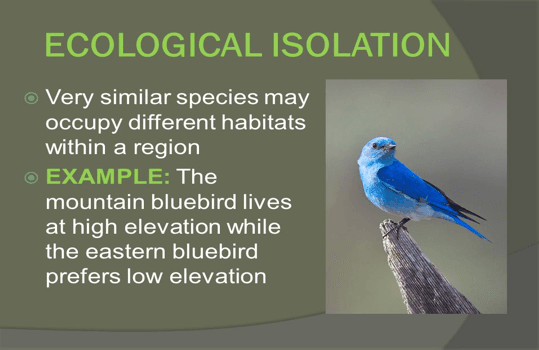
Ecological or habitat isolation occurs when populations or species occupy different habitats or ecological niches. They may have specific adaptations or preferences for particular environmental conditions, such as temperature, humidity, or food sources. As a result, individuals from different populations or species are more likely to be found in different habitats and have limited chances of coming into contact. This physical or ecological separation acts as a barrier to mating and prevents gene flow between populations or species.
Let’s explore some specific examples to illustrate this concept:
Desert Dwellers vs. Rainforest Residents:
Imagine two populations of lizards—one that thrives in the scorching hot desert and another that prefers the lush and humid rainforest. These two lizard populations have specific adaptations that suit their respective habitats. Due to their distinct preferences for temperature and humidity, desert dwellers are unlikely to encounter rainforest residents, and vice versa. This physical separation in their living spaces is an ecological barrier, limiting their chances of mating and exchanging genes.
Shoreline Versus Deep Sea Fish:
Consider two species of fish—one that resides near the shoreline, basking in the sun and feeding on small crustaceans, and another that inhabits the dark and mysterious depths of the deep sea, surviving on bioluminescent prey. The ecological differences between these two fish species lead them to occupy entirely different niches. As a result, their chances of intermingling and mating are minimal, as they rarely cross paths due to their contrasting habitat preferences.
Alpine Plants vs. Coastal Plants:
Now picture two types of plants—one that thrives in the chilly, high-altitude environment of alpine meadows and another that flourishes along sandy beaches, facing salty sea winds. These plants have evolved specific adaptations to cope with their distinct ecological conditions. Their habitat differences mean pollinators like bees or birds visiting alpine plants are unlikely to venture to coastal areas and vice versa. Consequently, these plant populations have limited cross-pollination and gene exchange opportunities, reinforcing their reproductive isolation.
In all these examples, ecological or habitat isolation acts as a barrier to mating and gene flow between populations or species. Their specific habitat preferences keep them physically separated, preventing them from interbreeding. As a result, each population maintains its unique genetic identity and continues on its distinct evolutionary path. Understanding ecological isolation helps us appreciate the fascinating diversity of life on Earth and highlights the incredible ways organisms have adapted to their environments over time.
4. Mechanical Isolation:
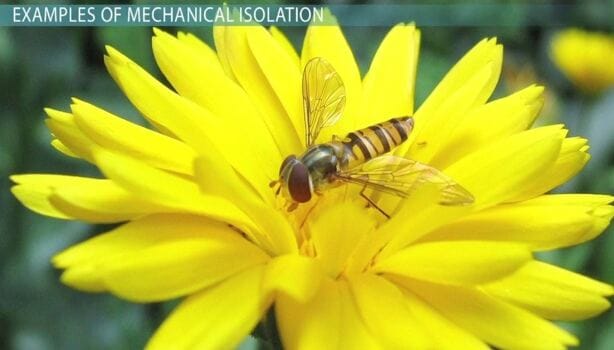
Mechanical isolation involves physical incompatibilities that prevent mating or the transfer of gametes between individuals from different populations or species. It can result from differences in reproductive structures, such as the shape, size, or placement of reproductive organs. These structural differences can make mating physically impossible or ineffective, reducing the chances of successful fertilization. Mechanical isolation ensures that individuals from different populations or species cannot reproduce with each other due to anatomical or mechanical constraints.
5. Gametic Isolation:
Gametic isolation occurs when the gametes (sperm and eggs) of individuals from different populations or species are unable to fuse or function properly to produce a viable zygote. It can arise from molecular incompatibilities between the gametes, such as differences in the surface proteins or receptors necessary for successful fertilization. These molecular differences can prevent gametes from recognizing and binding to each other, or hinder the necessary chemical reactions for fusion. Gametic isolation acts as a barrier by preventing the formation of viable zygotes and hindering the development of hybrid offspring.
III. Examples
Here are real-life examples of each of the prezygotic reproductive barriers:
1. Behavioral Isolation:
An example of behavioral isolation is seen in the case of fireflies. Different species of fireflies have distinct flashing patterns and signals they use to communicate and attract mates. Each species recognizes and responds to their own species-specific flashing pattern, while individuals from different species do not recognize or respond to each other’s signals. As a result, fireflies from different species do not mate with one another, maintaining reproductive isolation.
2. Temporal Isolation:
Temporal isolation can be observed in various species of orchids. Different orchid species often have specific flowering times. For instance, one species might bloom in the spring, while another species blooms in the summer. Since their flowering periods do not overlap, pollinators specific to each species visit the flowers during their respective blooming periods. This prevents cross-pollination between different orchid species due to the temporal separation of their reproductive activities.
3. Ecological or Habitat Isolation:
An example of ecological or habitat isolation can be found in two closely related bird species, the spotted towhee and the eastern towhee. These species inhabit different regions within North America. The spotted towhee prefers the western parts, while the eastern towhee occupies the eastern regions. The geographic separation and adaptation to different habitats result in limited or no overlap in their ranges, reducing the chances of interbreeding.
4. Mechanical Isolation:
Mechanical isolation is evident in certain plant species with specialized pollination mechanisms. For example, the structure of the flower and pollinator of the orchid Angraecum sesquipedale, commonly known as Darwin’s orchid, ensures pollination by a specific moth species with a long proboscis. The length and shape of the moth’s proboscis match the floral structure of the orchid, allowing for successful pollination. Other insect species with different probosci’s lengths are unable to reach the nectar, resulting in mechanical isolation and preventing cross-pollination.
5. Gametic Isolation:
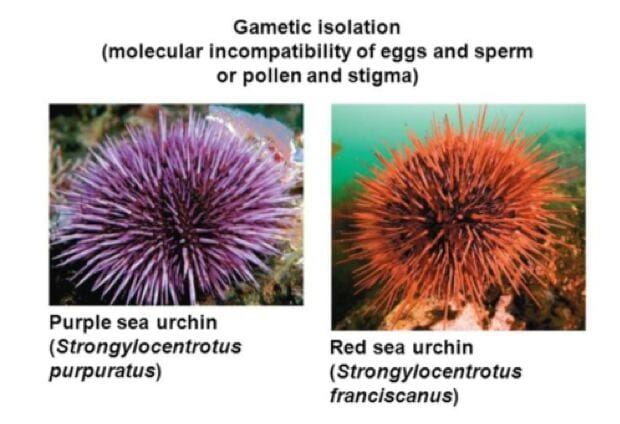
Gametic isolation can be observed in sea urchins. Different species of sea urchins release their eggs and sperm into the water for external fertilization. However, the gametes of each species have specific molecules on their surfaces that recognize and bind only to gametes from the same species. This recognition mechanism ensures that the eggs and sperm of different species do not fuse, preventing the formation of viable embryos and maintaining reproductive isolation.
Conclusion
Prezygotic reproductive barriers are fundamental in preventing the fusion of gametes and ensuring reproductive isolation between populations or species. Through mechanisms such as behavioral differences, temporal variations, ecological adaptations, structural incompatibilities, and gametic recognition, these barriers effectively hinder interbreeding and gene flow. As a result, populations remain genetically distinct, promoting the evolution of separate lineages and the emergence of diverse species. The combined action of prezygotic and postzygotic reproductive barriers plays a significant role in shaping the biodiversity and intricate web of life on our planet. Understanding these barriers provides insights into the mechanisms driving speciation and the incredible diversity of organisms we observe today.