


Lesson 3 – Speciation
Introduction
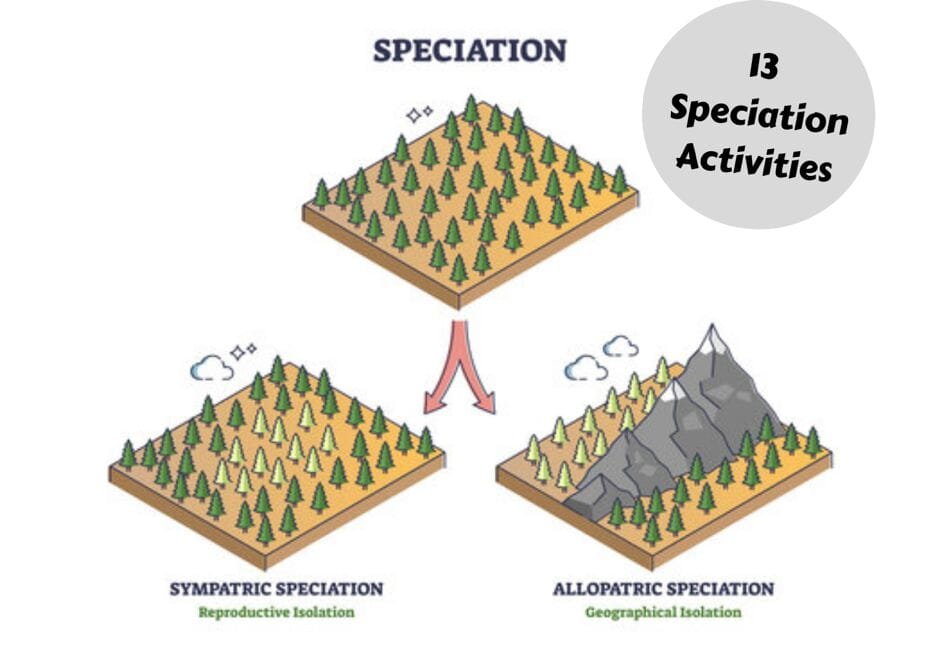
Speciation is the process by which new species arise, and it plays a crucial role in the diversification of life on Earth. Two primary modes of speciation are allopatric and sympatric speciation. Allopatric speciation occurs when populations become physically isolated, leading to independent evolutionary changes. In contrast, sympatric speciation occurs without physical isolation, with reproductive barriers evolving within a shared geographic range. Both processes contribute to the formation of distinct species and the maintenance of biodiversity.
I. Allopatric Speciation
1. Definition
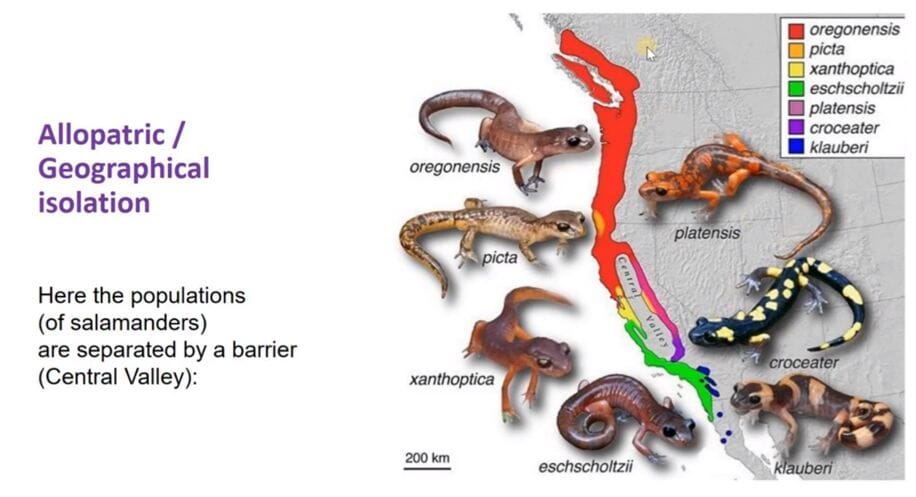
Allopatric speciation occurs when a single population is physically divided or isolated into separate geographic areas, giving rise to two distinct groups. The two groups that arise during allopatric speciation are referred to as the “parental population” and the “isolated population.” The parental population initially exists as a single, interconnected population spread over a continuous geographic area. However, due to various factors like the formation of physical barriers (e.g., mountains, rivers) or long-distance dispersal events, a portion of the population becomes isolated and geographically separated from the rest. This isolated group is what we refer to as the “isolated population.” The isolated population is now distinct from the parental population and faces a different set of environmental conditions, selection pressures, and potential mates. As a result, the two populations undergo independent evolutionary changes over time, leading to the accumulation of genetic and phenotypic differences between them.
As the isolated populations inhabit different environments and face unique selection pressures, they undergo independent evolutionary changes. Over time, this can result in the accumulation of genetic and phenotypic differences between the two groups. Genetic differences refer to changes in their DNA sequences and gene frequencies, while phenotypic differences pertain to variations in physical traits and characteristics. The genetic and phenotypic differences that accumulate during the period of isolation contribute to the formation of two genetically distinct populations. These divergent traits can eventually lead to the development of separate species if the populations remain reproductively isolated for an extended period. This process of allopatric speciation plays a crucial role in generating biodiversity and is one of the mechanisms by which new species arise in nature.
2. Process
The process of allopatric speciation involves five distinct stages, each contributing to the formation of new species:
Geographic Isolation:
At the outset, a single population faces geographical barriers or experiences dispersal events that lead to its separation into two or more isolated populations. Geographic barriers may include physical features like mountains, rivers, or oceans, which prevent gene flow and mating between the divided groups. Dispersal events, on the other hand, involve the migration of a subset of the population to new and distant habitats.
Genetic Divergence:
Once isolated, the separated populations experience different environmental conditions, selective pressures, and genetic drift. These distinct factors drive genetic divergence, causing the populations to accumulate unique genetic variations. Additionally, mutations may arise in each group, further contributing to the genetic differences between them.
Accumulation of Differences:
Over successive generations, the isolated populations undergo independent evolutionary processes. As they adapt to their specific environments, they accumulate both genetic and phenotypic differences. These differences become more pronounced over time due to the lack of gene flow between the populations.
Reproductive Isolation:
As the genetic and phenotypic differences accumulate, reproductive barriers may emerge. These barriers prevent successful interbreeding between the isolated populations when they come back into contact. Reproductive isolation can manifest in various ways, such as changes in mating behaviors or physical incompatibilities, making it difficult or impossible for individuals from different populations to produce viable and fertile offspring.
Formation of New Species:
If the reproductive barriers become strong enough, the isolated populations can no longer interbreed successfully, even if they are brought back into contact. At this point, the populations have diverged to such an extent that they are considered distinct species. The inability to produce viable and fertile offspring is a defining characteristic of speciation, indicating that the two populations have undergone enough genetic and phenotypic changes to be considered separate species.
Throughout the process of allopatric speciation, the isolated populations undergo a series of transformations driven by geographical separation, genetic divergence, and the accumulation of differences. The emergence of reproductive barriers ultimately solidifies the formation of new and distinct species. Allopatric speciation is a critical mechanism contributing to the remarkable diversity of life on Earth, highlighting the intricate processes of evolution that have shaped the natural world.
Examples
Allopatric speciation can occur through various mechanisms, such as Island Speciation, Mountain Range Speciation, River Speciation, Glacial Speciation, and Dispersal Speciation. Here are some typical examples:
Island Speciation:
Islands are often hotspots for allopatric speciation. A classic example is the finches observed by Charles Darwin in the Galápagos Islands. Each island had its own unique set of finch species, with different beak shapes and feeding habits, adapted to the specific food sources available on each island.
Mountain Range Speciation:
Mountain ranges can act as barriers that separate populations and promote speciation. For instance, the formation of the Andes Mountains in South America has led to the isolation and speciation of many plant and animal species. Different slopes and microclimates on either side of the mountains create distinct ecological niches for populations to evolve in isolation.
River Speciation:
Large rivers can divide populations and contribute to speciation. The example of the cichlid fish in the African Great Lakes, such as Lake Victoria and Lake Malawi, is often cited. These lakes have numerous species of cichlids that have diverged from a common ancestor due to geographical barriers created by the lakes’ formation.
Glacial Speciation:
Glaciation events can separate populations and trigger speciation. As glaciers advance and retreat, they can fragment habitats and isolate populations. When the glaciers recede, the previously isolated populations may have diverged sufficiently to be reproductively isolated. This process has been observed in various organisms, including plants and insects.
Dispersal Speciation:
Dispersal events can result in the colonization of new habitats, leading to allopatric speciation. For example, a small group of individuals from a population may migrate to a new island or mainland region where they establish a new population. Over time, reproductive isolation can occur between the original population and the colonized population, leading to speciation.
II. Sympatric Speciation
1. Definition
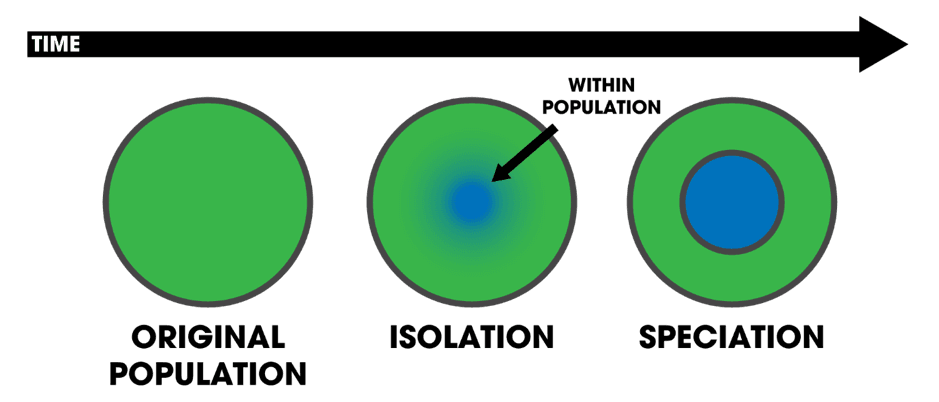
Sympatric speciation occurs when new species arise from a single ancestral population without physical geographic isolation. Instead, reproductive isolation evolves within a shared geographic range, often driven by ecological specialization or disruptive selection factors. This process allows for the formation of new species even when individuals from different populations are in close proximity.
2. Process
The process of sympatric speciation unfolds through five stages, each contributing to the emergence of new species within the same geographic area:
Ecological Divergence:
Initially, a single population exhibits individuals that occupy different ecological niches or exploit diverse resources within their shared habitat. This ecological divergence exposes the individuals to varying natural selection pressures, setting the stage for potential speciation.
Disruptive Selection:
As ecological divergence progresses, strong disruptive selection comes into play. This type of selection favors individuals with contrasting phenotypes or traits within the same habitat. As a result, individuals with different characteristics are more successful in surviving and reproducing, leading to the reinforcement of reproductive isolation between groups of individuals with divergent traits.
Assortative Mating:
The preference for individuals with similar traits becomes evident during assortative mating. Individuals showing similar characteristics have a higher likelihood of mating with each other, leading to the formation of distinct breeding groups within the population.
Genetic Divergence:
With the establishment of distinct breeding groups, gene flow between these groups reduces significantly. The reduced gene flow, combined with the effects of disruptive selection, accelerates genetic differentiation between the groups over time. As a result, each breeding group accumulates unique genetic variations that set them apart from one another.
Formation of New Species:
As genetic and phenotypic differences continue to accumulate, and reproductive barriers strengthen, the potential for interbreeding between the distinct breeding groups diminishes. Eventually, reproductive isolation becomes complete, and the groups are considered separate species, distinct from their ancestral population.
Sympatric speciation represents a fascinating evolutionary process where new species emerge within the same geographic area. Ecological divergence drives disruptive selection, promoting the evolution of distinct traits and reproductive isolation. Assortative mating reinforces these differences, leading to the formation of distinct breeding groups. As gene flow decreases and genetic divergence intensifies, the groups become reproductively isolated, culminating in the formation of new species within the confines of their shared habitat. The process of sympatric speciation is a testament to the remarkable adaptability and diversification capabilities of life, contributing to the rich tapestry of biodiversity that exists on our planet.
3. Examples
Sympatric speciation, a fascinating process of species diversification, occurs within the same geographic area without any physical isolation. Several mechanisms drive this phenomenon, like Polyploidy, Host Shifts, Ecological Speciation, Sexual Selection, and Hybridization and Polymorphism, leading to new species with distinct characteristics. Here are some notable examples:
Polyploidy:
Polyploidy is a condition where an organism has more than two sets of chromosomes. It can lead to sympatric speciation in plants. For example, the plant genus Tragopogon underwent sympatric speciation through polyploidy. Multiple species with different chromosome numbers and distinct morphological characteristics evolved within the same geographic area.
Host Shifts:
Sympatric speciation can occur when a population shifts to a new host or resource within the same habitat. This is observed in certain insect species that feed on specific host plants. As the insect population adapts to a new host plant, reproductive isolation can develop, leading to the formation of new species. The apple maggot fly (Rhagoletis pomonella) is an example of sympatric speciation resulting from host shifts.
Ecological Speciation:
Sympatric speciation can arise through ecological differentiation within a shared habitat. This occurs when populations exploit different ecological niches or resources. An example is the African cichlid fish in Lake Nagubago in Cameroon. Within the same lake, different populations of cichlids have adapted to distinct habitats and food sources, leading to reproductive isolation and the formation of new species.
Sexual Selection:
Sympatric speciation can also be driven by sexual selection. In some cases, sexual preferences or behaviors evolve differently within a population, leading to assortative mating. Over time, these mating preferences can lead to reproductive isolation and the formation of new species. The example of the Hawthorn fly (Rhagoletis) is often cited, where divergent mating behaviors and preferences have contributed to sympatric speciation.
Hybridization and Polymorphism:
Sympatric speciation can occur through hybridization and subsequent genetic divergence. Hybridization between different populations or species within the same geographic area can create new genetic combinations. If these hybrids have reduced fitness or face reproductive barriers, they can become reproductively isolated and evolve into separate species. This process is observed in certain plants and animals, such as the sunflower species Helianthus anomalus.
Conclusion
Understanding the mechanisms of speciation, such as allopatric and sympatric speciation, provides insights into the incredible diversity of life on our planet. Allopatric speciation occurs through geographic isolation, allowing populations to evolve independently and accumulate genetic and phenotypic differences. On the other hand, sympatric speciation occurs within the same geographic area, driven by ecological divergence and reproductive isolation. These processes highlight the dynamic nature of evolution and the various ways in which new species can arise.
Studying speciation deepens our knowledge of evolutionary processes and has practical implications for conservation and understanding the patterns of biodiversity. By comprehending the factors that contribute to speciation, scientists can gain insights into the origins of species and the mechanisms that shape their diversity. This knowledge can inform efforts to preserve and protect unique and endangered species, ultimately contributing to the conservation of our planet’s rich biological heritage.