


Lesson 8 – Hypothesis Testing
Introduction
Hypothesis testing is a vital component of the scientific method, allowing researchers to draw conclusions and make inferences based on evidence. In this essay, we will explore the hypothesis testing concept, focusing on comparing the null hypothesis (H0) and the alternative hypothesis (Ha). Through examples, we will understand how these hypotheses are formulated and their role in the research process.
I. Understanding the Null and Alternative Hypotheses
1. Null Hypothesis (H0):
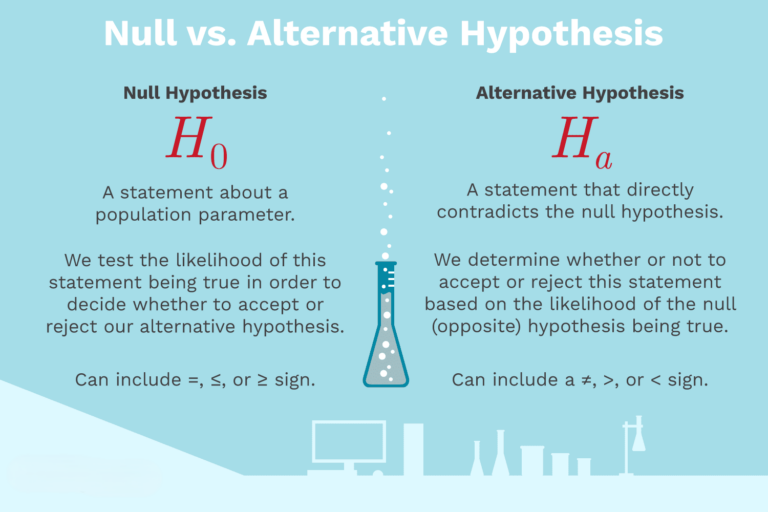
The null hypothesis is a statement that assumes no significant difference or relationship between variables. It suggests that any observed effects are merely due to chance or other factors. The null hypothesis is denoted as H0 and serves as a baseline for comparison in hypothesis testing.
2. Alternative Hypothesis (Ha):
The alternative hypothesis is the counterpart to the null hypothesis. It proposes a specific relationship, difference, or effect between variables. The alternative hypothesis (Ha) challenges or contradicts the null hypothesis, suggesting that the observed results are not due to chance alone.
II. Comparing the Null and Alternative Hypotheses
1. Example 1: Biology
Research Question: Does a new fertilizer enhance plant growth compared to the current fertilizer?
Null Hypothesis (H0): The new fertilizer has no significant effect on plant growth compared to the current fertilizer.
Alternative Hypothesis (Ha): The new fertilizer improves plant growth compared to the current fertilizer.
In this example, the null hypothesis assumes that the new fertilizer does not make a notable difference in plant growth. The alternative hypothesis, on the other hand, proposes that the new fertilizer does enhance plant growth compared to the current one.
2. Example 2: Psychology
Research Question: Does meditation reduce stress levels compared to relaxation techniques?
Null Hypothesis (H0): Meditation has no significant effect on reducing stress levels compared to relaxation techniques.
Alternative Hypothesis (Ha): Meditation reduces stress levels more effectively than relaxation techniques.
In this scenario, the null hypothesis states that there is no significant difference in stress reduction between meditation and relaxation techniques. The alternative hypothesis argues that meditation is more effective in reducing stress levels compared to relaxation techniques.
3. Key Differences Between Null and Alternative Hypothesis

The key distinctions between null and alternative hypotheses are elucidated as follows:
A declaration that there is no correlation between two variables is known as a null hypothesis. The opposite of the null hypothesis, which states that there is no statistical significance between two measurable phenomena, is referred to as an alternative hypothesis.
An alternative hypothesis is what the researcher aims to prove, in contrast to the null hypothesis that the researcher attempts to refute.
The alternative hypothesis reflects some observable effect, while the null hypothesis represents the absence of an observed effect.
If the null hypothesis is accepted, neither the attitudes nor the behavior will change. In contrast, if the alternative hypothesis is true, it will cause people to change their views or behavior.
The null hypothesis is an indirect and implicit test because it refers to a population parameter, so the testing is indirect and implicit. On the other hand, the alternative hypothesis indicates sample statistics, wherein the testing is direct and explicit.
A null hypothesis is labeled as H0 (H-zero), while an alternative hypothesis is represented by H1 (H-one).
The mathematical formulation of a null hypothesis is an equal sign, but an alternative hypothesis is not equal to a sign.
In the null hypothesis, the observations are the outcome of chance, whereas, in the case of the alternative hypothesis, the observations are an outcome of real effect.
III. Hypothesis Testing Process
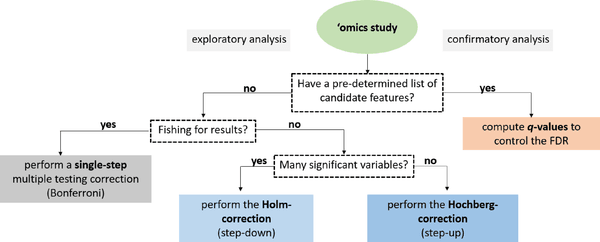
Figure: Hypothesis Testing Process example
1. Formulating the Hypotheses:
Before conducting any experiments or collecting data, researchers must clearly define the null and alternative hypotheses. These hypotheses should reflect the research question and provide testable predictions.
2. Collecting Data:
To test the hypotheses, researchers gather data through experiments, surveys, observations, or other research methods. The data collected should be relevant to the variables involved in the hypotheses.
3. Analyzing the Data:
Once the data is collected, researchers employ statistical analysis techniques to determine the likelihood of the observed results occurring by chance. This analysis allows them to accept or reject the null hypothesis.
4. Making a Conclusion:
Based on the statistical analysis, researchers make a conclusion regarding the hypotheses. If the data strongly supports the alternative hypothesis and provides evidence against the null hypothesis, researchers reject the null hypothesis. Conversely, it is accepted if the data does not provide sufficient evidence to reject the null hypothesis.
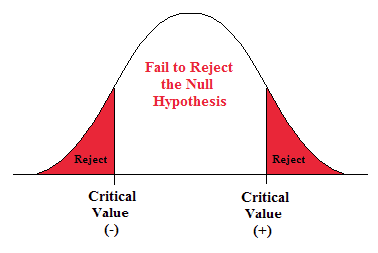
Figure: Hypothesis Testing Process
Conclusion
Hypothesis testing plays a crucial role in scientific research, allowing researchers to draw meaningful conclusions based on evidence. By comparing the null and alternative hypotheses, researchers can evaluate the significance of observed results and make inferences about the relationships between variables. Understanding the role of these hypotheses in hypothesis testing enables us to critically evaluate research findings and contribute to the advancement of knowledge in various fields of study.