


Lesson 7 – Columbian Exchange
Introduction
The Columbian Exchange stands as one of the most significant chapters in world history. It refers to the transfer of goods, ideas, diseases, and cultural influences between the Eastern and Western hemispheres following Christopher Columbus’s voyages. This article will explore the importance of the Columbian Exchange and its transformative impact on a global scale.
I. Background and Context
The Age of Exploration witnessed European voyagers like Christopher Columbus seeking new trade routes and territories. Columbus’s voyages in the late 15th century opened up a new era of global interconnectedness. They initiated the Columbian Exchange, named after Columbus, which forever altered the trajectory of human history.
II. Exchange of Goods
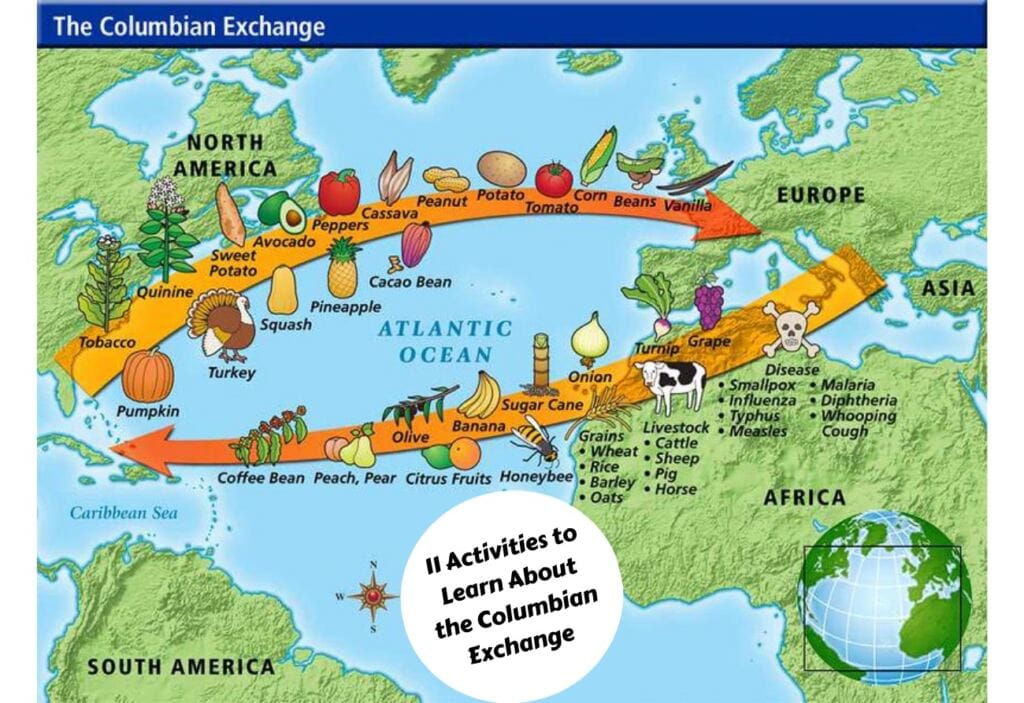
One of the primary outcomes of the Columbian Exchange was the exchange of goods between continents. Europe gained access to new crops from the Americas, such as potatoes, corn, tomatoes, and tobacco. These plants revolutionized European agriculture, leading to increased food production and population growth. Meanwhile, Europe introduced livestock, wheat, coffee, and sugarcane to the Americas, transforming their landscapes and economies. The exchange of goods between the continents had profound effects on agriculture, trade, and global dietary patterns.
III. Exchange of Diseases
The Columbian Exchange also had a devastating impact on indigenous populations in the Americas. The arrival of Europeans brought with them diseases like smallpox, measles, and influenza, to which the indigenous people had little immunity. These diseases ravaged communities, resulting in widespread death and societal upheaval. The demographic shifts caused by these diseases had lasting consequences on the cultural, social, and political landscape of the Americas.
IV. Cultural Exchange and Influences
Beyond the exchange of goods and diseases, the Columbian Exchange facilitated a significant cultural exchange. European languages, religions, and customs permeated the Americas, leading to profound changes in indigenous societies. Christianity became widespread, influencing art, architecture, and religious practices. Conversely, indigenous cultures influenced European art, music, and cuisine, creating a rich blend of traditions. This cultural exchange reshaped the identities and cultural landscapes of both continents.
V. Environmental Impact
The Columbian Exchange had unintended environmental consequences as well. The introduction of new plant and animal species to different regions disrupted local ecosystems. European species, like horses and cattle, transformed the Americas’ grasslands, while American crops like coffee and bananas found new homes in distant lands. This exchange contributed to global biodiversity and triggered environmental changes that continue to shape our planet.
VI. Evaluation and Reflection
The Columbian Exchange marked a turning point in world history, ushering in an era of globalization. It profoundly transformed economies, diets, societies, and the environment. However, it is essential to critically evaluate its impacts. While the exchange of goods and cultural influences brought new opportunities and advancements, the spread of diseases and environmental disruptions resulted in immeasurable human suffering and ecological challenges.
FAQs
1. What were the positive impacts of the Columbian Exchange?
The Columbian Exchange had a number of positive impacts, including the introduction of new crops to Europe and the Americas, which led to increased food production and population growth. The exchange of goods also stimulated trade and economic growth.
2. What were the negative impacts of the Columbian Exchange?
The Columbian Exchange also had a number of negative impacts, including the spread of diseases to the Americas, which devastated indigenous populations. The exchange of goods also led to the introduction of invasive species to new regions, which disrupted local ecosystems.
3. How does the Columbian Exchange continue to impact the world today?
The Columbian Exchange continues to impact the world today in a number of ways. The exchange of crops and livestock has transformed global dietary patterns. The spread of Christianity and European languages has shaped the cultural landscapes of many regions around the world. And the environmental consequences of the exchange continue to be felt in the form of invasive species and climate change.
Conclusion
The Columbian Exchange was a pivotal moment in human history, forever altering the course of civilizations. The exchange of goods, ideas, diseases, and cultural influences between the Eastern and Western hemispheres reshaped the world as we know it today. Acknowledging the complexities and consequences of the Columbian Exchange allows us to better understand the intricacies of globalization, cultural diversity, and the interconnectedness of our modern world.