


Lesson 5 – Planets of the Solar System
Introduction
Our solar system is a vast and intricate system comprising eight distinct planets, each orbiting a central star known as the Sun. This magnificent celestial arrangement includes a diverse array of planetary bodies, ranging from the rocky inner planets to the gas giants and ice giants in the outer reaches. These planets, along with their moons, dwarf planets, asteroids, and comets, form a dynamic and interconnected system that showcases the complexity and beauty of the cosmos. The Sun, as the central and most massive object in this system, exerts a gravitational pull that governs the orbital paths of all these celestial bodies, creating a harmonious and orderly structure that has captivated human curiosity and exploration for centuries.
I. Why We Can See Planets in the Night Sky?
One of the most interesting things we can see in the night sky is planets. Unlike stars, which twinkle, planets appear as bright, steady lights that are easy to see with the naked eye. But why can we see planets among the many stars in the universe? The answer lies in our solar system. Planets, including Earth, orbit around the sun. Just like our planet reflects sunlight during the day, other planets reflect sunlight at night, making them visible to us as they shine in the darkness.
Furthermore, the brightness and visibility of planets in the night sky also depend on how close they are to Earth. When a planet is closer to us, it looks bigger and brighter, making it easier to see. Additionally, the position of a planet around the sun and Earth is important for its visibility. For example, planets that are low on the horizon may be blocked by buildings or other structures, making them harder to observe. On the other hand, planets that are higher in the sky are easier to spot because there are fewer obstacles. By understanding these factors and paying attention to the timing, we can enjoy the beautiful sight of planets shining brightly in the night sky.
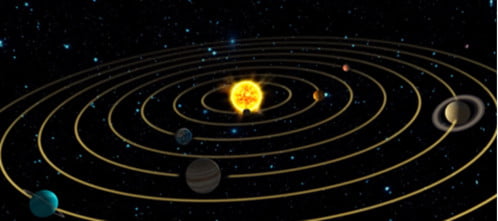
II. How the Planets Move on Our Sky
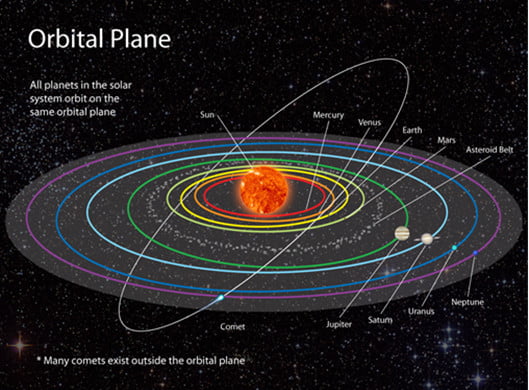
The movement of planets in the sky has fascinated humans for centuries. It is important to note that although it may appear that the planets are moving across the sky, they are orbiting around the sun, just like Earth. This orbit, combined with Earth’s rotation on its axis, creates the illusion of planets moving in the sky.
In our solar system, the planets, including Earth, revolve around the sun in elliptical paths called orbits. Each planet takes a specific amount of time to complete one orbit around the sun, known as its orbital period. For example, Mercury has the shortest orbital period, completing one orbit in just 88 Earth days, while Neptune takes about 165 Earth years to go around the sun once. As the planets orbit the sun, they appear to move across the sky from our perspective on Earth. This apparent motion is a result of Earth’s rotation on its axis. As the Earth rotates, different parts of the sky become visible, causing the planets to rise and set at different times throughout the year. Additionally, the planets do not travel in a straight line across the sky but instead follow a path known as the ecliptic, which is the same path the sun appears to take as it moves throughout the year. Overall, these combined motions create the impression that the planets are constantly in motion across our sky.
Conclusion
In conclusion, our understanding of the planets within our solar system has significantly evolved and expanded over the course of history. From the early observations of ancient astronomers to the sophisticated data collected by modern space probes and telescopes, humanity’s knowledge of these celestial bodies has grown exponentially. Advancements in technology and science have revealed intricate details about the composition, atmospheres, and potential for life on these planets, transforming our perception of the solar system from a simple collection of wandering stars to a complex and dynamic family of worlds. This ever-deepening comprehension underscores the remarkable progress we have made in our quest to unravel the mysteries of our cosmic neighborhood, inspiring continued exploration and discovery.