


Lesson 5 – Ecosystem
Introduction
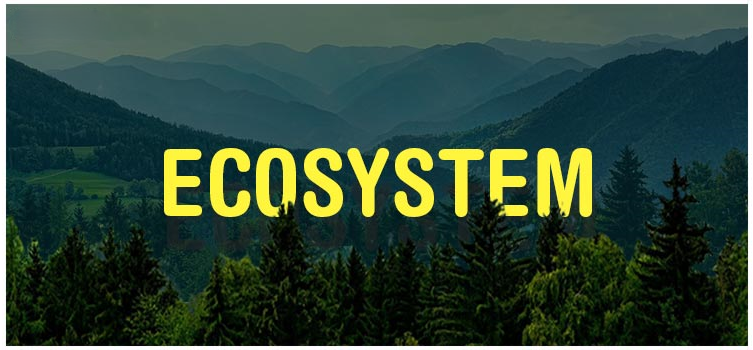
Ecosystems are fascinating and complex systems that encompass the interactions between living organisms and their physical environment. They provide us with vital resources, support diverse forms of life, and play a significant role in maintaining the balance of our planet. In this lesson, we will explore the definition of ecosystems, their components, and their importance in sustaining life on Earth.
I. Definition and Explanation of Ecosystems
1. Definition of Ecosystem:
An ecosystem refers to a community of living organisms, including plants, animals, and microorganisms, along with their physical surroundings. It encompasses biotic (living) and abiotic (non-living) components, creating a dynamic and interconnected web of life. Ecosystems can range in size, from small ponds to vast forests or even entire biomes like deserts or coral reefs. 1
2. Components of Ecosystems:
Biotic Components:
Biotic components refer to the living organisms within an ecosystem. They include:
Producers:
Plants and other photosynthetic organisms that convert sunlight into chemical energy through photosynthesis.
Consumers:
Animals and other organisms that obtain energy by consuming other organisms.
Decomposers:
Organisms, such as bacteria and fungi, that break down dead organic matter, returning nutrients to the soil.
Abiotic Components:
Abiotic components encompass the non-living aspects of an ecosystem. They include:
Sunlight:
The primary source of energy for most ecosystems, enabling photosynthesis.
Air:
The composition of gases, including oxygen, carbon dioxide, and nitrogen, that organisms require for respiration.
Water:
An essential resource for life, supporting various organisms and serving as a habitat for many species.
Soil:
The nutrient-rich medium in which plants grow, providing support, water, and essential minerals.
Temperature, climate, and physical features:
These factors influence the types of organisms that can thrive in an ecosystem.
II. Ecosystem Functions and Interactions
1. Energy Flow:
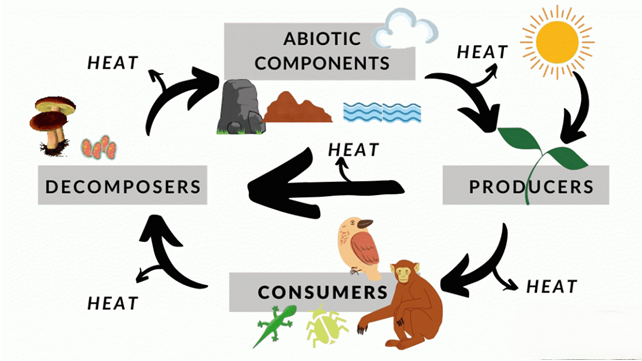
Ecosystems operate on the fundamental principle of energy flow. Energy enters ecosystems primarily through sunlight, which plants absorb during photosynthesis. This energy is then transferred from one organism to another through a series of feeding relationships. Producers are consumed by herbivores, who are then consumed by carnivores or omnivores, creating a food chain. The flow of energy is unidirectional, with energy being lost as heat at each trophic level.
2. Nutrient Cycling:
Ecosystems rely on the cycling of nutrients to maintain a sustainable balance. Nutrients, such as carbon, nitrogen, and phosphorus, are essential for the growth and survival of organisms. Decomposers play a crucial role in breaking down dead organic matter and releasing nutrients back into the soil or water. These nutrients are then taken up by plants and passed through the food chain as organisms consume one another. The continuous cycling of nutrients ensures their availability for new growth and sustains ecosystem productivity.
3. Symbiotic Relationships:
Ecosystems are filled with a multitude of symbiotic relationships, where different species interact and depend on each other for survival. Examples of symbiotic relationships include:
Mutualism:
Both species benefit from the interaction. For instance, pollinators, such as bees, benefit from nectar while aiding in plant reproduction through pollination.
Commensalism:
One species benefits while the other is neither harmed nor benefited. An example is birds building nests in trees, using the trees for support without affecting the tree’s survival.
Parasitism:
One species benefits at the expense of the other. Parasites, such as ticks or fleas, obtain nutrients from their hosts, causing harm or disease.
II. Types of Ecosystems
1. Terrestrial Ecosystems:
Terrestrial ecosystems are found on land and encompass a diverse range of environments. They can be classified into various biomes based on their climate, vegetation, and geographical characteristics. Some examples of terrestrial ecosystems include:
Forest Ecosystems:
Forests are abundant in life due to the presence of various plants, particularly trees. They serve as essential habitats for a wide array of animal species. Forests are crucial for carbon sequestration, helping to mitigate the effects of climate change.
Grassland Ecosystems:
Grasslands are characterized by vast areas covered with grasses and few or no trees. These ecosystems are home to grazing animals like cattle, goats, and deer. Grasslands play a significant role in supporting livestock agriculture.
Tundra Ecosystems:
Tundras are cold and treeless regions with a short growing season. They are important in regulating the Earth’s temperature and serve as water reservoirs due to the presence of ice and frost.
Desert Ecosystems:
Deserts are arid and windy habitats, with some regions containing sand dunes and others composed mostly of rock. Desert organisms have unique adaptations to survive in the harsh environment, such as CAM plants like cacti.
2. Freshwater Ecosystems:
Freshwater ecosystems include bodies of water that do not contain salt, such as ponds, lakes, rivers, and streams. They support a wide range of life, including algae, plankton, insects, amphibians, and fish. Freshwater ecosystems can be further classified into two major types:
Lentic Ecosystems:
Lentic ecosystems refer to still water bodies like ponds, puddles, and lakes. Lakes often exhibit zonation with distinct zones like littoral, limnetic, and profundal, each supporting different plant and animal communities.
Lotic Ecosystems:
Lotic ecosystems are characterized by flowing freshwater, as seen in rivers and streams. Organisms in lotic ecosystems have adaptations to cope with the current and varying water conditions.
3. Marine Ecosystems:
Marine ecosystems consist of saltwater environments found in seas and oceans. They are incredibly diverse and cover a significant portion of the Earth’s surface. Marine ecosystems play a crucial role in the planet’s overall health. Examples include coral reefs, kelp forests, and open ocean environments. Marine ecosystems are responsible for producing a substantial portion of the Earth’s atmospheric oxygen through the photosynthesis of autotrophic algae.
4. Artificial Ecosystems:
Artificial ecosystems are human-made systems that can replicate the characteristics of natural ecosystems. They can be terrestrial, freshwater, or marine and are often constructed for various purposes, such as:
Conservation:
Artificial ecosystems can be created to preserve and protect endangered or threatened species and habitats.
Aesthetics:
Some artificial ecosystems, like botanical gardens and ornamental ponds, are designed for aesthetic purposes and landscaping.
Research and Education:
Scientists and ecologists create artificial ecosystems to study various ecological processes and understand how natural ecosystems function.
III. Importance of Ecosystems
1. Biodiversity:
Ecosystems support a wide range of biodiversity, encompassing the variety of species, genes, and ecosystems themselves. Biodiversity is crucial for maintaining the stability and resilience of ecosystems. Each species plays a unique role, contributing to ecosystem functions such as pollination, seed dispersal, nutrient cycling, and pest control. The loss of biodiversity can disrupt these functions, leading to negative impacts on ecosystem health and human well-being.
2. Provision of Ecosystem Services:
Ecosystems provide invaluable services that support human life and well-being. These ecosystem services include:
Provisioning services:
Ecosystems provide resources such as food, water, timber, and medicinal plants that are essential for human survival and economic activities.
Regulating services:
Ecosystems regulate important processes such as water purification, climate regulation, and flood control, which are vital for environmental stability.
Cultural services:
Ecosystems provide recreational, aesthetic, and cultural value, promoting human enjoyment and emotional well-being.
3. Climate Regulation:
Ecosystems play a crucial role in regulating the Earth’s climate. Forests, for example, act as carbon sinks, absorbing and storing carbon dioxide, a greenhouse gas that contributes to climate change. Wetlands help regulate water cycles, preventing flooding and droughts. The preservation and restoration of ecosystems are essential strategies for mitigating climate change and ensuring a stable climate for future generations.
IV. Examples of Ecosystem
1. Deciduous Forest Ecosystem:
The deciduous forest ecosystem is a type of terrestrial ecosystem found in temperate regions, characterized by trees that shed their leaves during the winter. These forests have a rich diversity of plant and animal life. The trees in deciduous forests include oak, maple, beech, and birch. They provide habitat and food sources for various mammals, birds, insects, and fungi. In spring and summer, the forest floor is covered with wildflowers, ferns, and undergrowth. During the fall, the leaves of the trees change color, creating a stunning display of red, orange, and yellow foliage. Deciduous forests are essential for carbon sequestration and play a crucial role in regulating the Earth’s climate.

2. Savannah Ecosystem:
The savannah ecosystem is a type of grassland found in tropical and subtropical regions. It is characterized by vast expanses of grasses with scattered trees, such as acacias and baobabs. Savannahs are home to a variety of large herbivores, like zebras, wildebeests, and elephants, as well as predators like lions, cheetahs, and hyenas. The seasonal rainfall in savannahs influences the growth of grasses and vegetation. This ecosystem is adapted to periodic droughts and wildfires, which help maintain the grassland’s health and diversity. Savannahs are essential for sustaining wildlife populations and supporting traditional pastoralist communities.
3. Coral Reef Ecosystem:
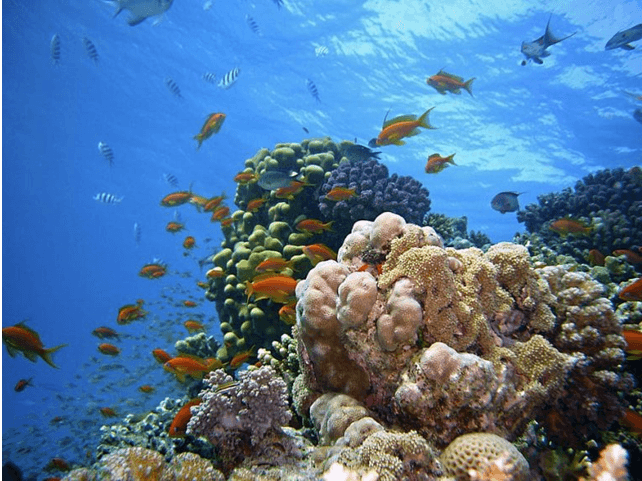
Coral reef ecosystems are marine ecosystems found in warm, shallow waters, typically near coastlines or islands. They are characterized by coral formations, which are colonies of tiny animals called polyps. Corals provide a complex habitat for a wide range of marine life, including fish, crustaceans, and mollusks. Coral reefs are one of the most biodiverse ecosystems on Earth, supporting millions of species. They also act as natural barriers, protecting coastal areas from erosion and storm surges. Coral reefs are vulnerable to climate change, ocean acidification, and human activities, making their conservation crucial for marine biodiversity.
4. Hot Spring Ecosystem:
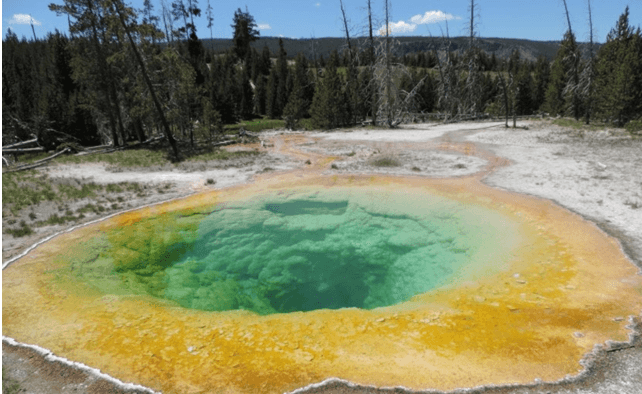
Hot spring ecosystems are unique environments found in geothermal areas where water emerges at high temperatures from the Earth’s crust. These springs often contain dissolved minerals and are rich in sulfur and other elements. Despite the extreme conditions, certain microorganisms thrive in hot springs, including thermophilic bacteria and archaea. These microorganisms have adapted to survive in high-temperature and chemically rich surroundings. Hot springs provide a fascinating insight into extremophile life forms and offer valuable scientific insights into the potential for life on other planets.
5. Micro-Ecosystems:
Micro-ecosystems are small-scale ecosystems that exist within broader ecosystems or even within human-made environments. Examples of micro-ecosystems include:
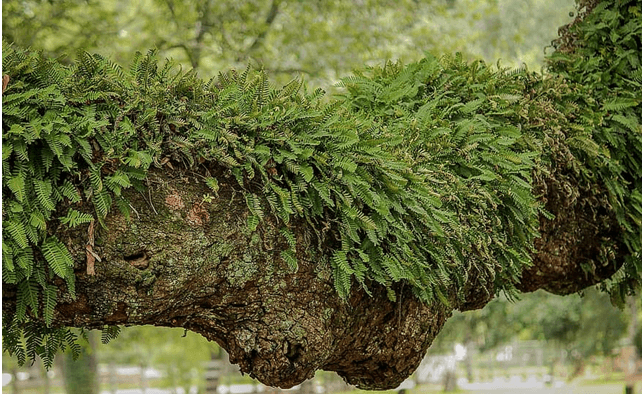
Tree Ecosystems:
The ecosystem surrounding a single tree, which can support various insects, birds, and microorganisms.
Pond Ecosystems:
Small ponds or water bodies that contain a diverse community of aquatic plants, insects, and small fish.
Garden Ecosystems:
Gardens and green spaces that create miniature habitats for birds, bees, butterflies, and other wildlife.
Conclusion
Ecosystems are dynamic and intricate systems that sustain life on Earth. They consist of a delicate balance between living organisms and their physical environment. Understanding the components and functions of ecosystems allows us to appreciate their importance in supporting biodiversity, providing essential services, and maintaining environmental stability. As responsible stewards of the planet, it is crucial to recognize the significance of ecosystems and work towards their preservation and sustainable management for the benefit of current and future generations.