


Lesson 4 – Pre-Columbian Civilization
Introduction
Welcome to our history lesson on exploring Pre-Columbian civilizations. Before the arrival of Christopher Columbus in 1492, the Americas were home to diverse and advanced societies with rich cultural traditions and technological achievements. In this lesson, we will embark on a journey to explore the fascinating civilizations that thrived in the Americas before European contact. Get ready to discover the wonders of Pre-Columbian cultures!
I. North American Indians Before Europeans
European explorers arrived in the 1500s in North America, a land unknown to them then. They saw it as a new and exciting place, teeming with undiscovered animals, plants, and fascinating indigenous people with unique cultures and languages. However, what was new to the Europeans was an ancient world for the various indigenous groups they encountered. Archaeological evidence suggests that American Indians had been on the continent for thousands of years, arriving gradually over time from Asia, either on foot or by boat, exploring diverse landscapes and eventually spreading throughout the continent.
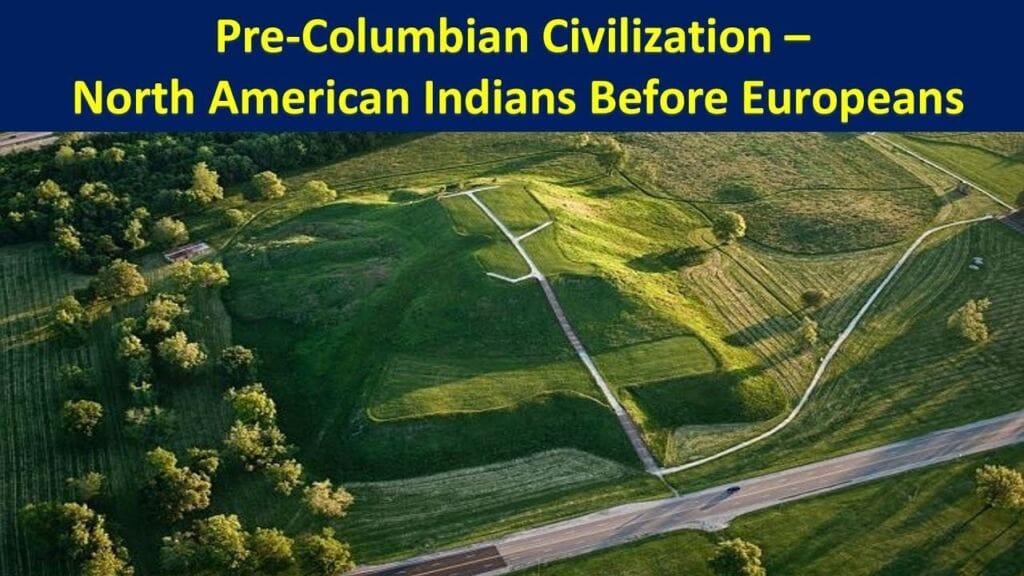
American Indians were highly adaptable and found innovative ways to thrive in different environments, such as deserts, forests, coastal areas, and prairies. They excelled as skilled hunters and productive farmers, building towns and engaging in extensive trade with other tribes. When European explorers arrived in America, they brought unintended consequences in the form of new diseases to which the native populations had no immunity. Devastating illnesses like smallpox, influenza, and measles spread rapidly, causing significant loss of life among indigenous communities. The introduction of European diseases had a profound impact, with experts estimating that up to 90 percent of the Native population succumbed to these illnesses.
Trade also brought significant changes to American Indian tribes. They quickly became interested in European goods and incorporated them into their daily lives. Items such as colored cloth, metal tools, firearms, and other trade goods transformed indigenous societies and altered traditional hunting and trading patterns. Some tribes were ensnared in the slave trade, as European settlers traded goods for captured Indians who were enslaved and forced to work. Surprisingly, before 1700, one-fourth of all enslaved individuals in the Carolinas were Native Americans. Slavery led to warfare among tribes and had long-lasting detrimental effects.
Over time, the practice of enslaving Native peoples ended. Still, its impact on the tribes of the South and Southwest was profound, resulting in the displacement and destruction of some communities. Today, the descendants of the Native survivors continue to form a diverse and vibrant part of the United States’ cultural tapestry.
In summary, the arrival of European explorers in North America brought significant changes to the indigenous populations. The introduction of diseases, the transformation of trade patterns, and the enslavement of Native peoples all impacted the rich and complex history of Pre-Columbian South America.
II. 3 most notable of Pre-Columbian Civilization
The Aztec, Maya, and Inca were the most prominent Pre-Columbian civilizations, leaving behind highly ornate and decorative artifacts.
1. The Maya
The Maya located in southern Mexico and Central America, boasted a fully developed language and excelled in art, mathematics, and astronomy. Gold played a role in the downfall of the Maya, as their craftsmanship in working the precious metal drew the attention of the Spanish conquistadors, leading to their ultimate defeat.
2. The Inca
The Inca situated in the Andean Mountain range of Peru, formed the most significant pre-Columbian empire. Unlike the Maya, they did not build cities but had a primarily rural population. The Inca Empire lasted from approximately 1100 to the Spanish conquest in the 1530s.
3. The Aztec
The Aztec, thriving in southern Mexico and Central America from 1175 to 1521 AD, were skilled flintknappers known for creating fine blades. Stone knives were utilized for offerings and special rituals. The Aztec artifacts in museums depict essential aspects of their way of life, such as armored warriors, figurines, and exotic animal vessels.
FAQs
1. What were the three most notable pre-Columbian civilizations?
The three most notable pre-Columbian civilizations were the Aztec, Maya, and Inca.
2. What were the Aztec known for?
The Aztec were known for their skilled flintknapping and their creation of fine blades. Stone knives were utilized for offerings and special rituals. Aztec artifacts in museums depict essential aspects of their way of life, such as armored warriors, figurines, and exotic animal vessels.
3. What were the Maya known for?
The Maya were known for their fully developed language, their art, mathematics, and astronomy. They also excelled in working with gold, which drew the attention of the Spanish conquistadors and contributed to their downfall.
4. What were the Inca known for?
The Inca were known for forming the most significant pre-Columbian empire. They had a primarily rural population and did not build cities. The Inca Empire lasted from approximately 1100 until the Spanish conquest in the 1530s.
5. What impact did European explorers have on pre-Columbian civilizations?
The arrival of European explorers in the Americas had a significant impact on pre-Columbian civilizations. The introduction of diseases, the transformation of trade patterns, and the enslavement of Native peoples all had a profound impact on the rich and complex history of Pre-Columbian South America.
6. What is the legacy of pre-Columbian civilizations?
Despite the challenges they faced, the legacy of pre-Columbian civilizations continues to thrive in the Americas today. Their cultural traditions, art, and architecture continue to inspire and amaze people around the world.
Conclusion
Pre-Columbian civilizations were diverse and complex societies with rich cultural traditions and technological achievements. They made significant contributions to art, architecture, mathematics, astronomy, and agriculture. The arrival of European explorers in the Americas brought significant changes to the indigenous populations, including the introduction of diseases, the transformation of trade patterns, and the enslavement of Native peoples. Despite these challenges, the legacy of Pre-Columbian civilizations continues to thrive in the Americas today.