

Lesson 3 – How to Develop a Spatial Perspective in Geography
Introduction
Geography is a fascinating field that allows us to explore and understand the world around us. It encompasses the study of the Earth’s physical features, climate, resources, and human activities. One key aspect of geography is developing a spatial perspective , which involves understanding and analyzing the relationships between different locations and how they shape our planet. In this lesson, we will delve into what geography is, its relationship to other disciplines, and the various perspectives that contribute to developing a spatial understanding.
I. Definition
1. What is Geography ?
Geography, as an academic discipline, encompasses the comprehensive study of the Earth’s physical and human characteristics, as well as the intricate interactions between them. It serves as a means to explore and elucidate the fundamental questions pertaining to the spatial organization of our world. These inquiries revolve around understanding the precise locations of phenomena, discerning the factors influencing their specific placement, and unraveling the intricate web of connections that bind them together.
Through the lens of geography, a multifaceted approach is adopted to scrutinize the intricate tapestry of patterns, processes, and relationships that define our planet’s diverse environments and societies. It entails meticulous examination of the spatial distribution of various phenomena, such as landforms, climate patterns, natural resources, ecosystems, and human settlements. Moreover, geography extends its purview to unraveling the underlying processes that shape these distributions and interactions over time. By employing analytical tools and methodologies, geography allows us to gain valuable insights into the dynamic interplay between physical and human factors.
In essence, geography offers us a lens through which we can unravel the profound mysteries of our planet’s physical and human landscapes. It provides a platform for asking crucial questions, investigating patterns and processes, and comprehending the intricate relationships that shape our world. Through the examination of these spatial interactions, geography empowers us to gain a deeper appreciation of the interconnectedness and interdependence that exists within our global ecosystem.
2. Geography and Its Relationship to Other Disciplines
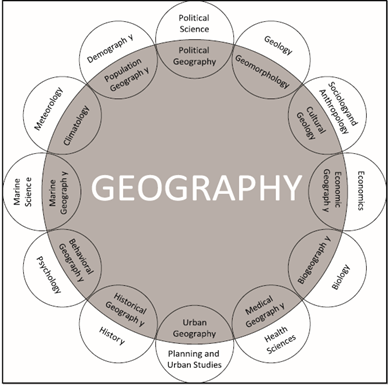
Geography is an interdisciplinary field that draws knowledge from various disciplines to gain a comprehensive understanding of the world. Here are some examples of how geography relates to other disciplines:
Geology
Geography incorporates geological principles to study the Earth's physical features, including landforms, rocks, and natural processes such as erosion and plate tectonics.
Biology
Geography explores the distribution of plant and animal species, ecosystems, and the impact of environmental factors on biodiversity.
Economics
Geography examines the spatial distribution of economic activities, trade routes, resources, and their influence on regional development and global economies.
Anthropology
Geography works closely with anthropology to understand the cultural landscapes, human settlements, and the relationship between societies and their environments.
Sociology
Geography investigates the spatial distribution of populations, urbanization, social inequality, and the impact of human activities on communities.
II. Geography's Perspectives
1. Physical Perspective
The physical perspective focuses on the Earth’s physical processes, such as landforms, climate patterns, natural hazards, and ecosystems. It explores how natural features interact and shape the environment.
2. Human Perspective
The human perspective emphasizes the study of human activities, including population distribution, cultural landscapes, urbanization, economic systems, and political boundaries. It seeks to understand how societies organize, interact, and impact the environment.
3. Spatial Perspective
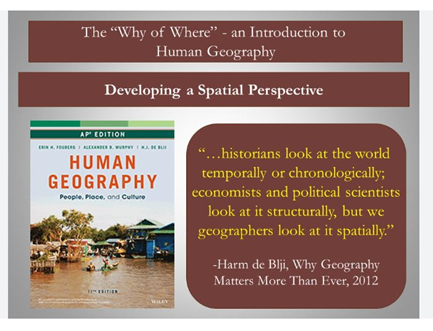
The spatial perspective is at the core of geography. It involves analyzing and understanding the spatial relationships between different phenomena. It explores the concept of location, distance, direction, and the interconnectedness of places. The spatial perspective allows us to identify patterns, trends, and processes across space and make connections between various geographic phenomena.
III. FAQ
What are some practical applications of a spatial perspective in geography?
A spatial perspective in geography is valuable for a range of practical applications. It can help urban planners determine the optimal location for infrastructure development, assist ecologists in studying species distribution patterns, aid in disaster management and emergency response, and support businesses in analyzing market trends and target audience demographics.
How can the spatial perspective be developed in geography?
The spatial perspective in geography can be developed through critical thinking, data analysis, and the use of spatial tools such as maps, GIS (Geographic Information Systems), and remote sensing technologies. By examining location, distance, direction, and interconnectedness, we can enhance our understanding of spatial relationships.
What are the key perspectives in geography?
The key perspectives in geography are the physical perspective, which focuses on natural features and processes, the human perspective, which emphasizes human activities and societies, and the spatial perspective, which analyzes the spatial relationships between phenomena.
Conclusion
Developing a spatial perspective in geography is crucial for understanding the world we live in. It allows us to explore the relationships between physical and human phenomena, their spatial distribution, and the impact they have on our planet. By embracing the perspectives of physical, human, and spatial geography, we can unravel the complexities of our interconnected world and make informed decisions to promote sustainability and well-being for both people and the environment.