


Lesson 2 – Biodiversity
Introduction
Biodiversity, the variety of life on Earth, encompasses the wide array of plants, animals, and microorganisms that inhabit our planet. It is a fundamental component of our natural world and plays a vital role in maintaining the delicate balance of ecosystems. In this essay, we will explore the concept of biodiversity, its various types, and its immense importance for our planet’s stability and well-being.
I. Definition and Types of Biodiversity
1. Definition of Biodiversity:
Biodiversity is a term used to describe the variety of life forms found on Earth. It encompasses three main components:
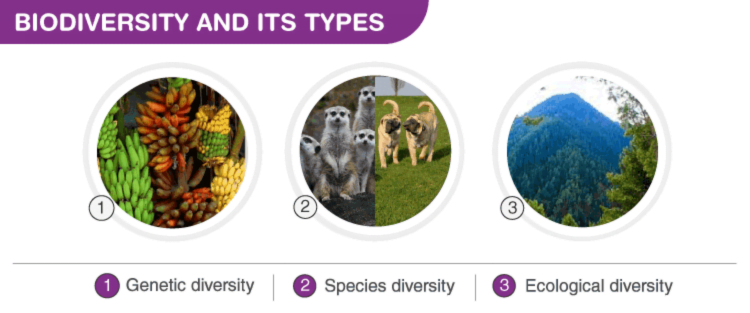
Types of Biodiversity.
Genetic Biodiversity:
This type refers to the diversity of genes within a particular species. Genetic diversity allows species to adapt and evolve over time, enabling them to survive changes in their environment.
Species Biodiversity:
Species biodiversity refers to the number of different species in a given area. Each species plays a unique role in its ecosystem, contributing to the overall balance and functionality of the ecosystem.
Ecosystem Biodiversity:
Ecosystem biodiversity refers to the diversity of ecosystems present on Earth. An ecosystem is a community of organisms interacting with each other and their physical environment. Each ecosystem has distinct characteristics and supports a variety of species.
2. Types of Biodiversity:
Biodiversity can be further classified into different types based on various factors:
Terrestrial Biodiversity:
This type of biodiversity includes all life forms found on land, such as forests, grasslands, deserts, and tundra. Terrestrial ecosystems harbor a wide range of plants, animals, and microorganisms, contributing significantly to global biodiversity.
Aquatic Biodiversity:
Aquatic biodiversity refers to the diversity of life forms in freshwater and marine ecosystems. These ecosystems include lakes, rivers, oceans, coral reefs, and estuaries. They provide habitats for numerous species, including fish, whales, dolphins, and marine invertebrates.
Functional Biodiversity:
Functional biodiversity focuses on the roles and interactions of species within ecosystems. Each species contributes to vital ecological processes such as nutrient cycling, pollination, seed dispersal, and predation. These functions are essential for the overall health and stability of ecosystems
II. Community-level diversity
It is defined by the species that occupy a particular locality and the interactions between them. It represents the collective response of species to different environmental conditions. Biological communities such as deserts, grasslands, wetlands, and forests support the continuity of proper ecosystem functioning by providing ecologically beneficial services to people.
Diversity at the level of community and ecosystem exists along three levels. It could be within-community diversity (alpha diversity), between-communities diversity (beta diversity), or diversity of the habitats over the total landscape or geographical area (gamma diversity). Alpha, Beta, and Gamma Diversity Whittaker (1972) described three terms for measuring biodiversity over spatial scales: Alpha, Beta, and Gamma diversity.
Alpha diversity:
Refers to the variety within a particular area or ecosystem and is usually expressed by the number of species (i.e., species richness) in that ecosystem.
Beta diversity:
A comparison of diversity between ecosystems, usually measured as the number of species changes between the ecosystems.
Gamma diversity:
A measure of the overall diversity within a large region. Geographic-scale species diversity, according to Hunter (2002).
III. Importance of Biodiversity and its Relation to Ecosystem Stability
1. Importance of Biodiversity:
Biodiversity is crucial for several reasons, both ecologically and economically. Let’s explore its significance:
Ecosystem Services:
Biodiversity provides various ecosystem services, including air and water purification, climate regulation, soil fertility, and flood control. These services are essential for human well-being and the functioning of ecosystems.
Food Security:
Biodiversity is the foundation of our food systems. A diverse range of crops, livestock, and aquatic organisms contribute to the global food supply. Genetic diversity within these species helps improve crop resilience and resistance to pests and diseases.
Medicine and Pharmaceuticals:
Many medicines and pharmaceuticals are derived from natural sources. Biodiversity serves as a rich source of bioactive compounds that can be used for developing new drugs and treatments.
Ecotourism and Recreation:
Natural environments with high biodiversity attract tourists and provide recreational opportunities. Preserving biodiversity not only protects natural habitats but also generates economic benefits through tourism.
2. Relation to Ecosystem Stability:
Biodiversity plays a crucial role in maintaining ecosystem stability. Here are some ways in which biodiversity contributes to ecosystem stability:
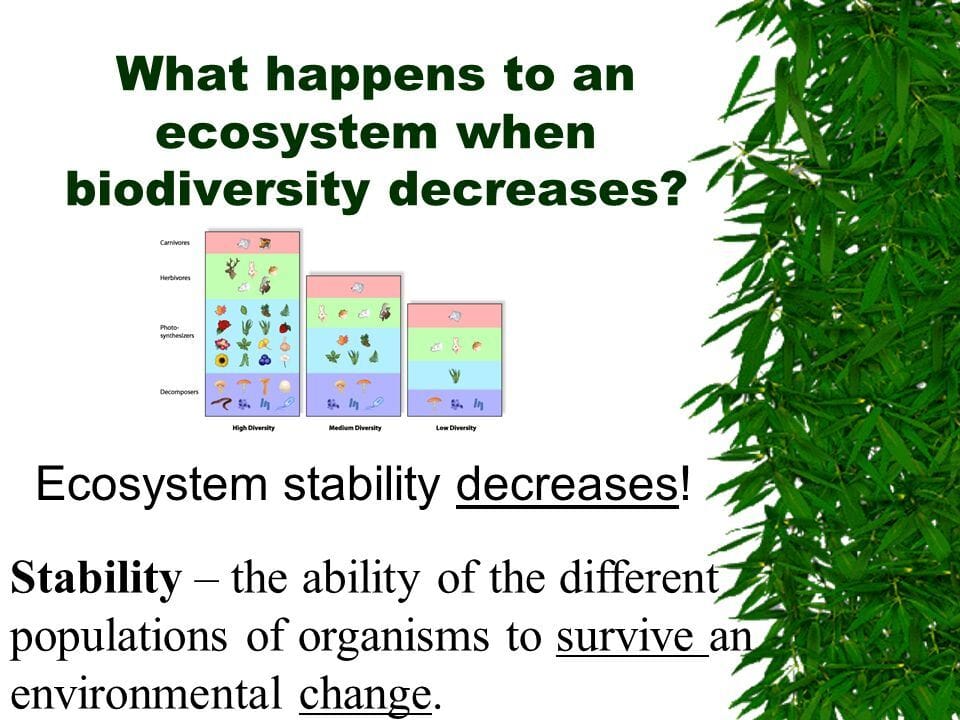
Relation to Ecosystem Stability
Resilience to Environmental Changes:
Ecosystems with higher biodiversity are more resilient to environmental changes such as climate change, pollution, and habitat destruction. A diverse range of species ensures that even if some species decline or become extinct, others can take their place and maintain ecosystem functioning.
Trophic Interactions:
Biodiversity contributes to complex food webs and trophic interactions within ecosystems. Species within a food web depend on each other for survival, forming a delicate balance. If one species declines or disappears, it can disrupt the entire food web, affecting other species and ecosystem stability.
Nutrient Cycling:
Biodiversity enhances nutrient cycling within ecosystems. Different species play specific roles in the decomposition of organic matter and the recycling of nutrients. This cycling maintains soil fertility, supports plant growth, and sustains the overall health of ecosystems.
Pest Regulation:
Biodiversity helps regulate pests and diseases. Natural predators and parasites control the populations of pests, preventing outbreaks and minimizing the need for chemical pesticides. A biodiversity loss can lead to imbalances and increased vulnerability to pest infestations.
Conclusion
Biodiversity, encompassing genetic diversity, species diversity, and ecosystem diversity, is the foundation of ecosystem stability. It plays a crucial role in providing essential ecosystem services, supporting human well-being, and maintaining the delicate balance of our planet’s ecosystems. Recognizing the importance of biodiversity is vital for ensuring the sustainable management and conservation of our natural resources. As responsible stewards of the Earth, it is our duty to protect and preserve the rich tapestry of life that surrounds us, not only for our own sake but also for the countless species that rely on it for survival.