


Lesson 1 – What is Life Sciences?
Introduction
Life sounds simple, but understanding it all is challenging since it involves living organisms, ecosystems, influencing factors, and how they relate. Life Science aims to help us comprehend the functioning mechanisms of life in species such as humans, animals, plants, bacteria, fungi, and so on. Understanding the science of life has become the foundation for novel concepts, modern technology, and increasing the quality of life.
This lesson aims to introduce the students to the topic they will focus on in the course. Here, the meaning and essential role of Life Science will be clearly explained through the following key points:
- What is Life science?
- Difference Between Biology and Life Science.
I. Definition
1. What is Science?
Science reflects what we know about the world. We may learn more about the world via our senses by paying attention to the events occurring all around us. After that, we draw inferences about everything in the cosmos.
Ivan Pavlov’s theory of conditioned response is an example of a scientific theory. Because dogs naturally salivate more when they view food, Pavlov predicted that the presentation of food is an unconditioned stimulus. Pavlov trained a dog to associate the sound of a bell (conditioned stimulus) with the delivery of food to demonstrate the possibility of conditioned (or learned) responses. The dog eventually began to salivate anytime the bell rang, even if no food appeared. However, Pavlov observed that a behavioral response can only be learned if the conditioned and unconditioned stimuli occur within a short period of time.
2. What is Life?
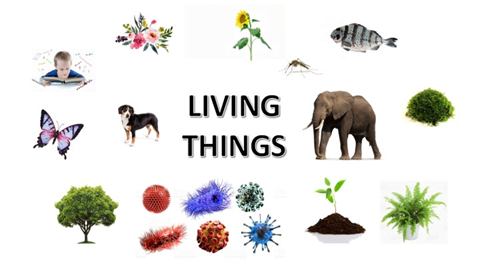
Life is a unique biological phenomenon in complex and dynamic structures known as living things. Nowadays, we can understand the critical events of cellular biology, the immense ecology on earth, the evolution of organisms, and the variety of ecosystems, owing to significant advances in Biology.
3. What is life science?
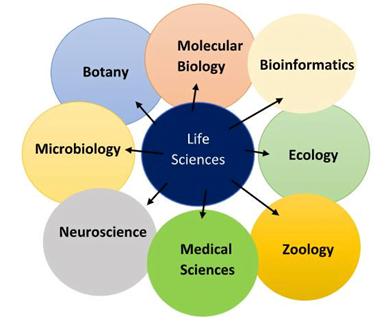
Life science is a broad field that encompasses the study of living organisms and the processes that govern their behavior, development, and evolution. It includes a range of disciplines, such as biology, botany, microbiology, neuroscience, medical sciences, zoology, ecology, and bioinformatics.
- Biology is a field of science, it helps us understand the living world and the ways its many species (including humans) function, evolve, and interact. Advances in medicine, agriculture, biotechnology, and many other areas of biology have brought improvements in the quality of life.
- Botany is essential in the field of economic productivity because it involves the study of crops and ideal growth procedures that assist farmers in increasing crop yield. Plant research is also vital for environmental conservation.
- One of the most important fields of biology is microbiology. By attentively examining microorganisms, microbiologists play a significant role in illness prevention, agrochemical development, and even environmental protection.
- The study of the nervous system enhances our understanding of our basic biology and how our bodies function. Knowing how things work in general might help throw light on what might happen when there are issues. It can assist researchers in discovering strategies to prevent or treat disorders affecting the brain, neurological system, and body.
- You may learn about the natural world and how we might help with conservation by studying zoology. It also provides an opportunity to discuss how to address global concerns such as climate change and food security, with the goal of finding solutions that benefit both animals and people.
- Ecology improves our world and is essential for human well-being and success. It adds to our understanding of the interdependence of humans and nature, which is critical for food production, clean air and water, and biodiversity preservation in a changing climate.
- Bioinformatics is the application of computer programming, big data, and biology to assist scientists in understanding and identifying patterns in biological data. It is especially valuable in genome research and DNA sequencing since it allows scientists to organize vast amounts of data.
Scientists explore the world of living things at various levels of biological organization, from the molecular and cellular levels to entire ecosystems. They seek to understand the interactions between living organisms and their environment and the interplay between genetic and environmental factors in shaping biological traits and behaviors. Life sciences have many practical applications, from developing new medical treatments to improving crop productivity and conserving biodiversity.
The diversity within this discipline means the life sciences have a broad application. Regarding life sciences, researchers or scientists play a vital role in multiple fields such as healthcare, technology, scientific investigation, agriculture, medicines, nutrition, preservation, etc. Then, Health-related disciplines are very popular among life science majors.
II. Difference between Biology and Life science
Biology is a specific branch of science that studies living organisms, including their physical structure, chemical processes, molecular interactions, physiological mechanisms, and genetic makeup. It focuses on understanding the fundamental principles that govern the living world, such as evolution, ecology, genetics, and cellular biology. Biology is a more technical and specific term used to refer to the study of living things.
- All living organisms have structural properties, including us humans. The general structure of a living organism, from the least to the most complex, can be understood as: atoms, molecules, organelles, cells, tissues, organs, organ systems, and organisms. The structure of something, whether alive or nonliving, refers to its components or elements and how they are organized. Thus, biological structure at various organizational levels deals with live creatures and their biological components.
- A chemical process is a method or means of transforming one or more chemicals or chemical compounds in a scientific sense. A chemical process of this type can occur on its own or be triggered by an outside stimulus, and it involves some kind of chemical reaction.
- Molecular interactions occur between molecules or atoms that are not connected by bonds. Cohesive (attraction between like molecules), adhesive (attraction between unlike molecules), and repulsive forces between molecules are examples of molecular interactions.
- The smaller physical and chemical events that make up a larger physiological process are referred to as physiological mechanisms. Human physiology is the study of the functions of humans, their organs and cells, and how these functions interact to allow for life, growth, and development.
- A gene is an inheritance unit that is transferred from parent to child by a gamete in chromosomes and determines the expression of a character in a young one in collaboration with its allele, other genes, and environment. A gene is a linear section of DNA that aids the body in the production of specific proteins. Each human cell has approximately 20,000 genes. Gene is the blueprint for the human body and how it functions. A genotype is a person's genetic make-up.
On the other hand, life science is a broader term encompassing multiple disciplines that study life and living systems, including biology, biochemistry, biotechnology, ecology, genetics, microbiology, and physiology. Life science is an interdisciplinary field that combines aspects of various scientific fields to understand living systems better. It is a more all-encompassing term that refers to studying living things and the processes that govern their interactions with the environment.
In summary, biology is a branch of life science that studies living organisms. In contrast, life science is a more expansive field that includes many different areas of study related to life and living systems.
Here, let us explore in further detail the difference between Biology and Life Science.
| Biology | Life science |
|---|---|
|
An important course |
Comprises biology and other fields related to science |
|
A branch in Life Science |
It is a scientific study of life and organisms |
|
Provide several concepts with the required background |
Enhance understanding of matters at both the molecular and cell level |
|
A key educational subject |
It is the basis for applying science |
|
The sub-disciplines of biology are zoology, botany, etc |
The sub-disciplines of life science are immunology, molecular biology, etc |
III. Frequently asked questions on the Difference Between Biology and Life Science.
Question 1:
What is immunology?
The study of the immune system, its cells, the mechanisms of immunity, disorders of the immune system, and graft rejection is called immunology.
Question 2:
What is molecular biology?
Molecular biology is the study of DNA, protein synthesis, central dogma, mutations, and related mechanisms.
Questions 3:
What is botany?
Botany is a branch of biology that deals with plants.
Question 4:
What is zoology?
Zoology is a branch of biology that deals with animals.
Question 5:
What is genetic engineering?
Genetic engineering is a science that deals with altering the DNA of organisms to incorporate new properties into them.
Conclusion
The study of living things around us, including their organization, behavior, relationships with other beings, and how they relate to their environment, is known as life science. It encompasses many different areas of study, including biology, ecology, physiology, genetics, and evolution. By understanding life science principles, we can better appreciate the complexity and diversity of the natural world around us.